


Dynamics of Microorganisms and Metabolites in the Mixed Silage of Oats and Vetch in Alpine Pastures, and Their Regulatory Mechanisms Under Low Temperatures
- PMID: 40732044
- PMCID: PMC12300317
- DOI: 10.3390/microorganisms13071535
Dynamics of Microorganisms and Metabolites in the Mixed Silage of Oats and Vetch in Alpine Pastures, and Their Regulatory Mechanisms Under Low Temperatures
Abstract
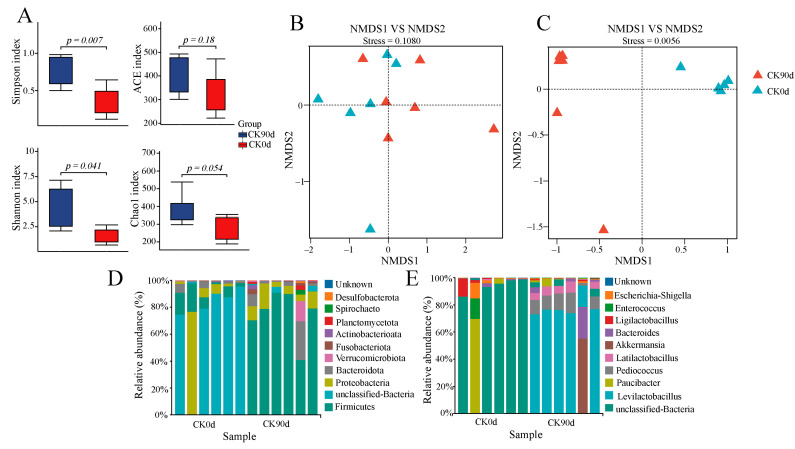
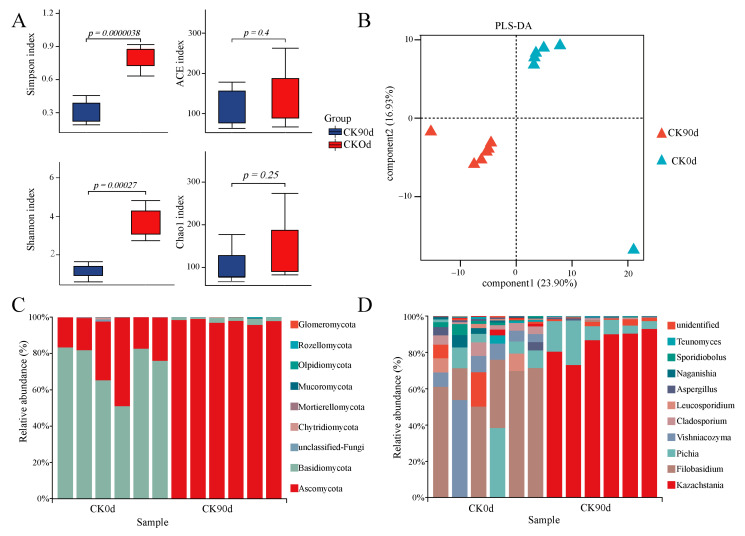
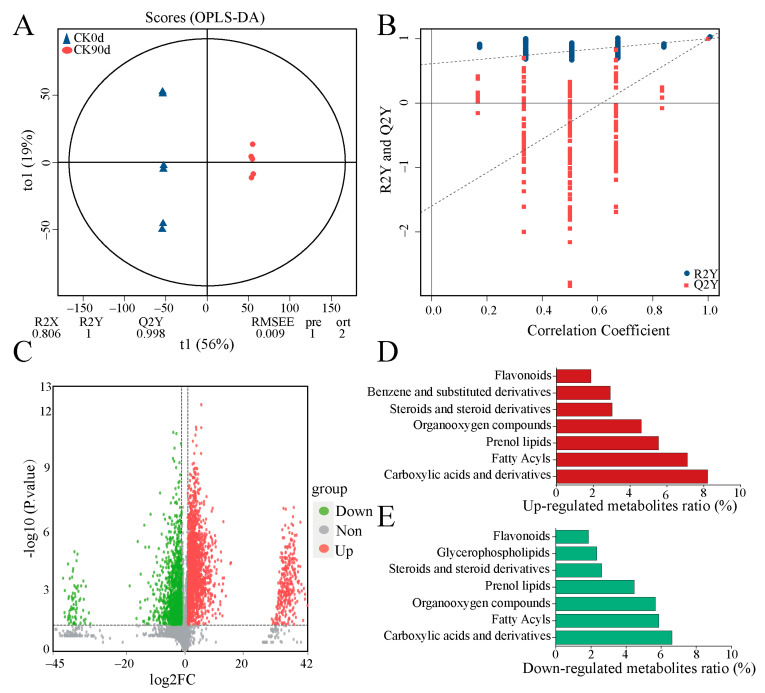
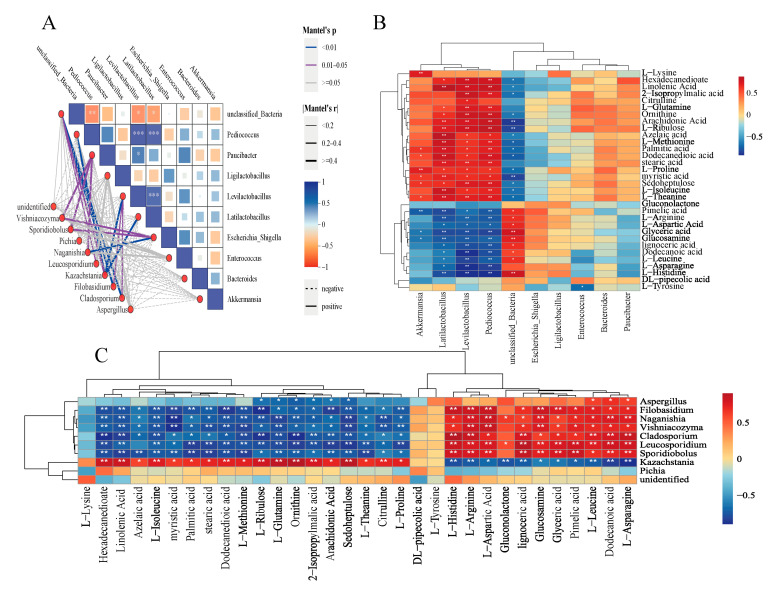
Silage is an effective method for alleviating winter feed shortages, but the mechanisms by which the silage microorganisms and metabolites respond to a mixture of oats and vetch at low temperatures remain unclear. In this study, the quality, microorganisms, and metabolites of oats mixed with vetch as a silage material, as well as after 90 days of silage, were analyzed. The traditional view holds that a decrease in microorganism diversity during silage indicates successful fermentation. However, in the present study, microorganism diversity was found to increase after silage under alpine and low-temperature conditions, with a significant rise in the abundance of microorganisms such as Levilactobacillus and Kazachstania. This phenomenon may be explained by the inhibition of rapid lactic acid bacteria proliferation by low temperatures, which allows for the survival of other cold-tolerant microorganisms and their involvement in metabolism. These microorganisms significantly increased the levels of metabolites such as l-methionine, l-glutamine, arachidonic acid, and linolenic acid in the mixed feeds, while simultaneously significantly decreasing the levels of metabolites such as l-leucine, l-arginine, l-asparagine, and glyceric acid. These metabolites possess antioxidant and anti-inflammatory properties that enhance the nutritional value of the feed and indirectly improve the immunity and performance of ruminants. This study comprehensively revealed the complex network of interactions between microorganisms and metabolites in the mixed forage of oats and vetch in alpine pastures and elucidated the regulatory mechanism of silage under low temperatures. The subsequent development of microorganism preparations for the targeted regulation of silage quality provides a theoretical foundation for producing high-quality silage in alpine pastures.
Keywords: metabolites; microorganisms; mixed silage; oats; vetch.
Conflict of interest statement
The authors declare no conflicts of interest.
Figures
References
-
- Yu H., Yang Q., Jiang S., Zhan B., Zhan C. Detection and Attribution of Vegetation Dynamics in the Yellow River Basin Based on Long-Term Kernel NDVI Data. Remote Sens. 2024;16:1280. doi: 10.3390/rs16071280. - DOI
-
- Gustine R., Theophilus A., Flint C.G., Ulrich-Schad J.D., Epperson E., Wright C.M., Adam J.C. Managing beyond water: Utilizing community well-being interviews in the Upper Yakima River Basin, USA, for climate change adaptation. Ecol. Soc. 2025;30:7. doi: 10.5751/ES-15809-300107. - DOI
-
- Ma T., Xin Y., Chen X., Wen X., Wang F., Liu H., Zhu L., Li X., You M., Yan Y. Effects of Compound Lactic Acid Bacteria Additives on the Quality of Oat and Common Vetch Silage in the Northwest Sichuan Plateau. Fermentation. 2025;11:93. doi: 10.3390/fermentation11020093. - DOI
-
- Ji J., Wang Z., Gao P., Tan X., Wang X., Kuai J., Wang J., Xu Z., Wang B., Zhou G., et al. Rapeseed Supports Hairy Vetch in Intercropping, Enhancing Root and Stem Morphology, Nitrogen Metabolism, Photosynthesis, and Forage Yield. Agronomy. 2025;15:220. doi: 10.3390/agronomy15010220. - DOI
LinkOut - more resources
Full Text Sources
