


The Characterization of a Gonococcal HicAB Toxin-Antitoxin System Capable of Causing Bacteriostatic Growth Arrest
- PMID: 40732128
- PMCID: PMC12297915
- DOI: 10.3390/microorganisms13071619
The Characterization of a Gonococcal HicAB Toxin-Antitoxin System Capable of Causing Bacteriostatic Growth Arrest
Abstract
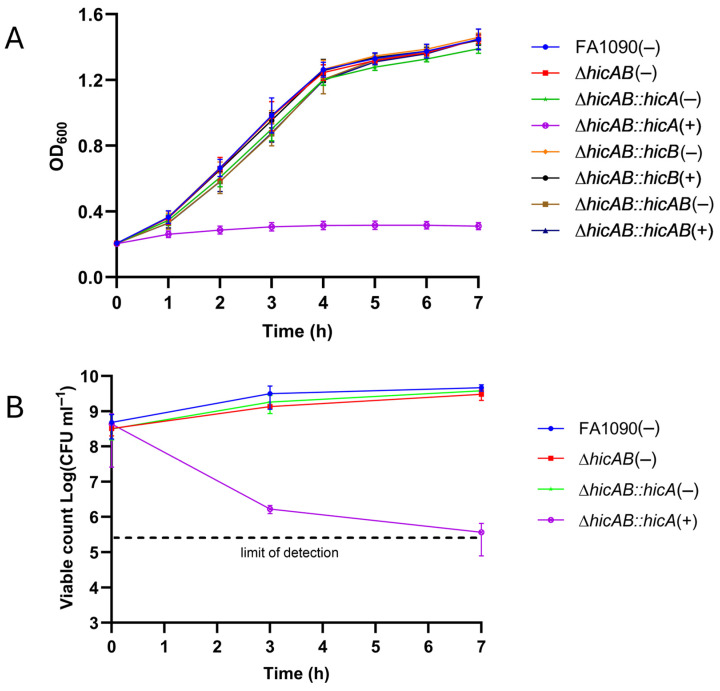
Neisseria gonorrhoeae is the causative agent of the sexually transmitted infection gonorrhea. Preventative vaccines or novel treatments based on a better understanding of the molecular basis of N. gonorrhoeae infection are required as resistance to current antibiotics is widespread. Toxin-antitoxin (TA) systems modulate bacterial physiology by interfering with vital cellular processes; type II TA systems, where both toxin and antitoxin are proteins, are the best-studied. Bioinformatics analysis revealed genes encoding an uncharacterized type II HicAB TA system in the N. gonorrhoeae strain FA1090 chromosome, which were also present in >83% of the other gonococcal genome sequences examined. Gonococcal HicA overproduction inhibited bacterial growth in Escherichia coli, an effect that could be counteracted by the co-expression of HicB. Kill/rescue assays showed that this effect was bacteriostatic rather than bactericidal. The site-directed mutagenesis of key histidine and glycine residues (Gly22, His24, His29) abolished HicA-mediated growth arrest. N. gonorrhoeae FA1090∆hicAB and complemented derivatives that expressed IPTG-inducible hicA, hicB, or hicAB, respectively, grew as wild type, except for IPTG-induced FA1090∆hicAB::hicA. RT-PCR demonstrated that hicAB are transcribed in vitro under the culture conditions used. The deletion of hicAB had no effect on biofilm formation. Our study describes the first characterization of a HicAB TA system in N. gonorrhoeae.
Keywords: HicA; HicAB; HicB; Neisseria gonorrhoeae; bacteriophage; biofilm; growth arrest; toxin–antitoxin.
Conflict of interest statement
The authors declare no conflicts of interest.
Figures



References
LinkOut - more resources
Full Text Sources
