


Quail development in in ovo and ex ovo conditions: Preincubation influences stress proteins and antioxidants
- PMID: 40735657
- PMCID: PMC12304923
- DOI: 10.1016/j.vas.2025.100486
Quail development in in ovo and ex ovo conditions: Preincubation influences stress proteins and antioxidants
Abstract
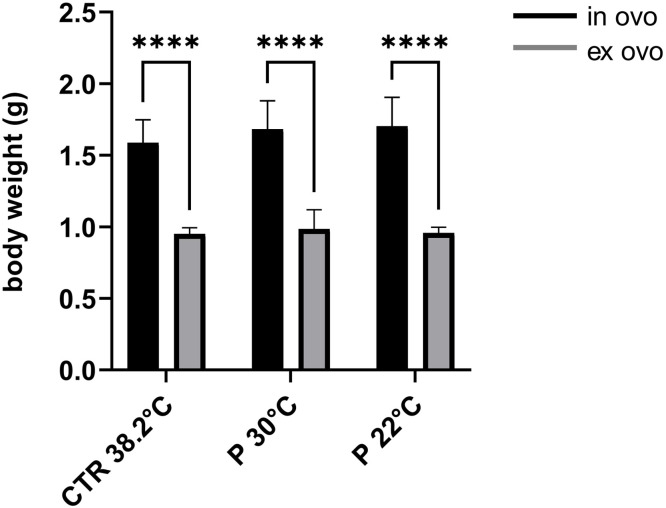
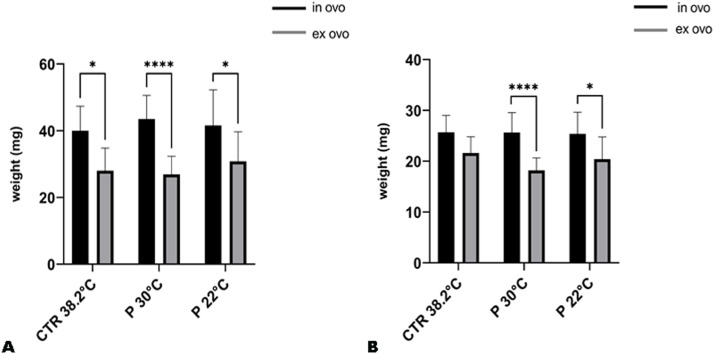
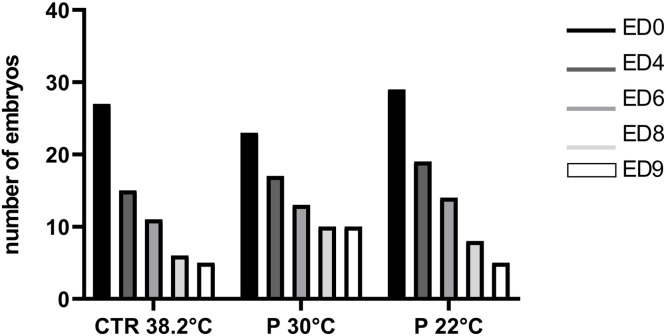
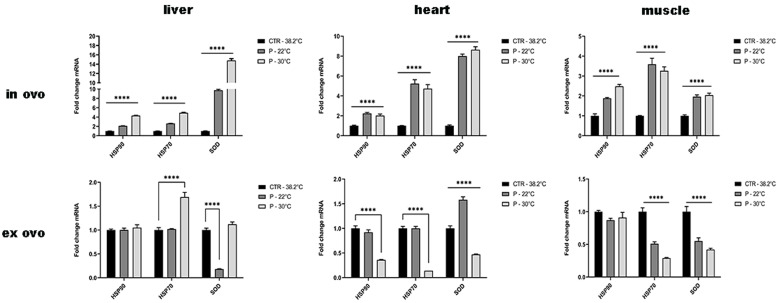
Extreme temperatures, whether excessively high or low, are critical environmental stressors for organisms, profoundly impacting cellular metabolism and homeostasis. The presented study addresses the effects of varying incubation conditions on the expression of key stress-related genes (HSP70, HSP90, and SOD1) during quail development. Quail eggs were incubated using three distinct methods: standard incubation at 38.2°C and preincubation at either 22°C or 30°C in both in ovo and ex ovo conditions. Results revealed a distinctive contrast in survival rates: embryos cultured ex ovo showed significantly lower viability (26.41 %) compared to the in ovo method (87.66 %). Among ex ovo groups, preincubation at 30°C yielded the highest survival rate (43.48 %), highlighting the critical role of optimal preincubation temperature. The preincubation period resulted in a notable increase in the total weight of embryos in the in ovo group when compared to the ex ovo group. Additionally, preincubation at 30°C resulted in increased weight of the heart and liver in the in ovo group. Gene expression analysis showed clear differences between incubation methods. While in ovo incubation led to uniformly increased gene expression across all examined organs (liver, heart, and breast muscle) at both preincubation temperatures, the ex ovo conditions exhibited mixed results: decreased gene expression in the liver (SOD1) and muscle (HSP70, SOD1) but notable increased in the liver (HSP70) and heart (SOD1). Our findings suggest that preincubating quail eggs at 30°C for 12 h is associated with improved survival under ex ovo conditions, providing insights into optimizing ex ovo incubation practices.
Keywords: Ex ovo; HSP70; HSP90; Heat stress; In ovo; Preincubation; Quail embryo; SOD1.
© 2025 The Authors.
Conflict of interest statement
The authors declare that they have no known competing financial interests or personal relationships that could have appeared to influence the work reported in this paper.
Figures

References
-
- Al-Zghoul M.-B., Ismail Z.B., Abd Elhafeed S.D., Al-Ramadan A., Althnaian T.A., Al-Ramadan S.Y., Ali A.M., Albokhadaim I.F., Al Busadah K.A., Eljarah A. Hsp90, Hsp60 and HSF-1 genes expression in muscle, heart and brain of thermally manipulated broiler chicken. Research in Veterinary Science. 2015;99:105–111. doi: 10.1016/j.rvsc.2014.12.014. - DOI - PubMed
-
- Azad M., Kikusato M., Maekawa T., Shirakawa H., Toyomizu M. Metabolic characteristics and oxidative damage to skeletal muscle in broiler chickens exposed to chronic heat stress. Comparative Biochemistry and Physiology Part A: Molecular & Integrative Physiology. 2010;155(3):401–406. doi: 10.1016/j.cbpa.2009.12.011. - DOI - PubMed
-
- Baer J., Lansford R., Cheng K. Laboratory animal medicine. Elsevier; 2015. Japanese quail as a laboratory animal model; pp. 1087–1108.
-
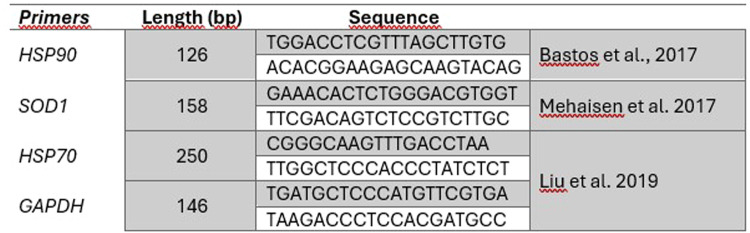
- Bastos M.S., Del Vesco A.P., Santana T.P., Santos T.S., de Oliveira Junior G.M., Fernandes R.P.M., Barbosa L.T., Gasparino E. The role of cinnamon as a modulator of the expression of genes related to antioxidant activity and lipid metabolism of laying quails. Plos One. 2017;12(12) doi: 10.1371/journal.pone.0189619. - DOI - PMC - PubMed
LinkOut - more resources
Full Text Sources
Miscellaneous
