


Repeated bouts of load carriage alter indirect markers of exercise-induced muscle damage, liver enzymes, and oxygen-carrying capacity in male soldiers
- PMID: 40737449
- PMCID: PMC12309849
- DOI: 10.14814/phy2.70268
Repeated bouts of load carriage alter indirect markers of exercise-induced muscle damage, liver enzymes, and oxygen-carrying capacity in male soldiers
Abstract
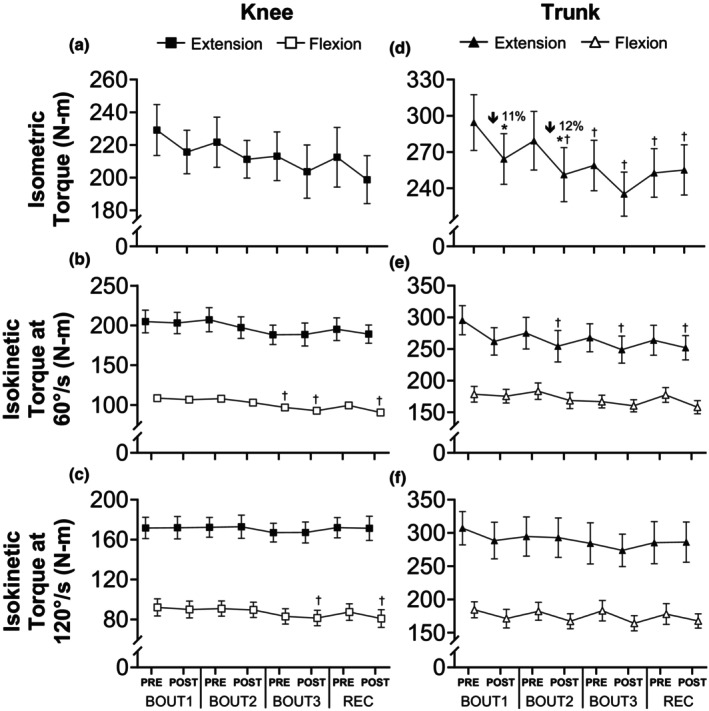
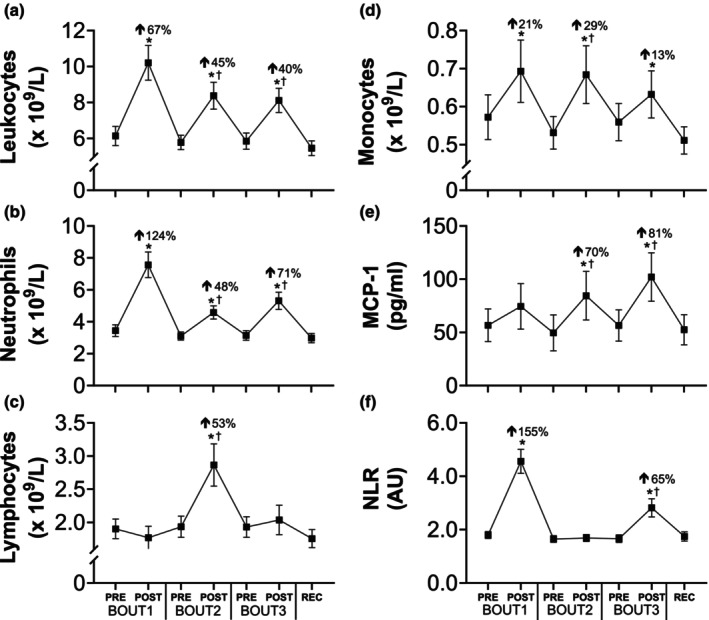
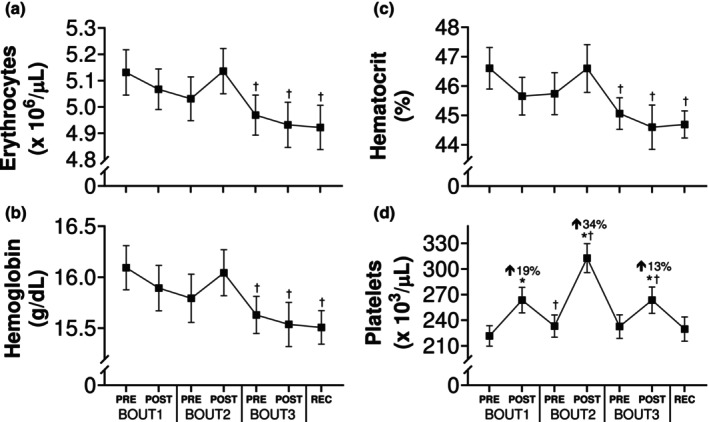
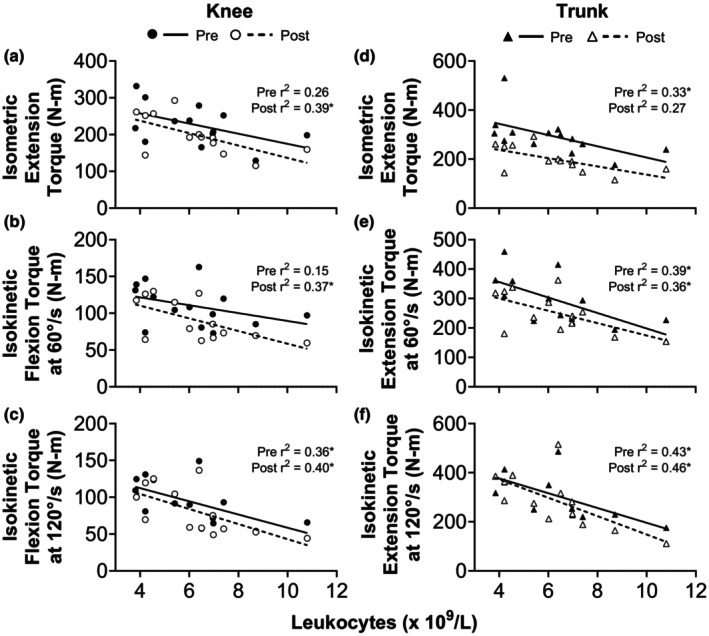
Soldiers are often required to carry heavy external loads over multiple days, which may degrade physical performance. We investigated the effects of repeated load carriage bouts on indirect markers of exercise-induced muscle damage, liver enzymes, and oxygen-carrying capacity in active-duty infantrymen. Fourteen male soldiers (age = 24.6 ± 1.1 y; BMI = 25.7 ± 0.7 kg/m2) underwent a 5-day protocol, consisting of baseline/familiarization, 3 load carriage bouts, and a recovery day. There were reductions in maximal voluntary contraction strength (p < 0.05), with the knee flexors and trunk extensors showing the greatest declines. Each load carriage bout produced an inflammatory response, including increases in leukocyte subtypes (neutrophils and monocytes) and monocyte chemoattractant protein-1 (p < 0.05). At the end of the protocol, serum liver enzymes were elevated, and erythrocytes and hematocrit were lower than baseline (p < 0.05). In addition, greater circulating leukocytes at baseline predicted lower knee and trunk torque during recovery. Repeated bouts of load carriage reduce muscle strength and cause inflammation consistent with exercise-induced muscle damage, alter liver function tests, and decrease oxygen-carrying capacity in male soldiers, which could compromise readiness for prolonged and/or intense military operations.
Keywords: immune cells; inflammation; military; performance; skeletal muscle.
Published 2025. This article is a U.S. Government work and is in the public domain in the USA. Physiological Reports published by Wiley Periodicals LLC on behalf of The Physiological Society and the American Physiological Society.
Conflict of interest statement
No conflicts of interest, financial or otherwise, are declared by the authors.
Figures


References
-
- Blacker, S. D. , Fallowfield, J. L. , Bilzon, J. L. , & Willems, M. E. (2010). Neuromuscular function following prolonged load carriage on level and downhill gradients. Aviation, Space, and Environmental Medicine, 81, 745–753. - PubMed
-
- Boffey, D. , Harat, I. , Gepner, Y. , Frosti, C. L. , Funk, S. , & Hoffman, J. R. (2019). The physiology and biomechanics of load carriage performance. Military Medicine, 184, e83–e90. - PubMed
MeSH terms
Substances
Grants and funding
LinkOut - more resources
Full Text Sources
Medical
Research Materials
