


Sleep and modern life: a population-based study
- PMID: 40738936
- PMCID: PMC12311182
- DOI: 10.1038/s41598-025-13405-5
Sleep and modern life: a population-based study
Abstract
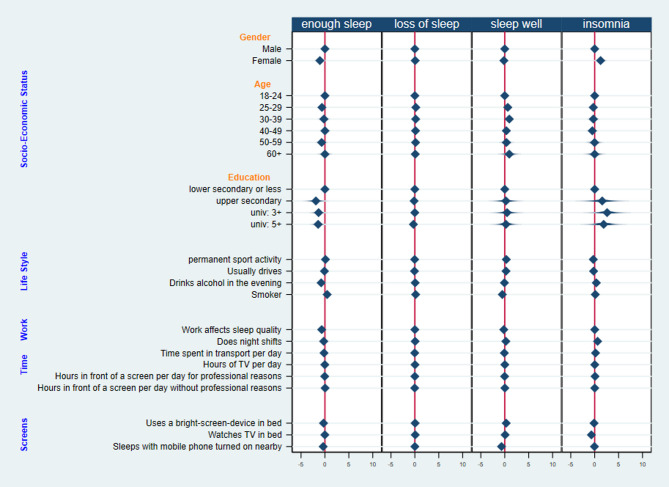
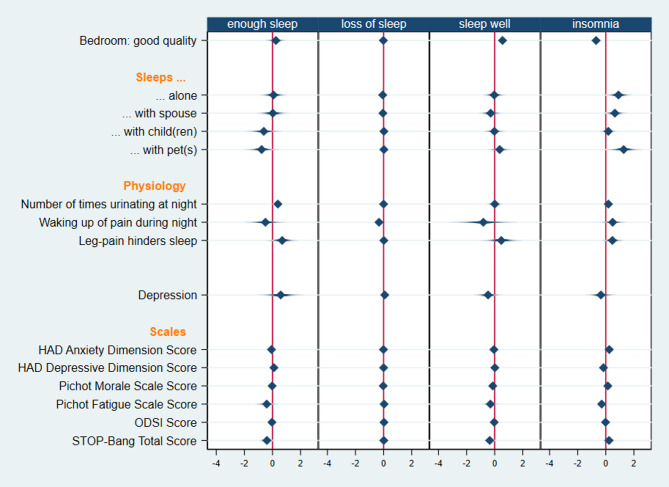
This paper examines sleep patterns in Romania, a country where long working hours and significant household responsibilities may impact rest. The study highlights key factors influencing perceived sleep quality, with the aim to offer insights for clinicians. Based on a cross-sectional survey 835 with Romanian respondents by the Francophone Space of Pneumology from 2019 to 2020, the study predates the COVID-19 pandemic and therefore avoids potential post-pandemic sleep disruptions. Participants reported their sleep habits, medical conditions, psychological well-being, and work conditions. The study assesses how these factors relate to sleep quality, sleep duration, insomnia, and sleep disturbances. Multivariate analysis reveals that individual perceptions of sleep quality can be misleading when analyzed in isolation. Through hierarchical models, we identify specific predictors of sleep quality. Multivariate analysis showed that good bedroom conditions (OR = 1.63) and physical activity (OR = 1.45) were associated with better sleep perception. Night shifts, female gender, and co-sleeping with pets (OR = 3.68) increased risk of sleep problems. Medical predictors (e.g., STOP-Bang) were not significantly associated. The results are also presented in a practical dashboard, helping healthcare professionals assess sleep disorders more effectively while identifying potential biases in self-reported sleep quality.
Keywords: Circadian rhythm; Public health; Sleep disordered breathing, life style; Sleep quality; Sleep self-perception; Sleeping behaviors.
© 2025. The Author(s).
Conflict of interest statement
Declarations. Competing interests: The authors declare no competing interests. Ethical approval: All procedures performed in studies involving human participants were in accordance with the ethical standards of the institutional and/or national research committee (name of institute/committee) and with the 1964 Helsinki declaration and its later amendments or comparable ethical standards. Informed consent: Informed consent was obtained from all individual participants included in the study.
Figures

References
-
- Grigg-Damberger, M. M. Ontogeny of sleep and its functions in infancy, childhood, and adolescence. In: (eds Nevsimalova, S. & Bruni, O.) Sleep Disorders in Children. Cham: Springer; 3–29. (2017).
-
- Finger, A. M. & Kramer, A. Mammalian circadian systems: organization and modern life challenges. Acta Physiol. (Oxf). 231, e13548 (2021). - PubMed
-
- Czeisler, C. A. Perspective: casting light on sleep deficiency. Nature497, S13 (2013). - PubMed
-
- Grandner, M. A. Sleep, health, and society. Sleep. Med. Clin.17, 117–139 (2022). - PubMed
MeSH terms
LinkOut - more resources
Full Text Sources
Medical
