


Pomelo by-products: A bibliometric review on enhancing gut health and digestive function for metabolic regulation through advanced processing techniques
- PMID: 40740478
- PMCID: PMC12309026
- DOI: 10.1016/j.crfs.2025.101150
Pomelo by-products: A bibliometric review on enhancing gut health and digestive function for metabolic regulation through advanced processing techniques
Abstract
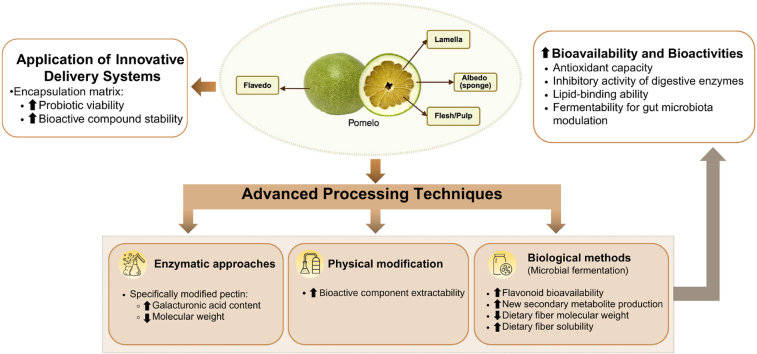
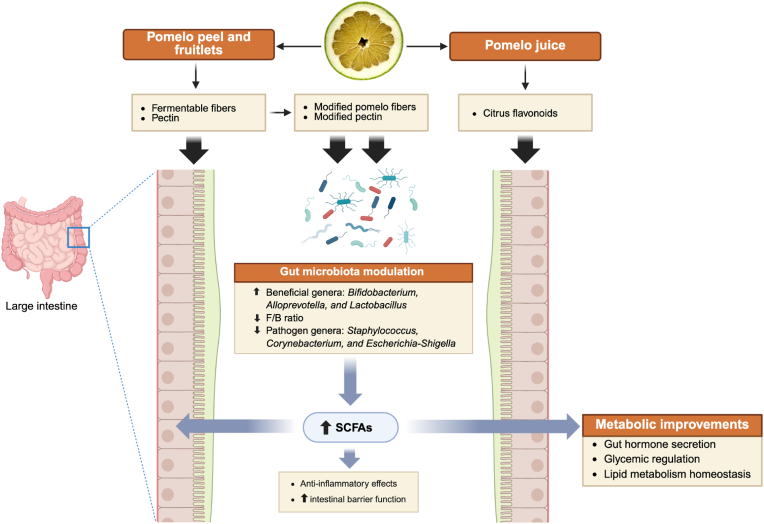
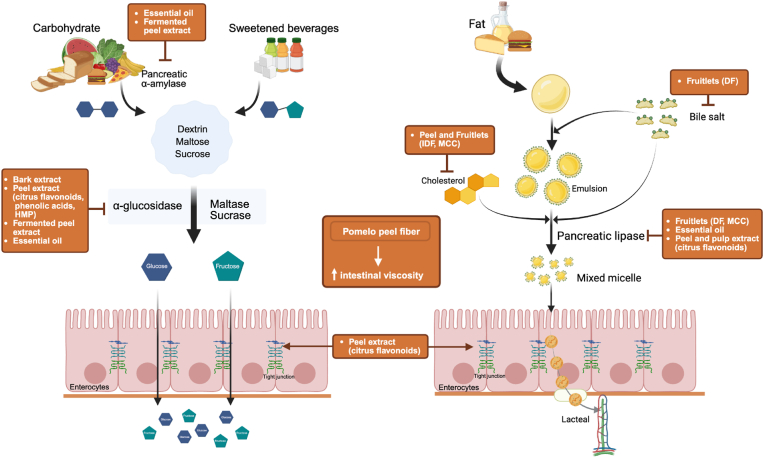
Pomelo (Citrus maxima or Citrus grandis) is widely cultivated for its edible pulp; however, processing generates substantial quantities of by-products, including peel, pith, sponge layer, and fruitlets, which are typically discarded as waste. Recent research highlights these by-products as abundant sources of bioactive compounds with promising health-promoting properties. This synthesis of current scientific evidence focuses on the potential of pomelo by-products to support gut health and digestive function, with particular emphasis on metabolic regulation. Key bioactive constituents identified in pomelo by-products include dietary fibers, pectins, flavonoids, and essential oils. These compounds have demonstrated the capacity to modulate gut microbiota composition by selectively promoting beneficial bacterial genera and enhancing short-chain fatty acid production. Additionally, pomelo by-products can inhibit carbohydrate-degrading enzymes such as α-glucosidase and lipid-degrading enzymes like pancreatic lipase, contributing to improved glycemic control and lipid metabolism. Furthermore, bile acid binding by pomelo by-product extracts can influence cholesterol metabolism and lipid absorption. Advanced processing technologies including super-comminution, enzymatic modification, fermentation, and pulsed electric field treatments have been investigated to enhance the release, stability, and bioavailability of these bioactive compounds, thereby improving their functional efficacy in food systems. Processing techniques are critically evaluated, highlighting their potential for sustainable upcycling of pomelo processing waste into high-value functional food ingredients and nutraceuticals. Despite encouraging preclinical evidence supporting the health benefits of pomelo by-products, further well-designed clinical trials are necessary to confirm their efficacy and safety in human populations. Overall, pomelo by-products show potential for development into sustainable and functional food ingredients that support gut health, regulate metabolic processes, and contribute to healthier dietary patterns.
Keywords: Advanced processing; Bioactive compounds; Digestive function; Functional foods; Gut health; Metabolic regulation; Pomelo by-products.
© 2025 The Authors.
Conflict of interest statement
The authors declare that they have no known competing financial interests or personal relationships that could have appeared to influence the work reported in this paper.
Figures
References
-
- Balmori V., Marnpae M., Chusak C., Kamonsuwan K., Katelakha K., Charoensiddhi S., Adisakwattana S. Enhancing phytochemical compounds, functional properties, and volatile flavor profiles of pomelo (Citrus grandis (L.) Osbeck) juices from different cultivars through fermentation with Lacticaseibacillus paracasei. Foods. 2023;12:4278. doi: 10.3390/foods12234278. - DOI - PMC - PubMed
-
- Balmori V., Marnpae M., Kamonsuwan K., Chusak C., Nungarlee U., Sivapornnukul P.…Adisakwattana S. Comparative effects of non-fermented and Lacticaseibacillus paracasei-fermented pomelo juice on gut microbiota composition and short-chain fatty acid production: an in vitro colonic model. Food Chem. X. 2024;24 doi: 10.1016/j.fochx.2024.102041. - DOI - PMC - PubMed
-
- Buljeta I., Šubarić D., Babić J., Pichler A., Šimunović J., Kopjar M. Extraction of dietary fibers from plant-based industry waste: a comprehensive review. Appl. Sci. 2023;13:9309. doi: 10.3390/app13169309. - DOI
Publication types
LinkOut - more resources
Full Text Sources
