


Closure techniques for esophageal reconstruction after total laryngectomy and their impact on fistula formation
- PMID: 40741197
- PMCID: PMC12305097
- DOI: 10.5306/wjco.v16.i7.109246
Closure techniques for esophageal reconstruction after total laryngectomy and their impact on fistula formation
Abstract
Background: The rising incidence of laryngeal cancer has led to an increasing number of total laryngectomy procedures. While voice prostheses have significantly improved post-laryngectomy rehabilitation, the risk of salivary fistula remains a major complication. This study aims to compare the stapler and hand-sewn techniques for esophageal closure and evaluate their impact on fistula formation.
Aim: To compare stapler-assisted and hand-sewn esophageal closure techniques after laryngectomy regarding their impact on salivary fistula formation.
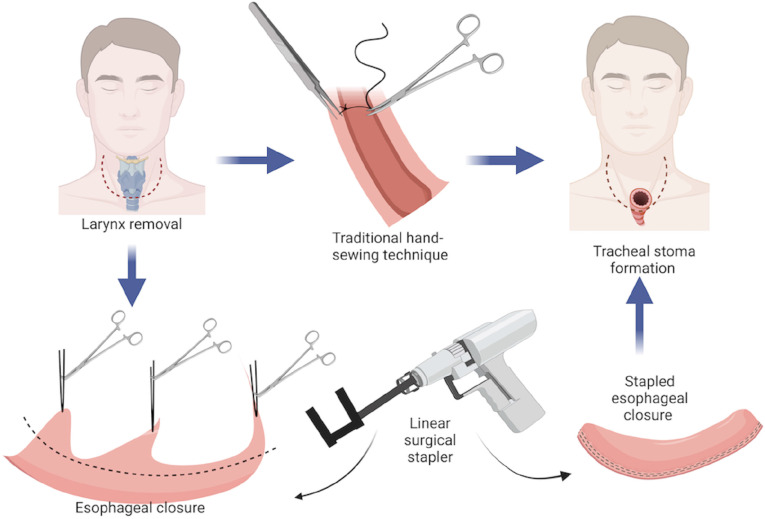
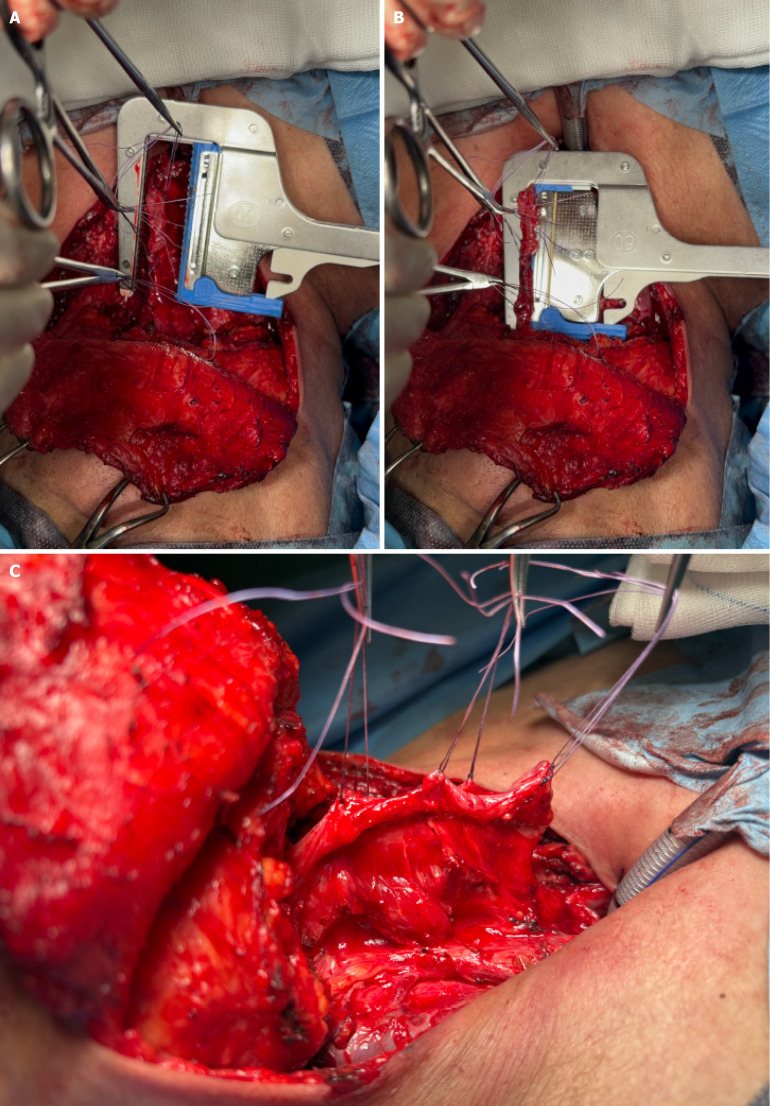
Methods: A total of 52 patients (44 men, 8 women), aged 43 to 77 years, underwent total laryngectomy. Esophageal reconstruction was performed using either a stapler (29 patients) or a hand-sewn technique (23 patients). A surgical stapler TA was used for esophageal closure in the stapler group. Patients were clinically monitored for fistula formation during the first 7 days postoperatively and again two weeks after discharge using fiberoptic examination.
Results: A total of 22 salivary fistulas were recorded: 17 (77.3%) occurred following the hand-sewn technique, while 5 (22.7%) developed in the stapler group. Additionally, preoperative radiotherapy was identified as a statistically significant risk factor for fistula formation. No technical complications related to the stapler device were observed.
Conclusion: Although hand-sewn closure is commonly used after total laryngectomy, stapler-assisted closure shows lower fistula rates and is a viable esophageal reconstruction alternative.
Keywords: Laryngeal cancer; Radiotherapy; Salivary fistula; Surgical stapler; Total laryngectomy.
©The Author(s) 2025. Published by Baishideng Publishing Group Inc. All rights reserved.
Conflict of interest statement
Conflict-of-interest statement: All the authors report no relevant conflicts of interest for this article.
Figures

References
-
- Cavaliere M, Bisogno A, Scarpa A, D'Urso A, Marra P, Colacurcio V, De Luca P, Ralli M, Cassandro E, Cassandro C. Biomarkers of laryngeal squamous cell carcinoma: a review. Ann Diagn Pathol. 2021;54:151787. - PubMed
-
- Korean Society of Thyroid-Head and Neck Surgery Guideline Task Force, Ahn SH, Hong HJ, Kwon SY, Kwon KH, Roh JL, Ryu J, Park JH, Baek SK, Lee GH, Lee SY, Lee JC, Chung MK, Joo YH, Ji YB, Hah JH, Kwon M, Park YM, Song CM, Shin SC, Ryu CH, Lee DY, Lee YC, Chang JW, Jeong HM, Cho JK, Cha W, Chun BJ, Choi IJ, Choi HG, Lee KD. Guidelines for the Surgical Management of Laryngeal Cancer: Korean Society of Thyroid-Head and Neck Surgery. Clin Exp Otorhinolaryngol. 2017;10:1–43. - PMC - PubMed
LinkOut - more resources
Full Text Sources
