


Untargeted metabolomics analysis of serum metabolic signatures as novel biomarkers for gastric carcinoma
- PMID: 40741199
- PMCID: PMC12305032
- DOI: 10.5306/wjco.v16.i7.108967
Untargeted metabolomics analysis of serum metabolic signatures as novel biomarkers for gastric carcinoma
Abstract
Background: In recent years, metabolomics has emerged as a novel platform for biomarker discovery. However, the metabolic profiles associated with gastric carcinoma (GC) remain insufficiently explored.
Aim: To examine the differences in metabolites between patients with GC and healthy controls, with the objective of identifying potential serum biomarkers for GC diagnosis through a non-targeted metabolomics approach.
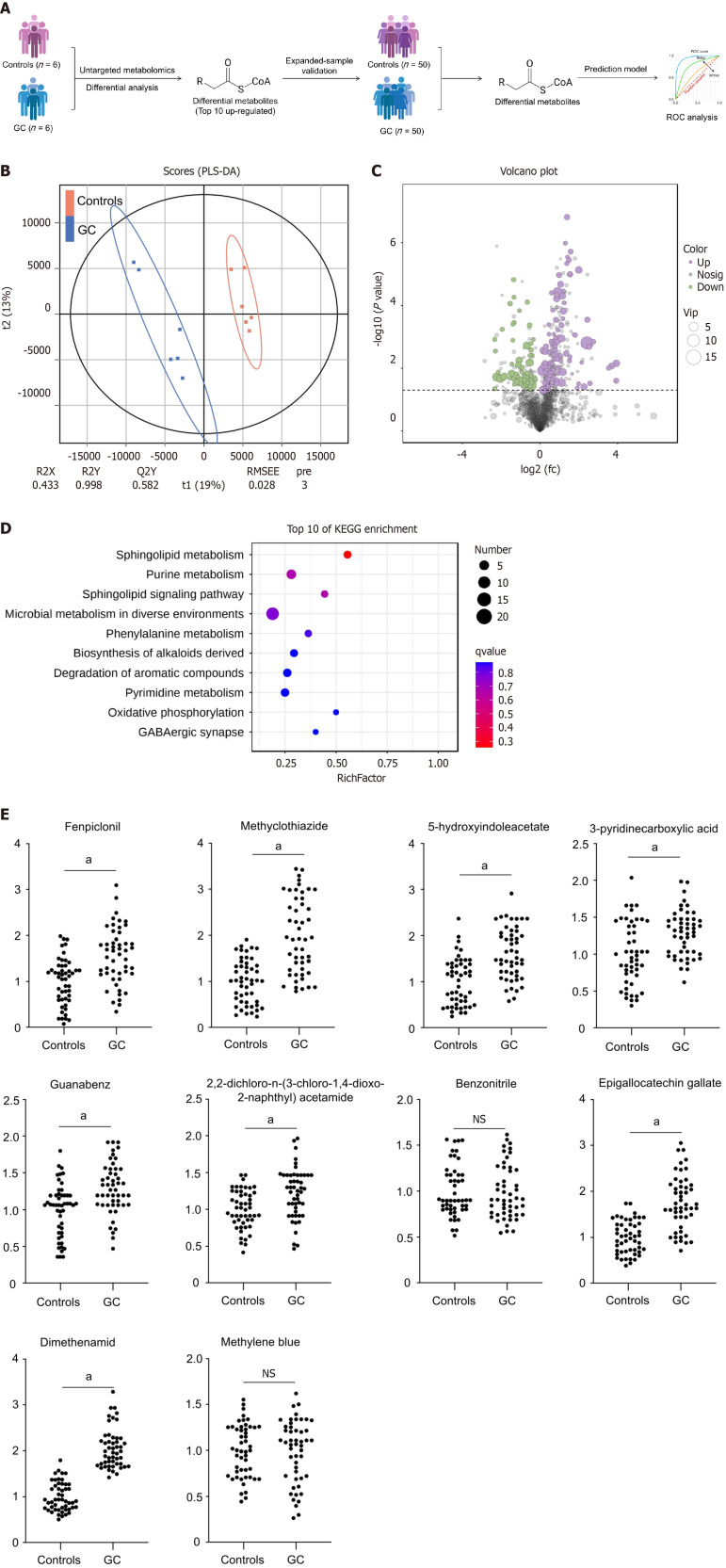
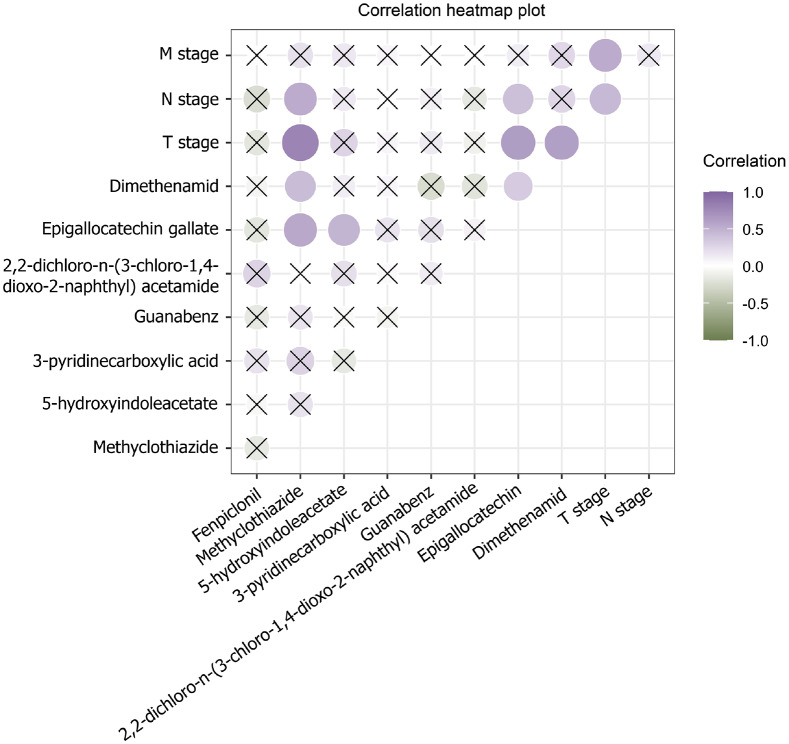
Methods: An untargeted metabolic analysis was conducted on serum samples from 6 patients with GC and 6 healthy controls. Subsequently, the differential metabolites identified were further validated in serum samples from an expanded cohort of 50 patients with GC and 50 healthy controls. The discriminative capacity of differential metabolites in distinguishing patients with GC from healthy controls was assessed utilizing the receiver operating characteristic curve analysis. The association between the serum levels of differential metabolites and the disease severity, as determined by the tumor-node-metastasis staging system, was evaluated using Spearman's rank correlation coefficient.
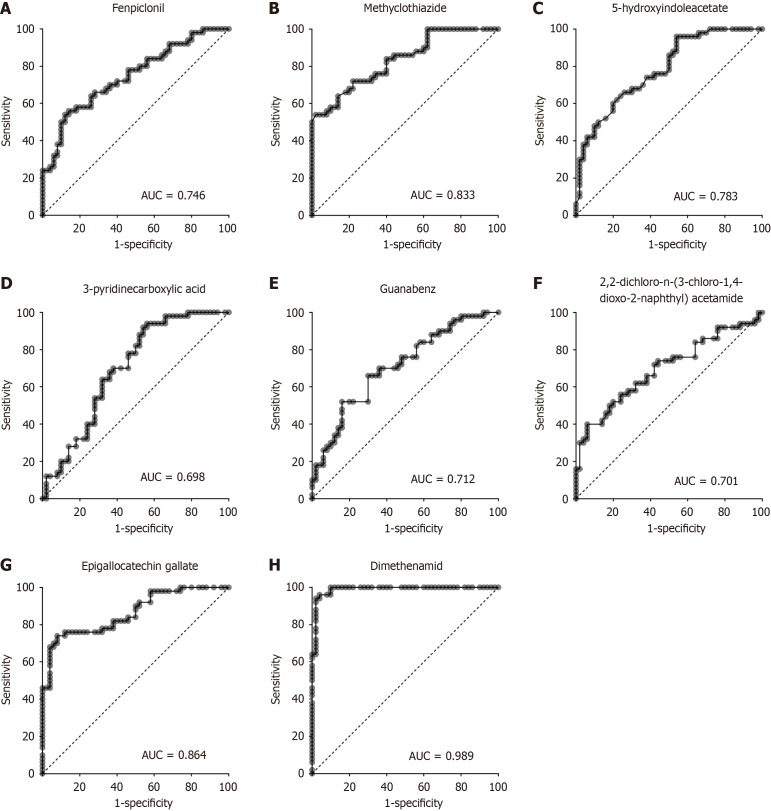
Results: Our findings revealed a significant alteration in the metabolic profile, characterized by 111 up-regulated and 55 down-regulated metabolites in patients with GC compared to healthy controls. Among the top 10 up-regulated metabolites, the serum concentrations of eight metabolites including fenpiclonil, methyclothiazide, 5-hydroxyindoleacetate, 3-pyridinecarboxylic acid, guanabenz, 2,2-dichloro-N-(3-chloro-1,4-dioxo-2-naphthyl) acetamide, epigallocatechin gallate, and dimethenamid, were further validated to be significantly elevated in a cohort of 50 patients diagnosed with GC compared to 50 healthy control subjects (P < 0.001). With the exception of 3-pyridinecarboxylic acid, the area under the curve values for the remaining seven metabolites exceeded 0.7, suggesting that these metabolites possess substantial diagnostic potential for distinguishing patients with GC from healthy individuals. Additionally, the serum concentrations of methyclothiazide (r = 0.615, P < 0.001), epigallocatechin gallate (r = 0.482, P = 0.004), and dimethenamid (r = 0.634, P < 0.001) demonstrated a significant positive correlation with the T stage in patients with GC. The serum concentrations of methyclothiazide (r = 0.438, P = 0.008) and epigallocatechin gallate (r = 0.383, P = 0.023) exhibited a significant positive correlation with the N stage in these patients.
Conclusion: This study provides insights into the metabolic alterations associated with GC, and the identification of these biomarkers may enhance the clinical detection and management of the disease.
Keywords: Biomarker; Diagnosis; Gastric carcinoma; Serum; Untargeted metabolomics.
©The Author(s) 2025. Published by Baishideng Publishing Group Inc. All rights reserved.
Conflict of interest statement
Conflict-of-interest statement: All the authors report no relevant conflicts of interest for this article.
Figures
References
-
- Bray F, Ferlay J, Soerjomataram I, Siegel RL, Torre LA, Jemal A. Global cancer statistics 2018: GLOBOCAN estimates of incidence and mortality worldwide for 36 cancers in 185 countries. CA Cancer J Clin. 2018;68:394–424. - PubMed
-
- Smyth EC, Nilsson M, Grabsch HI, van Grieken NC, Lordick F. Gastric cancer. Lancet. 2020;396:635–648. - PubMed
-
- López MJ, Carbajal J, Alfaro AL, Saravia LG, Zanabria D, Araujo JM, Quispe L, Zevallos A, Buleje JL, Cho CE, Sarmiento M, Pinto JA, Fajardo W. Characteristics of gastric cancer around the world. Crit Rev Oncol Hematol. 2023;181:103841. - PubMed
-
- Shimada H, Noie T, Ohashi M, Oba K, Takahashi Y. Clinical significance of serum tumor markers for gastric cancer: a systematic review of literature by the Task Force of the Japanese Gastric Cancer Association. Gastric Cancer. 2014;17:26–33. - PubMed
LinkOut - more resources
Full Text Sources
Miscellaneous
