


Integrated analysis of microRNA and mRNA interactions regulating fecundity in the ovaries of two distinct sheep breeds
- PMID: 40745523
- PMCID: PMC12312324
- DOI: 10.1186/s12864-025-11408-0
Integrated analysis of microRNA and mRNA interactions regulating fecundity in the ovaries of two distinct sheep breeds
Abstract
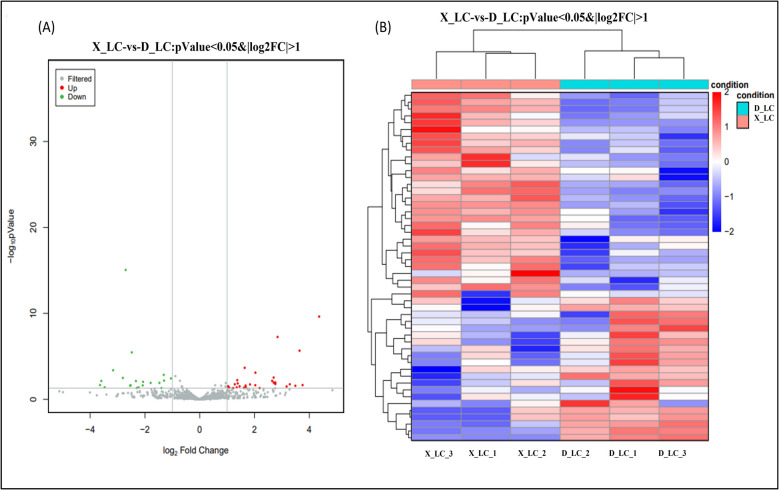
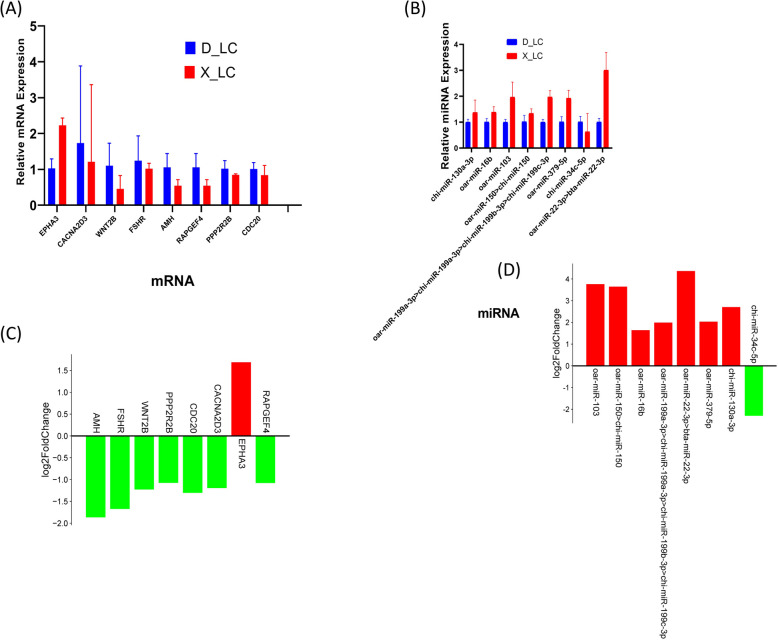
Sheep production is vital to the global agricultural economy, particularly for meat and wool. However, fertility varies significantly among breeds, influenced by genetics, nutrition, and environment. MicroRNAs (miRNAs) are crucial post-transcriptional regulators of gene expression, binding to target messenger RNAs (mRNAs) to inhibit translation or trigger degradation. Despite their importance, little is known about ovary-specific miRNAs and their target genes in high and low fecundity sheep breeds. Here, we investigated miRNA expression profiles in ovarian tissues from Small Tail Han (high fecundity) and Dolang sheep (low fecundity) using miRNA sequencing. The analysis identified 51 significantly differentially expressed miRNAs (DEmiRNAs), with only nine mapping to the reference genome (including oar-miR-103, oar-miR-16b). We predicted 88,699, 176,629, and 240,753 target mRNAs for these DEmiRNAs from sheep, goat, and cow, respectively. Functional enrichment analysis revealed significant biological processes and signaling pathways potentially associated with fecundity. Subsequently, we constructed a DEmiRNA-mRNA regulatory network, highlighting candidate miRNA-mRNA pairs like chi-miR-130a-3p-WNT2B, oar-miR-103-FSHR, and oar-miR-16b-AMH. These findings provide insights into the potential regulators of sheep fecundity. We further validated these candidate miRNA-mRNA interactions using qRT-PCR to explore their roles in regulating sheep fecundity. Overall, this study utilized miRNA sequencing to analyze ovarian miRNA expression in sheep and identified potential miRNA-mRNA targets associated with fecundity. This lays the foundation for future research on the molecular mechanisms underlying sheep ovarian physiology and improving reproductive traits.
Keywords: Fecundity; Ovary; Ovine tissue; Sheep; Transcriptome; miRNA.
© 2025. The Author(s).
Conflict of interest statement
Declarations. Ethics approval and consent to participate: All the procedures involving animals were approved by the animal care and use committee at the Institute of Animal Sciences, Chinese Academy of Agricultural Sciences (NO. IAS2019-82), where the study was conducted. All the experiments were performed in accordance with ARRIVE guidelines and regulations set by the Ministry of Agriculture of the People’s Republic of China. Consent for publication: Not applicable. Competing interests: The authors declare no competing interests.
Figures
References
-
- Souza CJ, MacDougall C, MacDougall C, Campbell BK, McNeilly AS, Baird DT. The Booroola (FecB) phenotype is associated with a mutation in the bone morphogenetic receptor type 1 B (BMPR1B) gene. J Endocrinol. 2001;169(2):R1-6. - PubMed
-
- Braw-Tal R, McNatty KP, Smith P, Heath DA, Hudson NL, Phillips DJ, et al. Ovaries of ewes homozygous for the X-linked Inverdale gene (FecXI) are devoid of secondary and tertiary follicles but contain many abnormal structures. Biol Reprod. 1993;49(5):895–907. - PubMed
MeSH terms
Substances
Grants and funding
LinkOut - more resources
Full Text Sources
