


Addressing the silent threat: managing invasive Candida infections in hospitalized newborns
- PMID: 40746356
- PMCID: PMC12310728
- DOI: 10.3389/fped.2025.1613832
Addressing the silent threat: managing invasive Candida infections in hospitalized newborns
Abstract
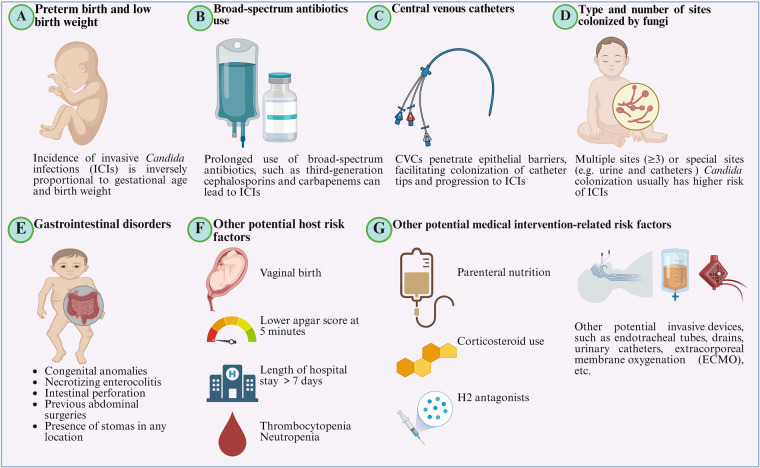
Invasive fungal infections (IFIs) remain an important problem for hospitalized newborn infants receiving intensive care, given their substantial morbidity and mortality. Candida species (Candida spp.) are the major fungal pathogens, which cause the so-called invasive Candida infections (ICIs). Of these, Candida albicans is the most commonly isolated species, followed by Candida parapsilosis. Other identified Candida spp. include Candida glabrata, Candida tropicalis, Candida krusei, etc. However, an increasing shift in the epidemiology of ICIs worldwide has been described, non-albicans Candida (NAC) spp. ICIs pose a growing threat to neonates. Herein, we examine the epidemiology of Candida spp. infections, patterns of antifungal resistance, risk factors, prevention strategies, clinical outcomes, and treatment recommendations for ICIs in hospitalized newborn infants. This review aims to provide a thorough understanding of the current evidence on ICIs to better inform targeted prevention strategies and improved treatments to reduce neonatal morbidity and mortality.
Keywords: antifungal resistance; invasive Candida infections (ICIs); newborn infants; pathogens; prevention strategies; risk factors; treatments.
© 2025 Zhang, Xie, Yuan, He, Dong and Lei.
Conflict of interest statement
The authors declare that the research was conducted in the absence of any commercial or financial relationships that could be construed as a potential conflict of interest.
Figures
References
Publication types
LinkOut - more resources
Full Text Sources
Miscellaneous
