


Towards predicting implant-induced fibrosis: A standardized network model of macrophage-fibroblast interactions
- PMID: 40746411
- PMCID: PMC12312070
- DOI: 10.1016/j.csbj.2025.07.022
Towards predicting implant-induced fibrosis: A standardized network model of macrophage-fibroblast interactions
Abstract
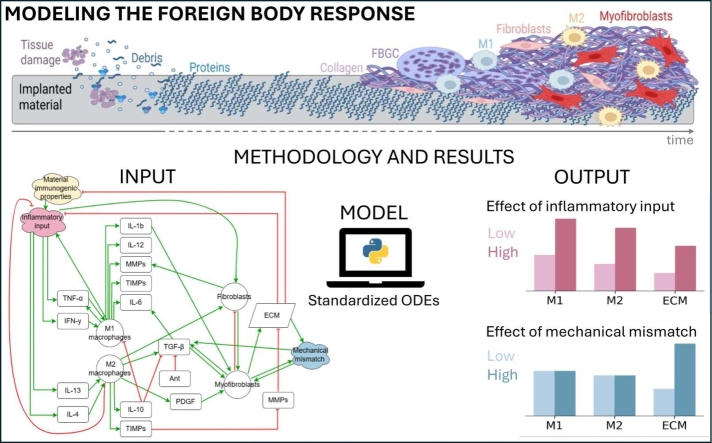
The foreign body response (FBR) is a complex and multifaceted process that remains incompletely understood, often leading to complications in medical device integration. In this study, we constructed a literature-based network of the FBR and developed it into a semi-quantitative predictive model to better understand its dynamics. The in silico FBR model incorporates key material-related factors, including immunogenic properties and mechanical mismatch, which influence immune cell activation and extracellular matrix (ECM) deposition. Predictions align with existing knowledge, showing that material stiffness and tissue progressive stiffening due to increased ECM deposition can exacerbate the FBR and that feedback interactions can protect the system from pathological outcome by gradually reducing the initial inflammatory input. The model also successfully replicated six out of eight experimental cases of anti-fibrotic interventions, demonstrating its potential as a predictive tool. Assessing implant safety in the early pre-clinical stages of device development is critical for ensuring long-term functionality and reducing adverse reactions. By systematically analyzing and integrating all interacting aspects of the FBR, in silico modeling can provide valuable insights and complement in vitro and in vivo studies for improved implant safety assessment.
Keywords: Fibrotic tissue; Foreign body response; Immune response; Mechanotransduction; Standardized ordinary differential equations.
© 2025 The Authors.
Conflict of interest statement
The authors declare that they have no known competing financial interests or personal relationships that could have appeared to influence the work reported in this paper.
Figures
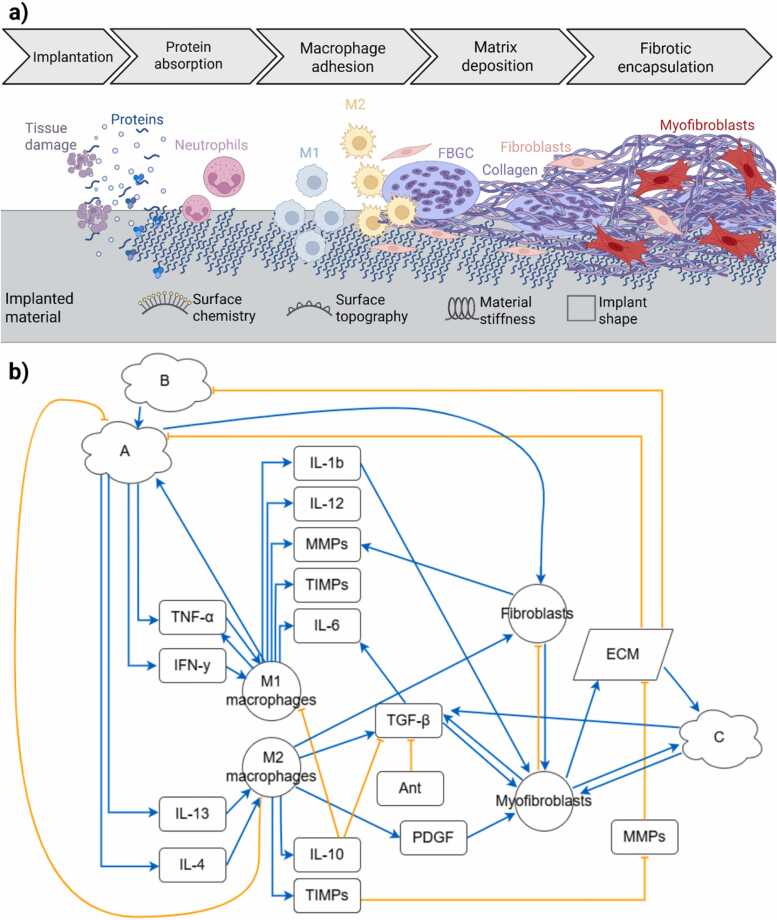
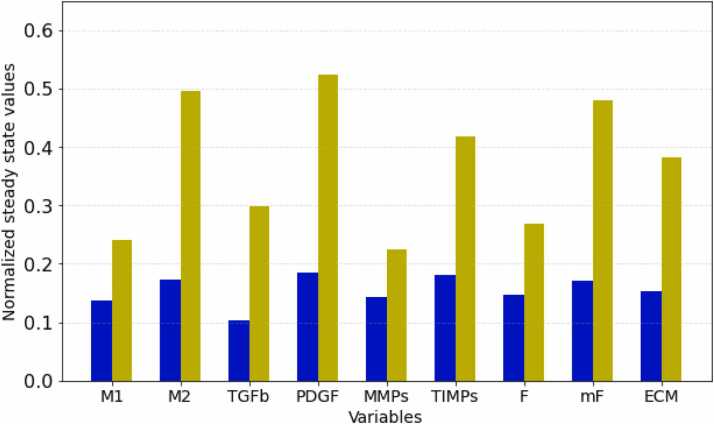
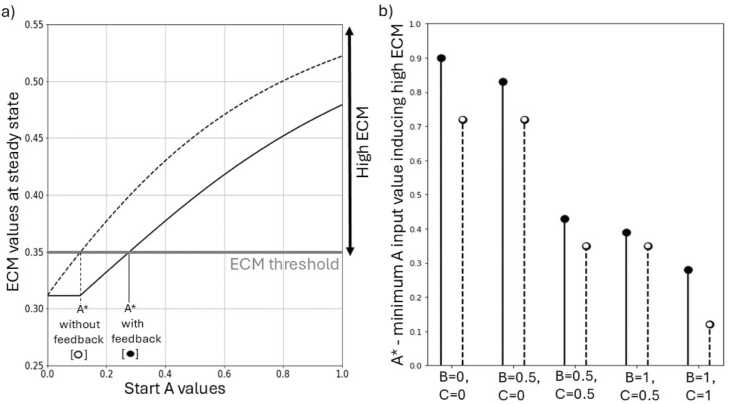
 C= 0. The normalized value at steady state between 0 and 1 represents the normalized concentration level (see Methods Section 2.2). M1 (macrophages of type 1), M2 (macrophages of type 2), TGF-β (transforming growth factor-β), PDGF (platelet derived growth factor), MMPs (matrix metalloproteinases), TIMPs (tissue inhibitors of metalloproteinases), F (fibroblasts), mF (myofibroblasts), ECM (extracellular matrix).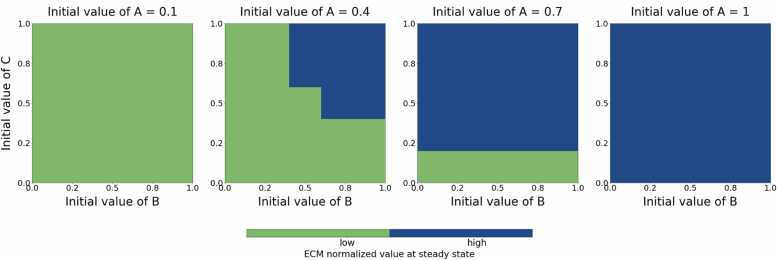
References
-
- Callaghan N.I., et al. Cell dynamics and metabolism of the foreign body response: characterizing host-biomaterial interactions for next-generation medical implant biocompatibility. Mater Adv. 2024;5(17):6719–6738.
-
- Klopfleisch R., Jung F. The pathology of the foreign body reaction against biomaterials. J Biomed Mater Res Part A. 2017;105(3):927–940. - PubMed
-
- Dolan E.B., et al. An actuatable soft reservoir modulates host foreign body response. Sci Robot. 2019;4(33):eaax7043. - PubMed
-
- <Guidance-ISO-10993-1.pdf>.
LinkOut - more resources
Full Text Sources