


Vector-borne infectious diseases in pregnancy in the era of climate change: A focus on mosquito- and tick-borne pathogens (Review)
- PMID: 40746445
- PMCID: PMC12311562
- DOI: 10.3892/etm.2025.12924
Vector-borne infectious diseases in pregnancy in the era of climate change: A focus on mosquito- and tick-borne pathogens (Review)
Abstract
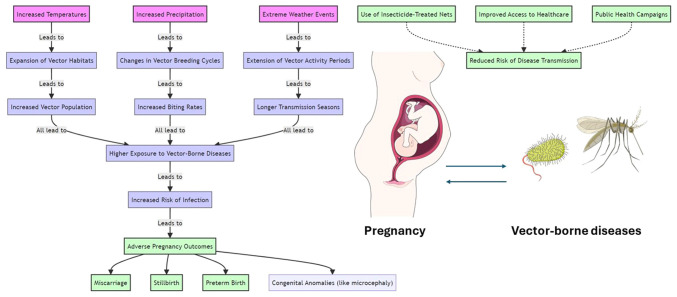
The escalating challenges posed by climate change have profound implications for public health, particularly concerning the interplay between pregnancy and vector-borne infections. This review explores the multifaceted interactions between climate change, vector ecology, and pregnancy, with a focus on pathogens such as malaria, Zika virus, and dengue fever. For pregnant women, these vector-borne infections carry significant risks, including miscarriage, stillbirth, preterm birth, and congenital anomalies, necessitating urgent and effective public health responses. Highlighting the heightened vulnerability of pregnant women to these diseases, the review outlines the significant risks, including miscarriage, stillbirth, preterm birth, and congenital anomalies. It advocates actionable public health responses, emphasizing the urgent need for enhanced surveillance systems to monitor vector populations and disease incidence, particularly in climate-vulnerable regions. By integrating preventive measures and timely medical interventions into maternal healthcare systems, the study provides a pathway to mitigating adverse outcomes. Additionally, the findings underscore the importance of interdisciplinary approaches to bridge gaps between climate adaptation, vector control, and healthcare strategies. These insights not only enhance our understanding of a critical health challenge but also serve as a foundation for advancing medical research and healthcare practices, thereby promoting resilience in vulnerable populations.
Keywords: climate change; disease surveillance; pregnancy; public health; vector-borne infections.
Copyright: © 2025 Georgakopoulou et al.
Conflict of interest statement
DAS is the editor-in-chief for the journal, but had no personal involvement in the reviewing process, or any influence in terms of adjudicating on the final decision, for this article. The other authors declare that they have no competing interests.
Figures

References
Publication types
LinkOut - more resources
Full Text Sources