


The Antimicrobial and Antioxidant Properties of Raw, Aged, and Fermented Garlic: Influence of Processing Methods
- PMID: 40746652
- PMCID: PMC12311394
- DOI: 10.1002/fsn3.70743
The Antimicrobial and Antioxidant Properties of Raw, Aged, and Fermented Garlic: Influence of Processing Methods
Abstract
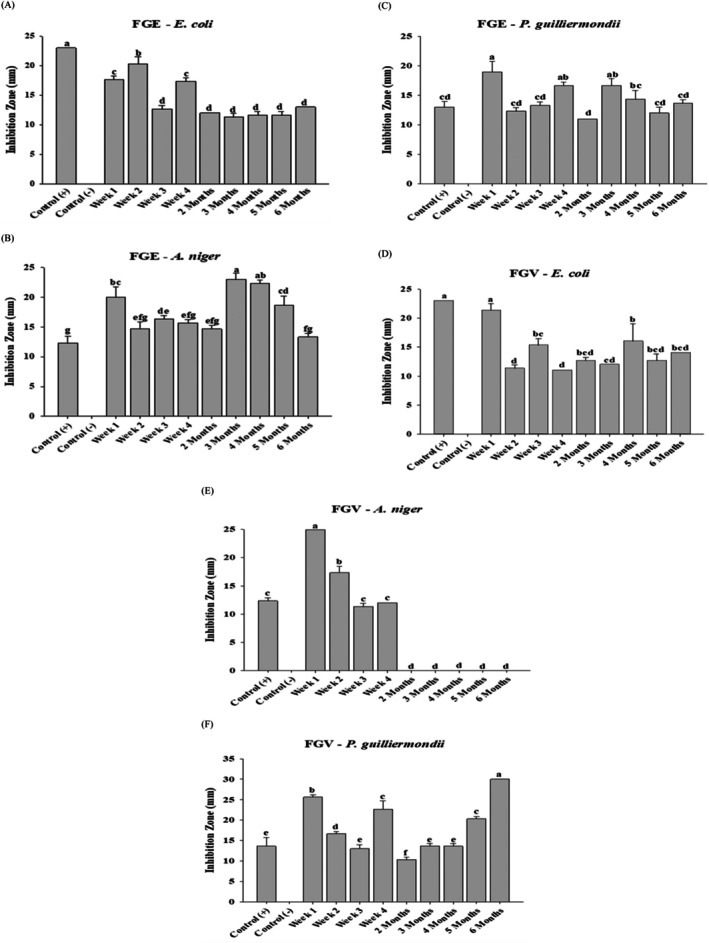
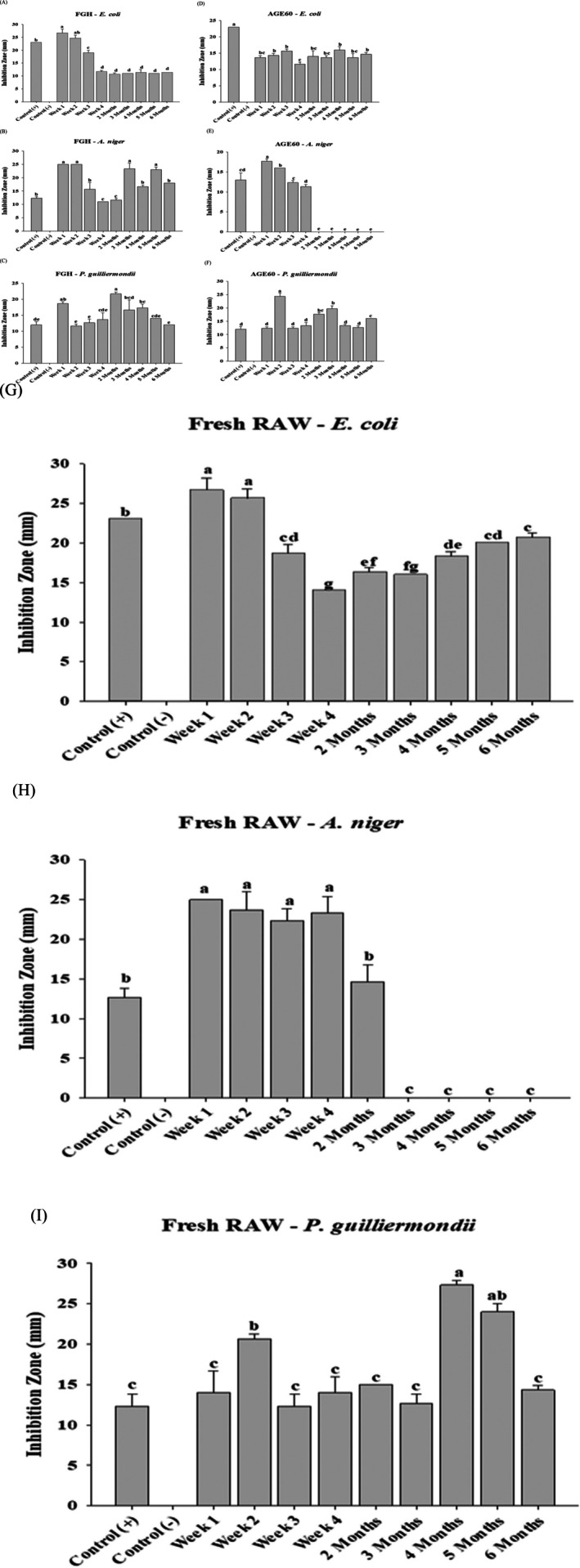
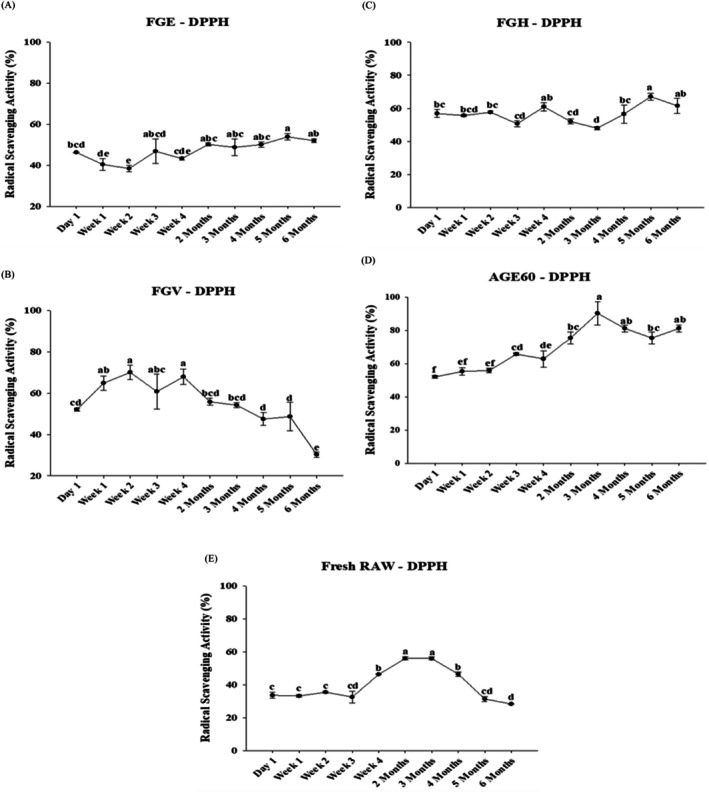
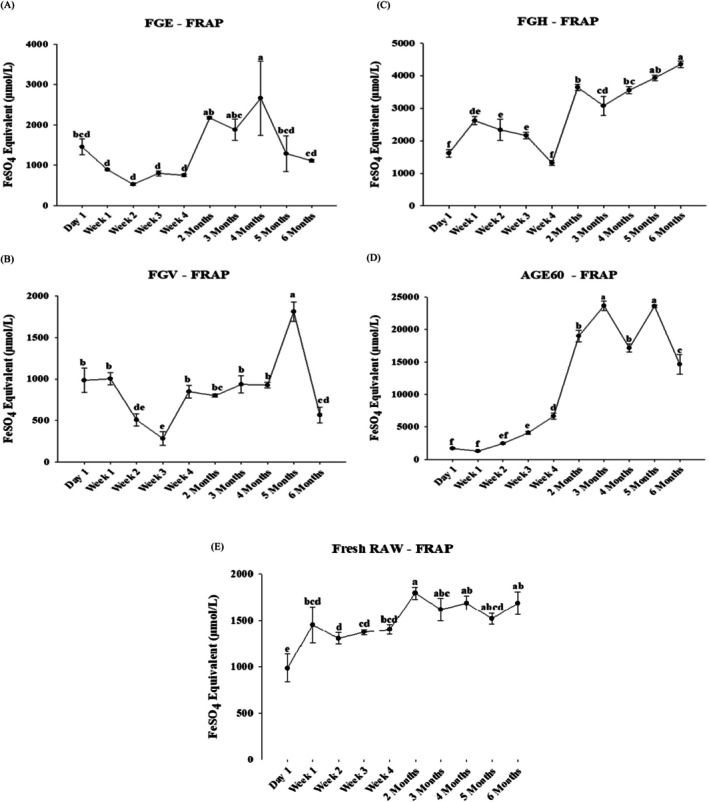
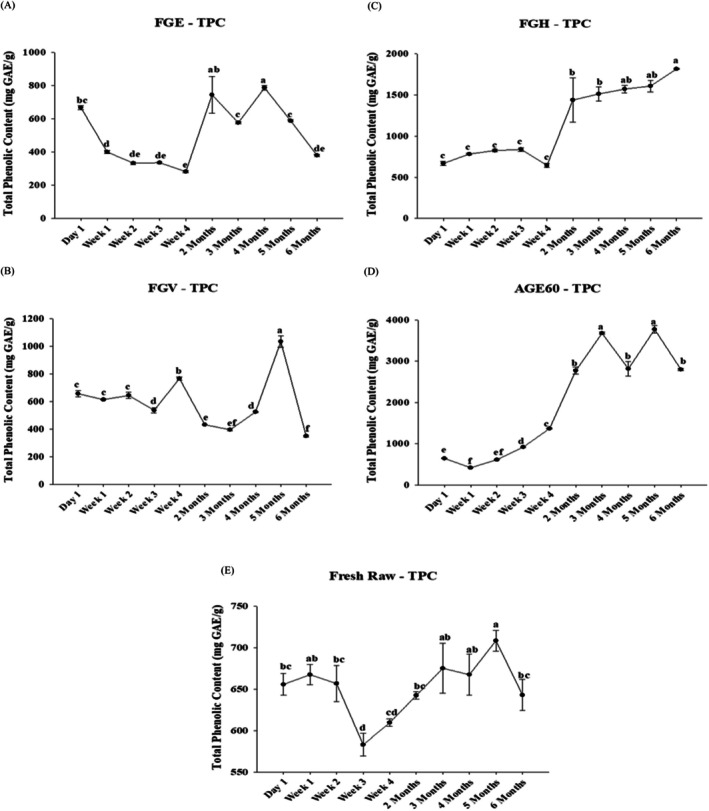
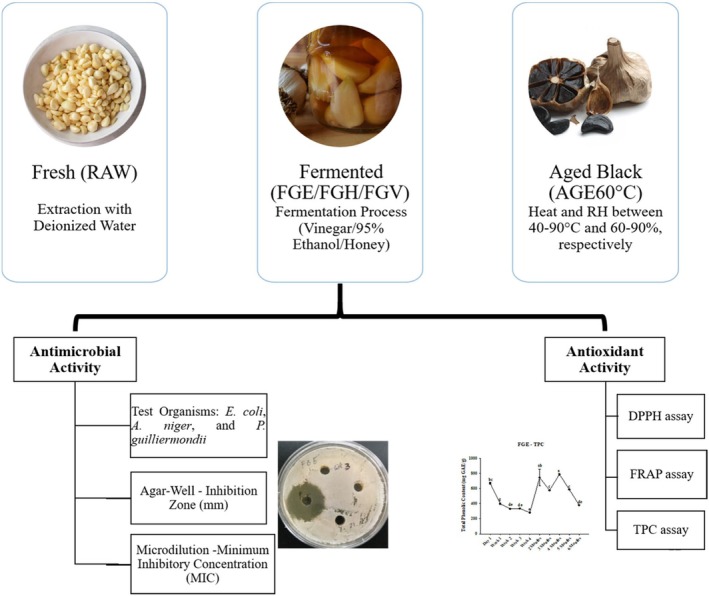
Garlic (Allium sativum L.) is widely recognized for its bioactive properties, primarily attributed to its sulfur-containing compounds (SCs), which provide both prophylactic and therapeutic benefits. This study evaluates the antimicrobial and antioxidant activities of raw, aged, and fermented garlic, utilizing ultrasound-assisted extraction (UAE). Processed garlic samples, including fermented garlic in fruit vinegar (FGV), honey (FGH), ethanol (FGE), aged garlic (AGE60), and fresh raw garlic (RAW), were analyzed to determine the effects of different processing methods on their functional properties. Antimicrobial activity was assessed using the agar well diffusion method to measure inhibition zones (IZ) and microdilution techniques to determine the minimum inhibitory concentration (MIC) against Escherichia coli, Aspergillus niger, and Pichia guilliermondii. The results indicate that FGV, FGH, FGE, and AGE60 exhibited notable antimicrobial activity, while RAW garlic demonstrated the strongest antimicrobial effects, primarily due to its high allicin content and other sulfur-containing organosulfur compounds (OSCs), which are recognized as potent antimicrobial agents. Antioxidant capacity was evaluated through free radical scavenging activity (RSA) using the 1,1-diphenyl-2-picrylhydrazyl (DPPH) assay, ferric reducing antioxidant power (FRAP), and total phenolic content (TPC). AGE60, FGH, and FGV exhibited the highest antioxidant activity, with fermentation and aging processes contributing to the production of flavonoids and phenolic compounds, thereby enhancing antioxidative capacity. However, these processing methods did not significantly improve antimicrobial properties. These findings highlight the impact of processing methods on garlic's functional properties, suggesting that different processing techniques may be tailored to optimize specific health benefits.
Keywords: aged garlic; antimicrobial; antioxidation; organosulfur compounds.
© 2025 The Author(s). Food Science & Nutrition published by Wiley Periodicals LLC.
Conflict of interest statement
The authors declare no conflicts of interest.
Figures
References
-
- Ahmad Nejhad, A. , Alizadeh Behbahani B., Hojjati M., Vasiee A., and Mehrnia M. A.. 2023. “Identification of Phytochemical, Antioxidant, Anticancer and Antimicrobial Potential of <styled-content style="fixed-case"> Calotropis procera </styled-content> Leaf Aqueous Extract.” Scientific Reports 13, no. 1: 14716. 10.1038/s41598-023-42086-1. - DOI - PMC - PubMed
-
- Alizadeh Behbahani, B. , and Imani Fooladi A. A.. 2018. “Antibacterial Activities, Phytochemical Analysis and Chemical Composition Makhlaseh Extracts Against the Growth of Some Pathogenic Strain Causing Poisoning and Infection.” Microbial Pathogenesis 114: 204–208. 10.1016/j.micpath.2017.12.002. - DOI - PubMed
-
- Benzie, I. F. , and Strain J. J.. 1996. “The Ferric Reducing Ability of Plasma (FRAP) as a Measure of ‘Antioxidant Power’: The FRAP Assay.” Analytical Biochemistry 239, no. 1: 70–76. - PubMed
-
- Bergen, A. , Roemhild S., and Santoro D.. 2024. “Minimum Inhibitory and Bactericidal/Fungicidal Concentration of Commercially Available Products Containing Essential Oils, Zinc Gluconate, or 4% Chlorhexidine for Malassezia Pachydermatis, Pseudomonas Aeruginosa, and Multi‐Drug Resistant <styled-content style="fixed-case"> Staphylococcus pseudintermedius </styled-content> Canine Clinical Isolates.” Veterinary Research Communications 48, no. 6: 3699–3709. 10.1007/s11259-024-10528-4. - DOI - PubMed
-
- Blois, M. S. 1958. “Antioxidant Determinations by the Use of a Stable Free Radical.” Nature 181, no. 4617: 1199–1200.
LinkOut - more resources
Full Text Sources
Miscellaneous
