


Material Safety of Styrene-Block-Ethylene/Butylene-Block-Styrene Copolymers Used for Cardiac Valves: 6-Month In Vivo Results from a Juvenile Sheep Model
- PMID: 40748729
- PMCID: PMC12365636
- DOI: 10.1093/ejcts/ezaf266
Material Safety of Styrene-Block-Ethylene/Butylene-Block-Styrene Copolymers Used for Cardiac Valves: 6-Month In Vivo Results from a Juvenile Sheep Model
Abstract
Objectives: To assess the in vivo 6-month safety of styrene-block-ethylene/butylene-block-styrene (SEBS) block copolymers material used to make cardiac valves.
Methods: Research-grade mitral valve prototypes made from SEBS29/SEBS20 copolymers (n = 7; 3 with heparin-coating) were implanted in juvenile sheep under cardiopulmonary bypass and kept for 6 months. No vitamin K antagonists were used. Anticoagulation included enoxaparin 1 mg/kg SC twice/day from day 1 until day 120 along with clopidogrel 300 mg once/day with food from day 1 until sacrifice. Safety measures included SEBS-related calcification, degradation, haemolysis, cytotoxicity, clinical pathology (biochemistry, complete blood count, coagulation), structural integrity, damage to surrounding tissue, overall animal health, and device embolization and function.
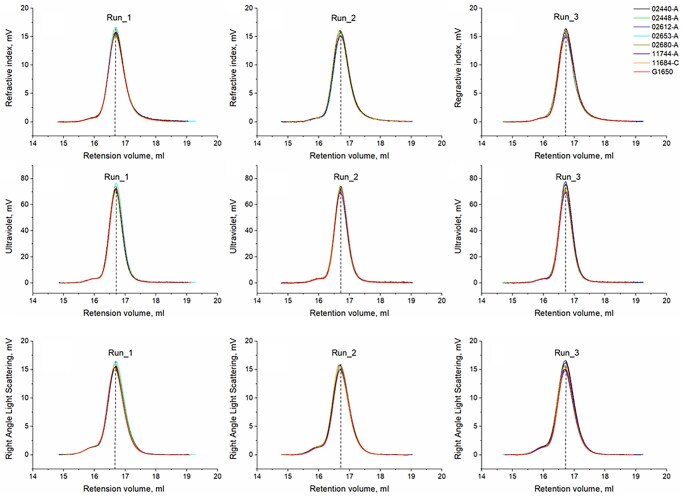
Results: Surgery was feasible in all cases. Four animals reached the final 180 ± 5 days timepoint, while 1 needed non-SEBS related sacrifice on day 2, 1 suffered non-SEBS related death on day 81, and 1 needed sacrifice on day 169 due to prototype dysfunction. High-resolution X-ray, spectroscopy and histology showed absence of SEBS calcification, while gel permeation chromatography confirmed no SEBS degradation at 6 months. At histology, there was no SEBS-related calcification, thrombosis, cytotoxic or neoplastic degeneration, and no damage of the cardiac and downwards organs. Blood testing showed no haemolysis, while clinical pathology and animal health remained within normal reference intervals. The function of the research-grade mitral prototypes was clinically acceptable. The use of heparin-coating did not add benefit.
Conclusions: This preclinical in vivo study in juvenile sheep confirms the 6-month safety of SEBS29/SEBS20 material used to make cardiac valves. A future early feasibility study is warranted to confirm long-term durability, haemocompatibility, and function in humans.
Keywords: SEBS co-polymers; calcification; cardiac valves; material safety; preclinical testing.
© The Author(s) 2025. Published by Oxford University Press on behalf of the European Association for Cardio-Thoracic Surgery.
Conflict of interest statement
R.A., G.D.M., M.S., and J.R.S. are co-inventors of a new heart valve that is made from commercial SEBS materials. They have board membership on CamBris Cardiac, a spin-out formed by the Universities of Cambridge and Bristol to oversee the development and adoption of the new valve. There are no other known conflicts of interest.
Figures


References
-
- Osnabrugge RLJ, Mylotte D, Head SJ, et al. Aortic stenosis in the elderly: disease, prevalence and number of candidates for transcatheter aortic valve replacement: a meta-analysis and modelling study. J Am Coll Cardiol. 2013;62:1002-1012. - PubMed
-
- Nkomo VT, Gardin JM, Skelton TN, Gottdiener JS, Scott CG, Enriquez-Sarano M. Burden of valvular heart disease: a population-based study. Lancet. 2006;368:1005-1011. - PubMed
-
- Watkins DA, Johnson CO, Colquhoun SM, et al. Global, regional and national burden of rheumatic heart disease 1990-2015. N Engl J Med. 2017;377:713-722. - PubMed
-
- Kim KM, Shannon F, Paone G, et al. Evolving trends in aortic valve replacement: a statewide experience. J Card Surg. 2018;33:424-430. - PubMed
MeSH terms
Substances
Grants and funding
LinkOut - more resources
Full Text Sources
