


Postoperative functional training program for vascularised Iliac flap donor site in jaw defect reconstruction based on the Delphi method
- PMID: 40753339
- PMCID: PMC12318053
- DOI: 10.1038/s41598-025-13774-x
Postoperative functional training program for vascularised Iliac flap donor site in jaw defect reconstruction based on the Delphi method
Abstract
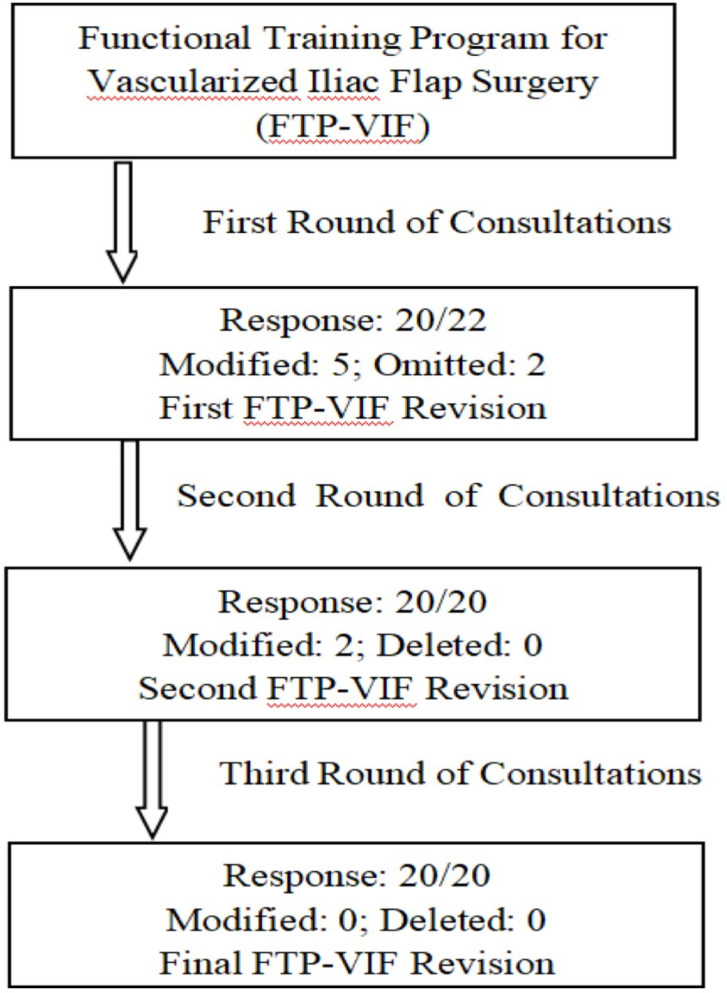
Vascularised iliac flaps (VIFs) are widely used for the reconstruction of jawbone defects; however, postoperative donor-site complications, such as gait disturbances, with an incidence of 13.9-50%, significantly impede patient recovery. Despite this, evidence-based rehabilitation protocols specific to VIFs remain lacking. Existing rehabilitation guidelines for hip surgeries are unsuitable owing to differences in surgical mechanisms. This study employed the Delphi method, engaging 20 multidisciplinary experts (oral and maxillofacial surgery: 5; orthopaedics: 7; rehabilitation: 6; nursing: 2). Through three rounds of anonymous consultations, and by integrating literature evidence with postoperative mobility assessments, we developed a phased, individualised progressive functional training (PFT) protocol featuring dynamic evaluation, coordinated activation of abdominal and hip muscle groups, and safe exercise strategies during head and neck immobilisation, while overcoming conventional hip rehabilitation limitations (e.g., restrictions on flexion < 90°, and bans on squatting or cross-legged sitting). PFT is structured into six progressive phases, with exercise intensity tailored to assessment outcomes. A single-centre randomised controlled trial (n = 62) demonstrated that PFT significantly accelerated lower limb functional recovery, improved hip mobility and balance, reduced donor-site pain, and enhanced quality of life (University of Washington Quality of Life questionnaire: F (1,60) = 17.262, P < 0.001), without increasing the risk of flap vascular compromise or iliac hematoma. The limitations of the study include the single-centre design and lack of cross-cultural validation. Future multicentre studies are required to enhance adaptability. This study establishes a foundational yet effective framework for post-VIF rehabilitation, guiding clinical practice and research advancements.
Keywords: Delphi method; Functional training; Nursing; Vascularised iliac flap.
© 2025. The Author(s).
Conflict of interest statement
Declarations. Competing interests: The authors declare no competing interests. Consent for publication: All authors have provided their explicit consent for the publication of this manuscript.
References
-
- Brown, J. S. et al. Vascularized iliac crest with internal oblique muscle for immediate reconstruction after maxillectomy. Br. J. Oral Maxillofac. Surg.40, 183–190. 10.1054/bjom.2001.0774 (2002). - PubMed
-
- Navarro Cuellar, C. et al. Mandibular reconstruction with iliac crest free flap, nasolabial flap, and osseointegrated implants. J. Oral Maxillofac. Surg.10.1016/j.joms.2014.02.031 (2014). - PubMed
-
- Zheng, L. et al. Deep circumflex iliac artery perforator flap with iliac crest for oromandibular reconstruction. J. Craniomaxillofac. Surg.46, 1263–1267. 10.1016/j.jcms.2018.04.021 (2018). - PubMed
-
- Taylor, G. I., Townsend, P. & Corlett, R. Superiority of the deep circumflex iliac vessels as the supply for free groin flaps. Clin. Work. Plast. Reconstr. Surg.64, 745–759. 10.1097/00006534-197912000-00001 (1979). - PubMed
-
- Rendenbach, C. et al. Evaluation of long-term functional donor-site morbidity after deep circumflex iliac crest artery bone flap harvest. Microsurgery39, 304–309. 10.1002/micr.30358 (2019). - PubMed
Publication types
MeSH terms
Grants and funding
- PKUSSNCT-22A15/the Program for New Clinical Techniques and Therapies of Peking University School and Hospital of Stomatology
- PKUSSNKP-202120/the Project of National Clinical Key Department Construction of Peking University School and Hospital of Stomatology
- 2022YFC2504203/National Key Research and Development Program
LinkOut - more resources
Full Text Sources
Medical
