


Predictive Value of Cortical Transit Time on Diuretic Renography in Determining the Need for Surgery and Evaluating the Postoperative Outcome in Ureteropelvic Junction Obstruction in Children: A Prospective Observational Study
- PMID: 40756044
- PMCID: PMC12316415
- DOI: 10.4103/jiaps.jiaps_12_25
Predictive Value of Cortical Transit Time on Diuretic Renography in Determining the Need for Surgery and Evaluating the Postoperative Outcome in Ureteropelvic Junction Obstruction in Children: A Prospective Observational Study
Abstract
Background: Ureteropelvic junction obstruction (UPJO) is the most common cause of antenatal hydronephrosis. Although the majority of them improve with time, none of the existing diagnostic modalities can accurately predict which hydronephrotic kidney is at the risk of progressive renal damage and will benefit from early surgery. Few authors have suggested that a delayed cortical transit time (CTT) on diuretic renography is a reliable prognostic factor for both the need for surgery and renal functional improvement after surgery.
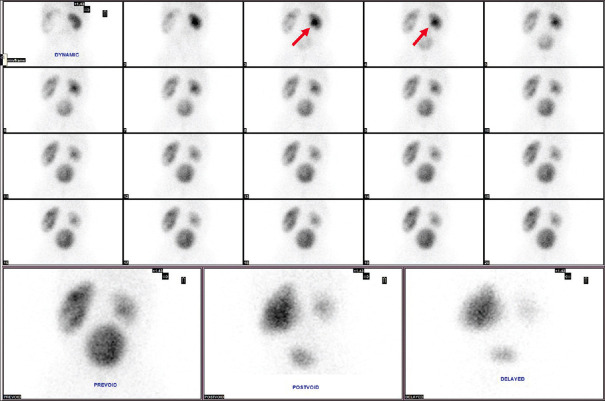
Methodology: We designed this prospective observational study on CTT in 99mTc-EC renal scan of all the unilateral UPJO patients of mean age were 2.15 years (0-5 years) managed in our institute. All patients diagnosed antenatally or postnatally with unilateral hydronephrosis, possibly due to UPJO, were evaluated and investigated. 99mTc-EC renogram was done. The detailed data were collected on CTT, differential renal function, the drainage pattern, and other parameters measured in a diuretic renogram. The management of these patients was done as per the standard institutional protocol, and there was no deviation due to inclusion in this study. Linear correlation between two continuous variables was explored using Pearson's correlation (if the data were normally distributed) and Spearman's correlation (for nonnormally distributed data).
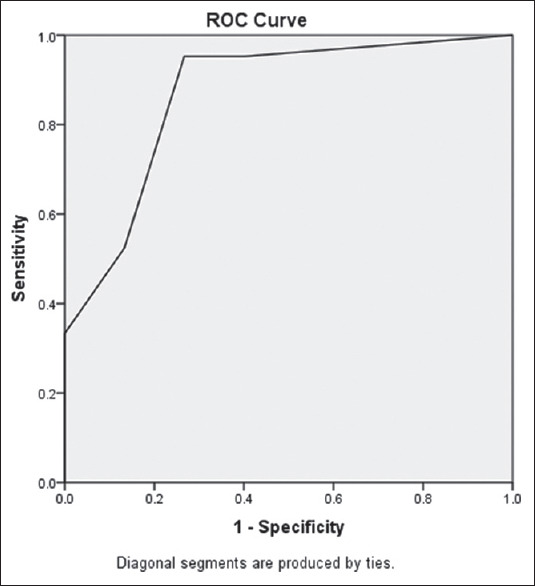
Results: We found a CTT of more than 210 s to be associated with a 95% sensitivity and 74% specificity for the requirement of surgery in children with unilateral UPJO. The limitation of our study was the small sample size (n = 36). However, a multicentric study with a large sample size may confirm our findings.
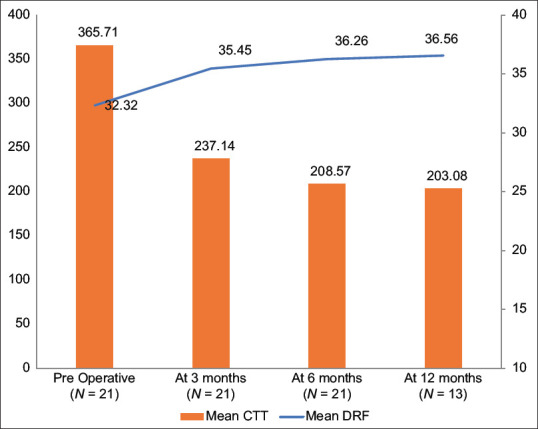
Conclusion: The predictive value of CTT as a reliable and sensitive indicator of surgery and early recovery even after 3 months of surgery. CTT can be used to identify reliably those subset of patients with unilateral UPJO who will deteriorate irreversibly. We are proposing the cutoff value of CTT to be 210 s, unlike several previous researchers, who have found a cutoff value of 180 to be significant.
Keywords: Anteroposterior pelvic diameter; cortical transit time; hydronephrosis; pyeloplasty; ureteropelvic junction obstruction.
Copyright: © 2025 Journal of Indian Association of Pediatric Surgeons.
Conflict of interest statement
There are no conflicts of interest.
Figures
References
-
- Krajewski W, Wojciechowska J, Dembowski J, Zdrojowy R, Szydełko T. Hydronephrosis in the course of ureteropelvic junction obstruction: An underestimated problem? Current opinions on the pathogenesis, diagnosis and treatment. Adv Clin Exp Med. 2017;26:857–64. - PubMed
-
- Duong HP, Piepsz A, Collier F, Khelif K, Christophe C, Cassart M, et al. Predicting the clinical outcome of antenatally detected unilateral pelviureteric junction stenosis. Urology. 2013;82:691–6. - PubMed
-
- de Grauw AM, den Dekker HT, de Mol AC, Rombout-de Weerd S. The diagnostic value of routine antenatal ultrasound in screening for congenital uropathies. J Matern Fetal Neonatal Med. 2016;29:237–41. - PubMed
-
- Koff SA. Requirements for accurately diagnosing chronic partial upper urinary tract obstruction in children with hydronephrosis. Pediatr Radiol. 2008;38(Suppl 1):S41–8. - PubMed
-
- Piepsz A, Tondeur M, Nogarède C, Collier F, Ismaili K, Hall M, et al. Can severely impaired cortical transit predict which children with pelvi-ureteric junction stenosis detected antenatally might benefit from pyeloplasty? Nucl Med Commun. 2011;32:199–205. - PubMed
LinkOut - more resources
Full Text Sources