


Exploring the link between burning mouth syndrome and human herpesvirus-6B: a narrative review on pathogenesis
- PMID: 40756883
- PMCID: PMC12315221
- DOI: 10.1080/03036758.2024.2406818
Exploring the link between burning mouth syndrome and human herpesvirus-6B: a narrative review on pathogenesis
Abstract
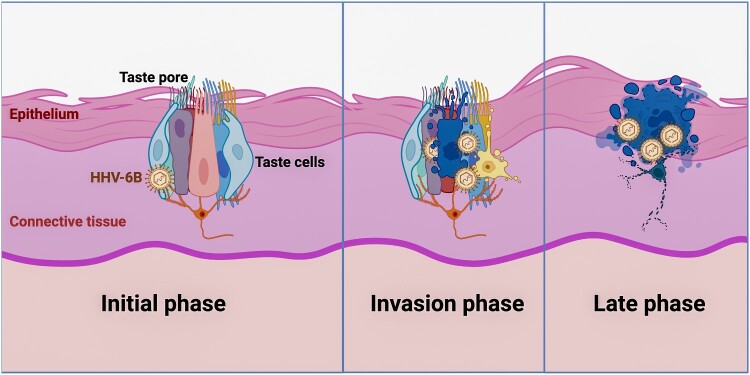
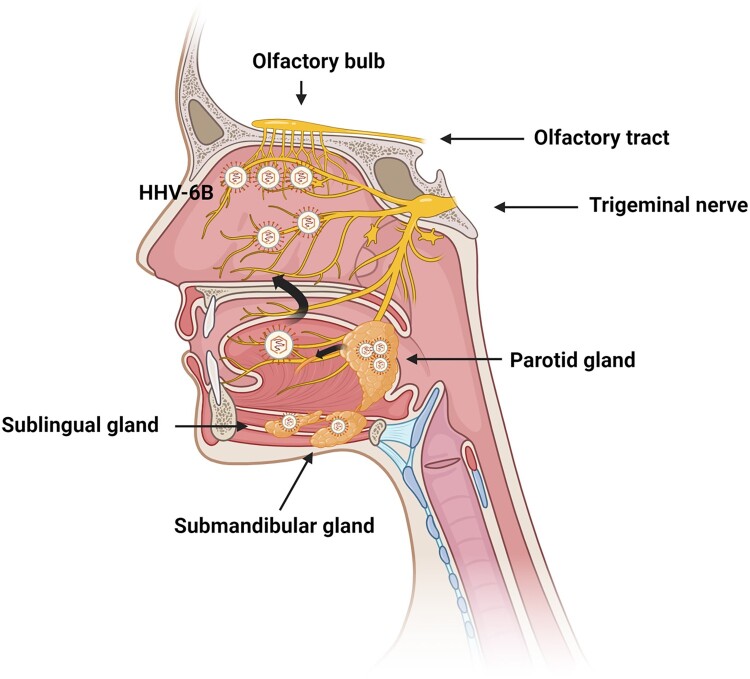
Burning Mouth Syndrome (BMS) presents as a persistent, often perplexing pain condition characterised primarily by a sensation of burning, yet frequently lacks observable clinical evidence. The underlying mechanisms of BMS remain elusive. Typically, the tongue bears the brunt of the discomfort, followed by the inner lower lip and hard palate. Psychologically, BMS often intersects with anxiety and depression, forming common comorbidities. There's emerging research suggesting a potential link between Human Herpesvirus 6B (HHV-6B) and mental health disorders. This association raises the possibility of HHV-6B as a contributor to BMS. HHV-6B's hypothesised involvement in BMS could be from various avenues: direct damage to taste cells and nerves, eliciting an inflammatory response, or even disrupting olfactory functions. This narrative review aims to critically evaluate the current literature on the potential association between HHV-6B and BMS. It explores the role of HHV-6B in pain mechanisms, inflammatory responses, and its impact on sensory functions such as taste and olfaction, providing a comprehensive overview of its implications in BMS pathogenesis.
Keywords: Burning mouth syndrome; dysaesthesia; human herpesvirus 6B; taste; taste bud.
© 2024 The Author(s). Published by Informa UK Limited, trading as Taylor & Francis Group.
Conflict of interest statement
No potential conflict of interest was reported by the author(s).
Figures
References
-
- Allnutt MA, Johnson K, Bennett DA, Connor SM, Troncoso JC, Pletnikova O, Albert MS, Resnick SM, Scholz SW, De Jager PL, Jacobson S.. 2020. Human herpesvirus 6 detection in Alzheimer's disease cases and controls across multiple cohorts. Neuron. 105(6):1027–1035.e2. doi: 10.1016/j.neuron.2019.12.031. - DOI - PMC - PubMed
Publication types
LinkOut - more resources
Full Text Sources
