


Demographic Disparities in Stroke Occurrence: Insights From an Integrative Review of Emerging Trends
- PMID: 40760721
- PMCID: PMC12321967
- DOI: 10.1002/brb3.70575
Demographic Disparities in Stroke Occurrence: Insights From an Integrative Review of Emerging Trends
Abstract
Background and objectives: Stroke continues to be a major global health challenge, with notable differences in its occurrence across various demographic groups. This review aimed to investigate trends in stroke occurrence, focusing on disparities related to age, sex, ethnicity, socioeconomic status, and geographic location.
Methods: A thorough review of the literature was conducted using prominent databases such as PubMed, Web of Science, Google Scholar, and Scopus. Studies published between 2015 and 2025 that examined stroke in relation to demographic factors were included. Articles were selected based on relevance, study design, and the rigor of the research methodology. Both qualitative and quantitative studies were included in the synthesis. The data were synthesized qualitatively to highlight significant trends.
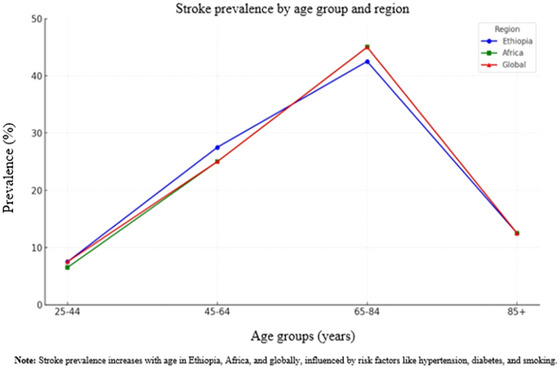
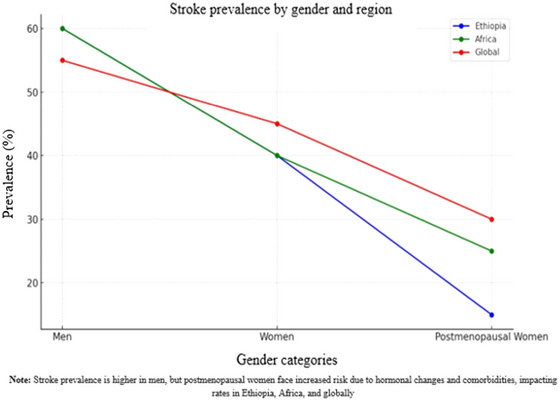
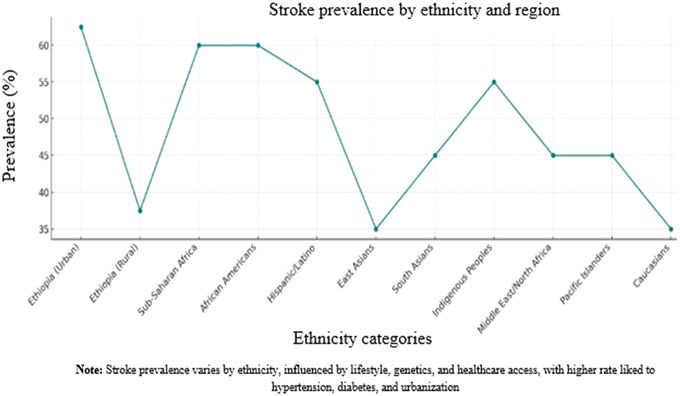
Results: This review revealed that age is a key factor in the occurrence of stroke. Stroke prevalence increases with age, particularly in individuals aged 65 years and older. Gender differences in stroke risk are evident-men tend to have higher stroke risks at younger ages, whereas women face a greater risk later in life, especially after menopause. Ethnic disparities are also significant, with African Americans and Hispanics experiencing a higher risk of stroke compared to Caucasians. This increased risk is influenced by genetics, socioeconomic factors, and a higher prevalence of hypertension and diabetes.
Conclusion: Demographic disparities significantly affect both the occurrence and outcome of stroke. Addressing these disparities requires comprehensive approaches, including enhanced access to preventive care, culturally sensitive health education, and targeted policies aimed at high-risk groups.
Keywords: age; demographic disparities; ethnicity; geographic trends; prevalence; socioeconomic status; stroke.
© 2025 The Author(s). Brain and Behavior published by Wiley Periodicals LLC.
Conflict of interest statement
The author declares no conflicts of interest.
Figures
References
-
- Abdeta, C. , Teklemariam Z., and Seyoum B.. 2018. “Prevalence of Physical Inactivity and Associated Factors Among Adults in Harar Town, Eastern Ethiopia.” Baltic Journal of Health and Physical Activity 10, no. 2: 72–80.
-
- Abdu, H. , and G. Seyoum,. 2022. “Sex Differences in Stroke Risk Factors, Clinical Profiles, and in‐Hospital Outcomes Among Stroke Patients Admitted to the Medical Ward of Dessie Comprehensive Specialized Hospital, Northeast Ethiopia.” Degenerative Neurological and Neuromuscular Disease 12: 133–144. - PMC - PubMed
-
- Abissegue, G. , Yakubu S. I., Ajay A. S., and Niyi‐Odumosu F.. 2024. “A Systematic Review of the Epidemiology and the Public Health Implications of Stroke in Sub‐Saharan Africa.” Journal of Stroke and Cerebrovascular Diseases 33, no. 8: 107733. - PubMed
Publication types
MeSH terms
LinkOut - more resources
Full Text Sources
Medical
