


Predicting lymphovascular space invasion in early-stage cervical squamous cell carcinoma using heart rate variability
- PMID: 40761255
- PMCID: PMC12318772
- DOI: 10.3389/fonc.2025.1562347
Predicting lymphovascular space invasion in early-stage cervical squamous cell carcinoma using heart rate variability
Abstract
Background: Accurate preoperative assessment of lymphovascular space invasion (LVSI) in patients with early-stage cervical squamous cell carcinoma (ECSCC) is clinically significant for guiding treatment decisions and predicting prognosis. However, current LVSI assessment of ECSCC mainly relies on the invasive method of pathological biopsy, which needs to be further improved in terms of convenience. The main objective of this study is to verify the value of preoperative heart rate variability (HRV) parameters in predicting ECSCC LVSI.
Methods: A total of 79 patients with ECSCC confirmed by postoperative pathology were enrolled in this study at the Department of Gynecologic Oncology of the First Affiliated Hospital of Bengbu Medical University. Patients were classified as LVSI-positive (LVSI+) or LVSI-negative (LVSI-) based on pathological examination. Preoperative 5-minute electrocardiogram (ECG) data were collected from all patients, and their HRV parameters were analysed, including 7 time-domain parameters, 5 frequency-domain parameters, and 2 nonlinear parameters. Ten HRV features were selected through univariate analysis, and a logistic model was constructed using age, body mass index, menopausal status, and mean heart rate to predict LVSI status. The model performance was evaluated by the area under the receiver operating characteristic curve (AUC), accuracy, precision, sensitivity, and specificity.
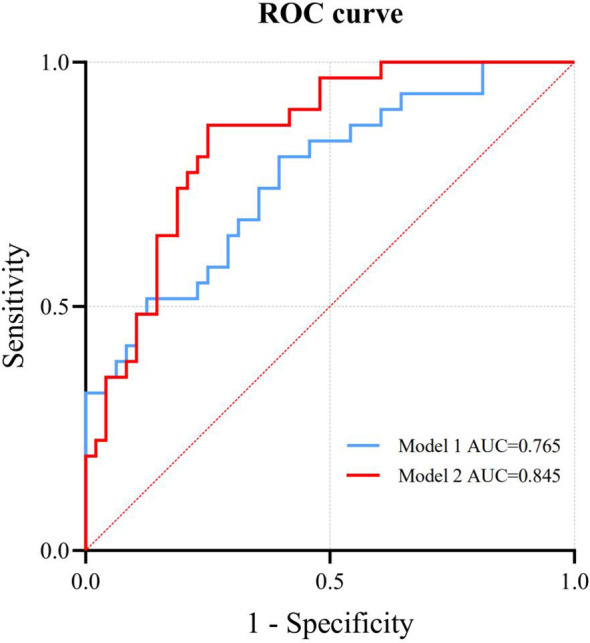
Results: The constructed model showed good predictive performance, with an AUC of 0.845 (95% CI: 0.761 - 0.930), sensitivity of 0.871, specificity of 0.750, precision of 0.690, and accuracy of 0.747.
Conclusions: The Logistic model constructed based on HRV features has a relatively good diagnostic performance in predicting the LVSI status of ECSCC, but further research is still needed through larger datasets, more features, and the combination of machine learning models.
Keywords: autonomic nervous system; cervical cancer; cervical squamous cell carcinoma; heart rate variability; lymphovascular space invasion.
Copyright © 2025 Fang, Liu, Song, Zhang, Shi, Liu and Zhang.
Conflict of interest statement
A direct family member of B.S. owns stock in HeaLink Ltd., Bengbu, China. The remaining authors declare that the research was conducted in the absence of any commercial or financial relationships that could be construed as a potential conflict of interest.
Figures
References
-
- Tortorella L, Restaino S, Zannoni GF, Vizzielli G, Chiantera V, Cappuccio S, et al. Substantial lymph-vascular space invasion (LVSI) as predictor of distant relapse and poor prognosis in low-risk early-stage endometrial cancer. J Gynecol Oncol. (2021) 32:e11. doi: 10.3802/jgo.2021.32.e11, PMID: - DOI - PMC - PubMed
-
- Morice P, Piovesan P, Rey A, Atallah D, Haie-Meder C, Pautier P, et al. Prognostic value of lymphovascular space invasion determined with hematoxylin-eosin staining in early stage cervical carcinoma: results of a multivariate analysis. Ann Oncol. (2003) 14:1511–7. doi: 10.1093/annonc/mdg412, PMID: - DOI - PubMed
LinkOut - more resources
Full Text Sources
