


Decision regret after reirradiation of the primary site in patients with prostate cancer
- PMID: 40761289
- PMCID: PMC12320099
- DOI: 10.1016/j.ctro.2025.101019
Decision regret after reirradiation of the primary site in patients with prostate cancer
Abstract
Purpose: A subset of prostate cancer patients develops local relapse at the primary site after radiotherapy. The optimal local salvage strategy is unknown. Therefore, we aimed to explore prevalence and determinants of decision regret among patients after reirradiation of the primary site.
Materials and methods: We surveyed 31 patients in a cross-sectional bi-centre exploratory study. Reirradiation was high dose-rate brachytherapy (HDR-BT) in 21 and stereotactic body radiotherapy (SBRT) in 10 patients. Decision regret (DR) was measured using the Decision Regret Scale (DRS) (range: 0-100; higher values higher regret). Further patient-reported outcomes (PRO) included the EPIC-26, EORTC QLQ-C30, PRO-CTCAE, and PSCC questionnaires. Univariable associations of decision regret and potential determinants were assessed by one-way ANOVA or Pearson's correlation.
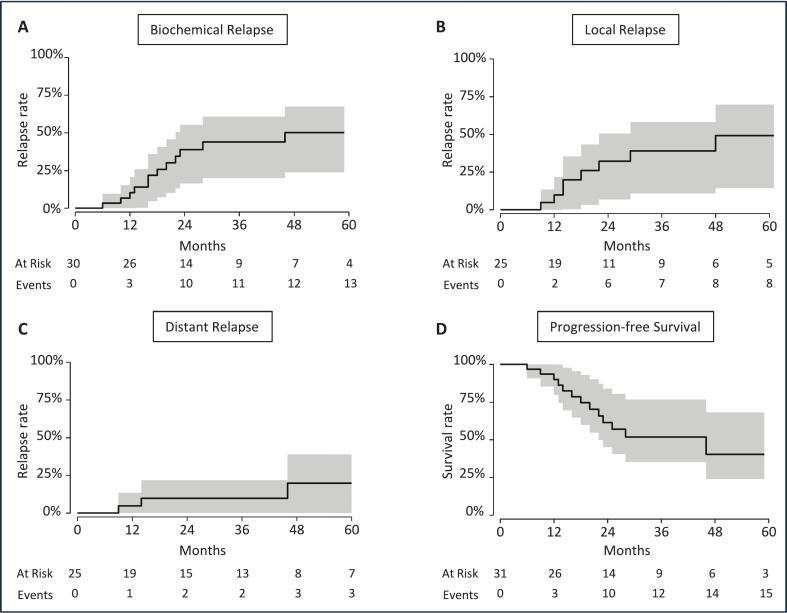
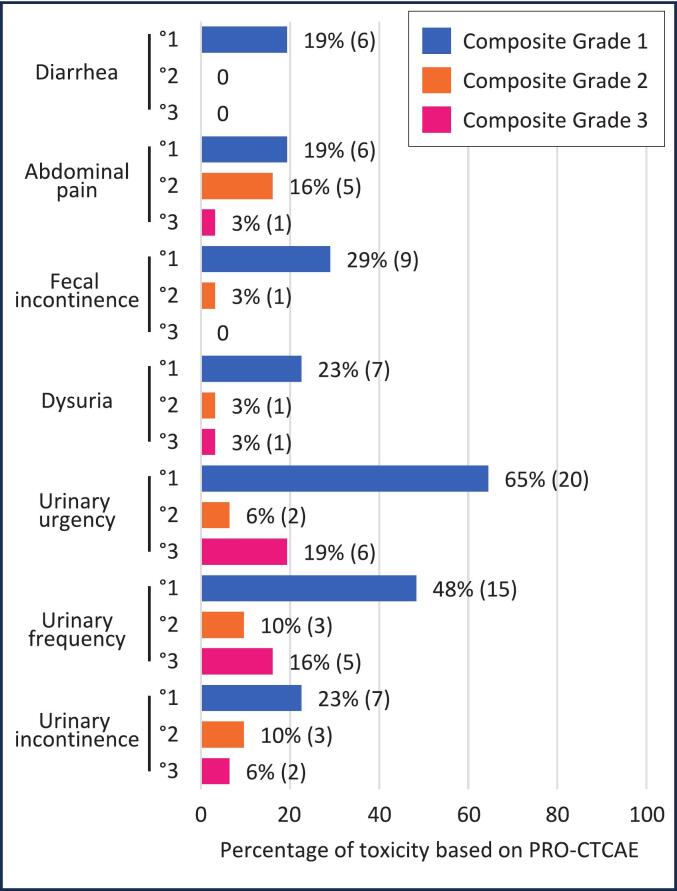
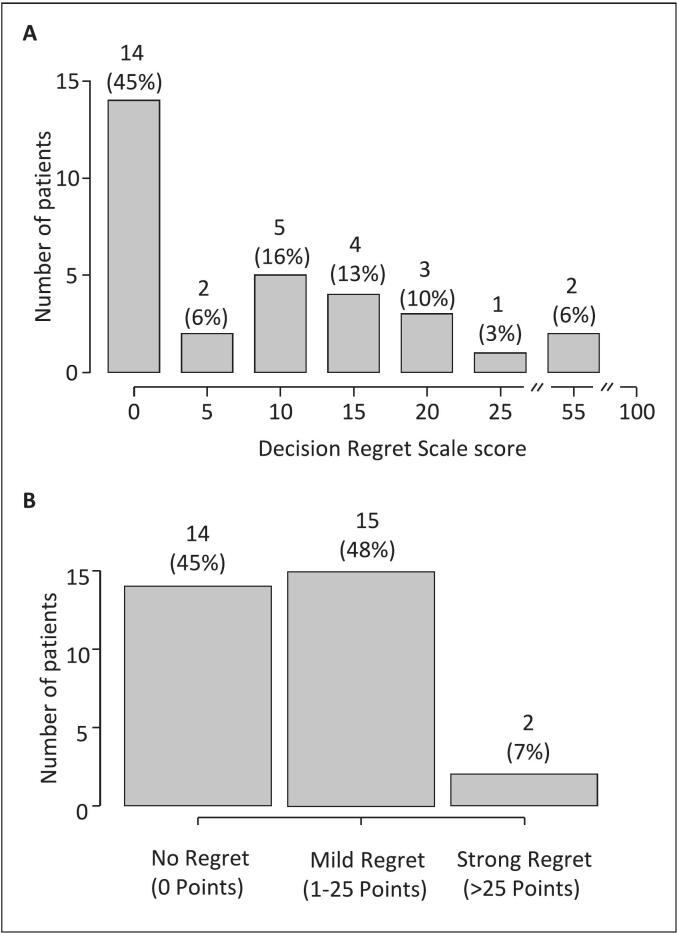
Results: Median age at reirradiation was 75 years. Median time intervals from initial radiotherapy to reirradiation was 8 years and 4 years from reirradiation to survey. The mean DRS score was 10 (SD: 14). No (0 points), mild (1-25 points), or strong regret (>25 points) was reported by 45 % (14/31), 48 % (15/31), and 7 % (2/31) of the patients, respectively. DR was significantly associated with PRO of urinary symptom burden and toxicity as well as levels of shared-decision making and patient satisfaction. HDR-BT vs. SBRT, further local relapse, and progression-free survival were not associated with DR.
Conclusions: DR was mild among prostate cancer patients after reirradiation to the primary site. PRO on symptom burden and shared decision making may be associated with DR. These findings should be validated and may inform treatment decisions on local salvage therapy.
Keywords: Brachytherapy; Decision regret; Health-related quality of life; Patient-reported outcome; Prostate cancer; Radiotherapy; Reirradiation; SBRT; Stereotactic body radiotherapy.
© 2025 The Author(s).
Conflict of interest statement
The authors declare that they have no known competing financial interests or personal relationships that could have appeared to influence the work reported in this paper. AF has received honoraria from Merck Sharp &Dohme and a research award from Lilly Deutschland Stiftung.DK has received honoraria from Astra Zeneca, best practice onkologie, ESO, ESMO, Gilead, med update, Merck Sharp & Dohme, Novartis, onkowissen, and Pfizer, as well as research funding from Stiftung Deutsche Krebshilfe and Merck KGaA. OW received honoraria and travel grants from Brainlab AG and novocure AG.SR has received honoraria from BMS, Merck, MSD and Novartis and has equity interest in Rocketlane Medical Ventures GmbH. All other authors declare no conflicts of interest.
Figures
References
-
- Rebello RJ, Oing C, Knudsen KE, Loeb S, Johnson DC, Reiter RE, et al. Prostate cancer. Nat Rev Dis Primers 2021;7:1–27. https://doi.org/10.1038/s41572-020-00243-0. - PubMed
-
- Koerber S.A., Kroener R.C., Dendl K., Kratochwil C., Fink C.A., Ristau J., et al. Detecting and locating the site of local relapse using 18F-PSMA-1007 imaging after primary treatment of 135 prostate cancer patients—potential impact on PSMA-guided radiation therapy. Mol Imaging Biol. 2023;25:375–383. doi: 10.1007/s11307-022-01766-6. - DOI - PMC - PubMed
-
- Ma T.M., Chu F.-I., Sandler H., Feng F.Y., Efstathiou J.A., Jones C.U., et al. Local failure events in prostate cancer treated with radiotherapy: a pooled analysis of 18 randomized trials from the meta-analysis of randomized trials in cancer of the prostate consortium (LEVIATHAN) Eur Urol. 2022;82:487–498. doi: 10.1016/j.eururo.2022.07.011. - DOI - PubMed
LinkOut - more resources
Full Text Sources
