


Clinical significance and gene prediction of a novel classification system based on tacrolimus concentration-to-dose ratio in the early post-liver transplant period
- PMID: 40761401
- PMCID: PMC12319242
- DOI: 10.3389/fphar.2025.1614753
Clinical significance and gene prediction of a novel classification system based on tacrolimus concentration-to-dose ratio in the early post-liver transplant period
Abstract
Background and aims: Classification system of tacrolimus elimination and its clinical significance has not been well described in liver transplantation. This study aimed to present a novel tacrolimus clearance clinical-FIS (Fast-Intermediate-Slow) classification and its gene prediction system.
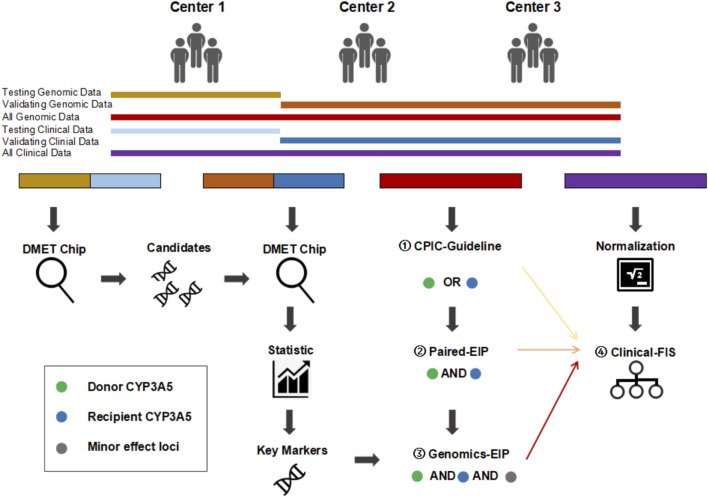
Methods: Patients from 3 transplant centers were enrolled in this study. All recipients and their corresponding donor livers from center 1 were genotyped using an Affymetrix DMET Plus microarray, and association analysis was performed using trough blood concentration/weight-adjusted-dose ratios (CDR, (ng/mL)/(mg/kg)). The candidate-associated loci were then sequenced in center 2 and center 3 patients for verification.
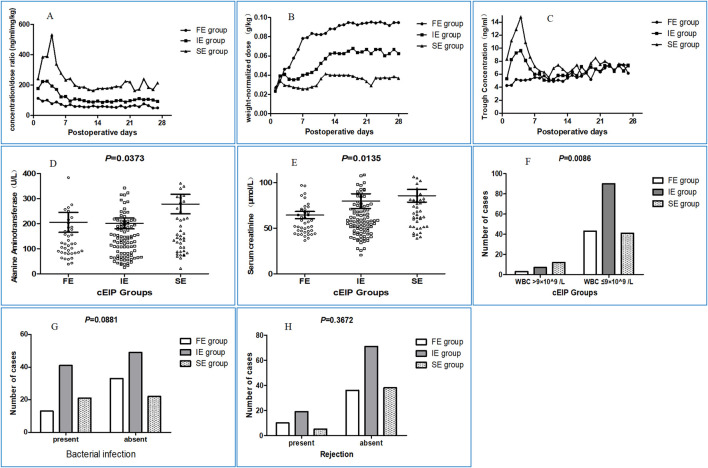
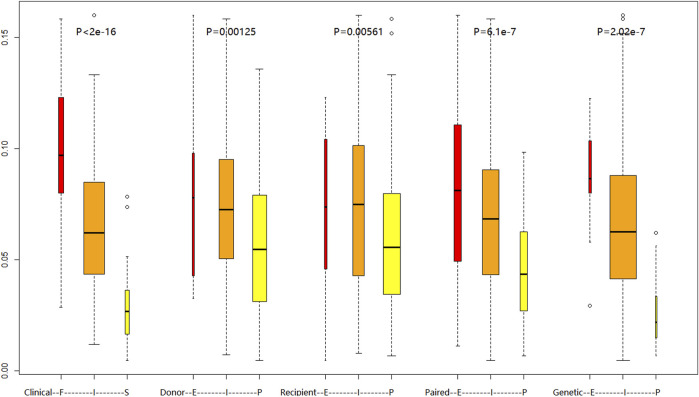
Results: A clinical classification based on tacrolimus CDR can effectively divide liver transplantation patients into fast elimination (FE), intermediate elimination (IE), and slow elimination (SE) groups, which we called the clinical-FIS classification. Trough blood concentrations in the clinical-SE group during the early postoperative period were higher than those in the clinical-FE and clinical-IE groups, which could lead to delayed recovery of liver (P = 0.0373) and kidney function (P = 0.0135) and a higher infection rate (P = 0.0086). The prediction accuracy of the current CPIC (Clinical Pharmacogenetics Implementation Consortium)-EIP metabolizer classification based on recipient CYP3A5 rs776746 genotype for clinical-FIS classification was only 35.56%. A newly established genetic-EIP classification including major effect genetic factors (donor and recipient CYP3A5 rs776746) and minor effect genetic factors (recipient SULT1E1 rs3775770 and donor SLC7A8 rs7141505) showed 73.2% overall consistency with the former clinical FIS classification.
Conclusion: Our study presented a novel tacrolimus clearance classification, clinical-FIS, and then proposed a novel prospective genetic-EIP classification as a genotyping basis for precisely predicting the clinical-FIS.
Keywords: drug metabolism; gene polymorphism; liver transplantation; personalized medicine; tacrolimus.
Copyright © 2025 Fan, Wen, Yuan, Xia, Hu, Zhang and Peng.
Conflict of interest statement
The authors declare that the research was conducted in the absence of any commercial or financial relationships that could be construed as a potential conflict of interest.
Figures
References
-
- Ben Brahim B., Arenas Hoyos I., Zhang L., Vögelin E., Olariu R., Rieben R. (2025). Tacrolimus-loaded drug delivery systems in vascularized composite allotransplantation: lessons and opportunities for local immunosuppression. Transplantation 109 (1), 142–152. 10.1097/TP.0000000000005049 - DOI - PMC - PubMed
LinkOut - more resources
Full Text Sources
Research Materials
