


Influence of natural and anthropogenic drivers on plague risk in Southwest China: A multicenter cross-sectional study
- PMID: 40761621
- PMCID: PMC12319548
- DOI: 10.1016/j.onehlt.2025.101142
Influence of natural and anthropogenic drivers on plague risk in Southwest China: A multicenter cross-sectional study
Abstract
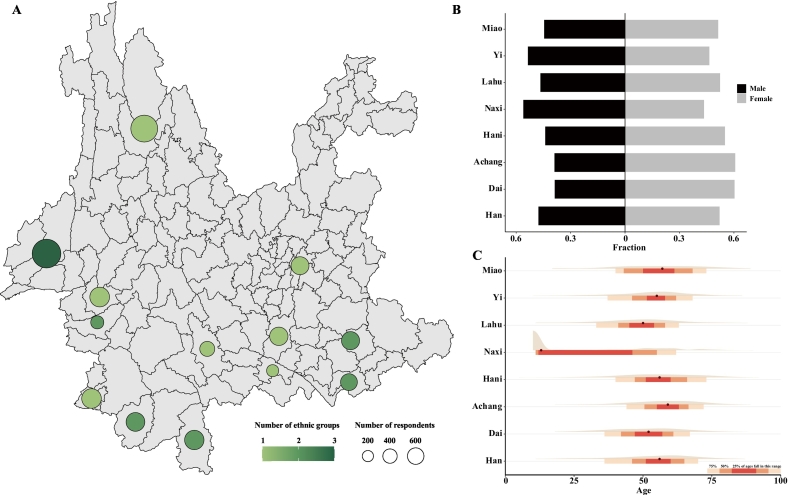
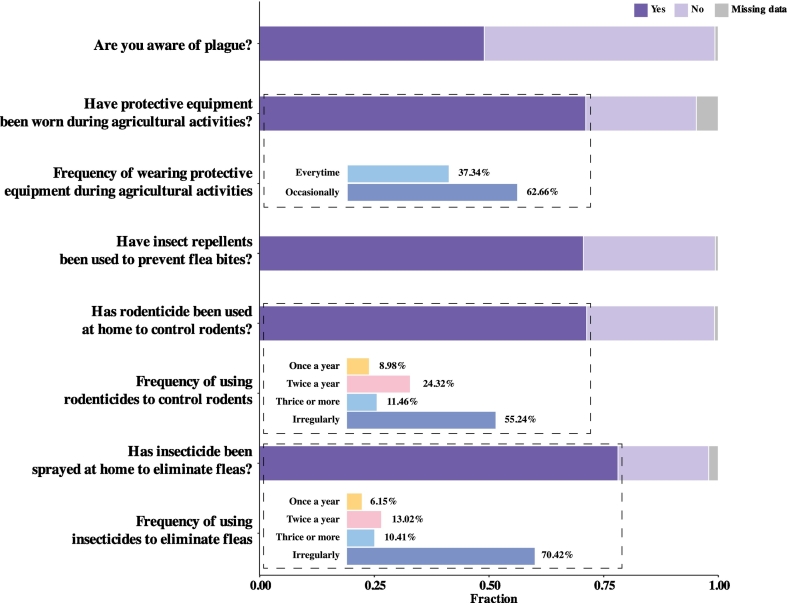
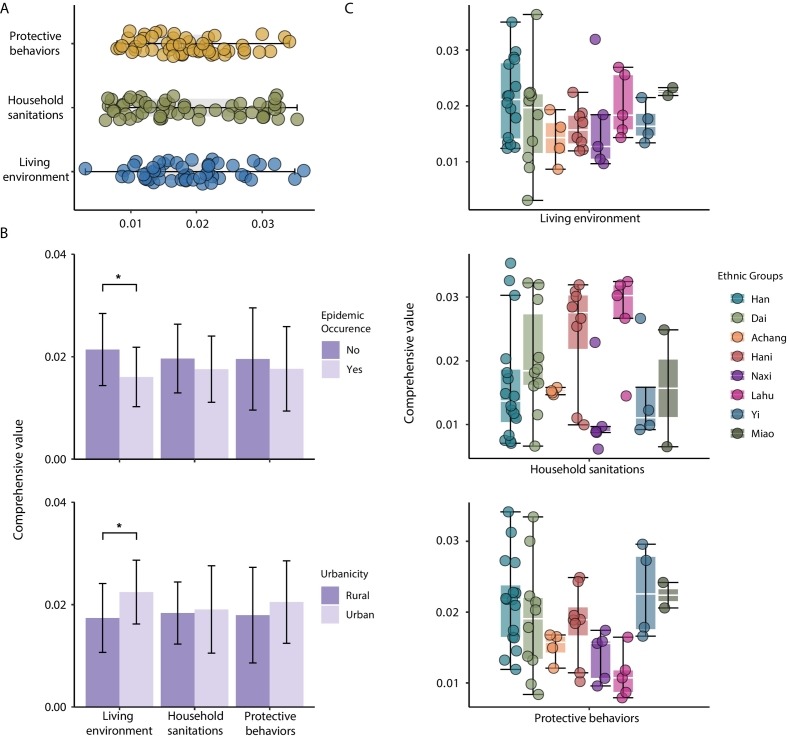
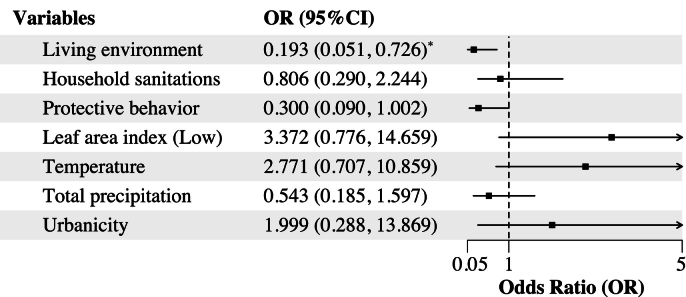
The natural and anthropogenic environment have contributed to the dynamic risk of plague and their threats to human health. Although evidence has indicated the environmental suitability for disease dynamics, the alteration of the risk by anthropogenic factors have not been fully investigated. We conducted a multicenter cross-sectional survey among 2998 residences across 54 villages in 13 counties in Southwest China. With the survey data, we developed composite anthropogenic indices to make systematic assessment of people's living environment, household sanitation levels, and risk perception regarding plague. We identified disparities of these anthropogenic indices among ethnic groups. By featuring plague, we further established statistical model to assess how environmental and anthropogenic factors associate with the occurrence of the typical zoonotic disease. Our results show that the improved living environment is significantly linked to the lower risk of plague occurrence. In contrast, we have no evidence for the significant association between household sanitation, protective behaviors, environmental conditions and plague risk. These findings pointed at the improved living environment as the most likely anthropogenic driver that is associated with the reduced risk of plague. Integrating anthropogenic modulators of disease dynamics in public health strategies would be the key for the effective management of disease risks.
Keywords: Anthropogenic factors; Epidemiology; Ethnic disparities; Living conditions; Plague.
© 2025 The Authors.
Conflict of interest statement
They authors declare that they have no competing interests.
Figures
References
LinkOut - more resources
Full Text Sources
