


Utility of Pharmacological Agents for Diabetes Mellitus in the Prevention of Alzheimer's Disease: Comparison of Metformin, Glucagon-Like Peptide-1 (GLP-1) Agonists, Insulin, and Sulfonylureas
- PMID: 40761983
- PMCID: PMC12321270
- DOI: 10.7759/cureus.87350
Utility of Pharmacological Agents for Diabetes Mellitus in the Prevention of Alzheimer's Disease: Comparison of Metformin, Glucagon-Like Peptide-1 (GLP-1) Agonists, Insulin, and Sulfonylureas
Abstract
Background: Metformin is a drug primarily used for the treatment of diabetes mellitus (DM), but it also offers clinical benefits that extend beyond glycemic control. Existing literature provides an unclear conclusion as to whether metformin's benefits extend to preventing neurodegeneration, such as in Alzheimer's disease (AD).
Methods: A retrospective database study was conducted to evaluate the likelihood of developing AD in DM patients taking metformin compared to those taking glucagon-like peptide (GLP-1) analogs, sulfonylureas, and short-acting insulin variants. An analysis was also run to assess whether metformin has a protective benefit for AD and mortality when used in those with DM compared to those without DM.
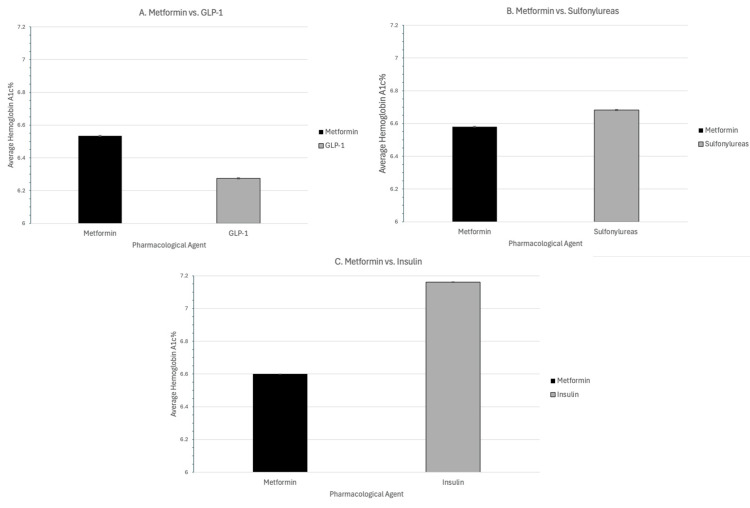
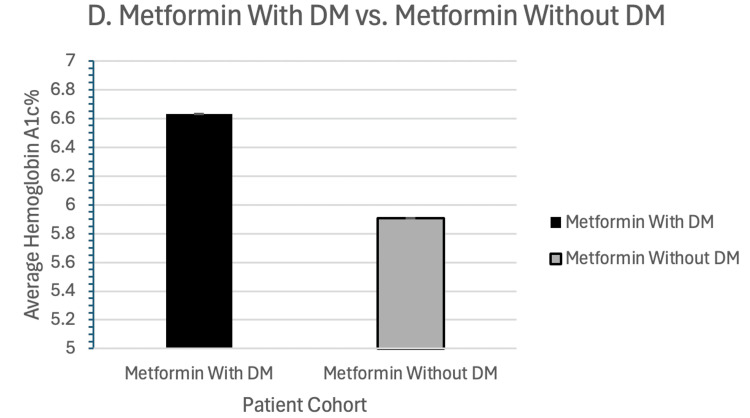
Results: In analyses totaling greater than 2.5 million patients, those on metformin had lower A1C percentages and a decreased mortality risk when compared to sulfonylureas (HR = 0.519, (CI: (0.493,0.546)), and short-acting insulins (HR = 0.372, (CI: (0.364,0.380)). Metformin use for DM was associated with a statistically significant increased likelihood of AD diagnosis compared to GLP-1 use (HR = 2.228, CI: (1.036,4.794)) but an insignificant difference compared to both sulfonylureas and insulins. Those with DM were at a significantly higher risk of being diagnosed with Alzheimer's compared to those without DM (HR = 1.826, (CI: 1.579, 2.111)).
Conclusions: Metformin, previously thought to have significant benefits in preventing neurodegeneration, may not be the optimal pharmacologic agent of choice, particularly in patients with DM, if neurodegeneration is a primary concern in treatment decision-making based on other risk factors.
Keywords: alzheimer's disease; diabetes mellitus; glp-1 receptor agonist; insulin; metformin; pharmacology; sulfonylurea.
Copyright © 2025, DiGiovanni et al.
Conflict of interest statement
Human subjects: Informed consent for treatment and open access publication was obtained or waived by all participants in this study. Animal subjects: All authors have confirmed that this study did not involve animal subjects or tissue. Conflicts of interest: In compliance with the ICMJE uniform disclosure form, all authors declare the following: Payment/services info: All authors have declared that no financial support was received from any organization for the submitted work. Financial relationships: All authors have declared that they have no financial relationships at present or within the previous three years with any organizations that might have an interest in the submitted work. Other relationships: All authors have declared that there are no other relationships or activities that could appear to have influenced the submitted work.
Figures
References
LinkOut - more resources
Full Text Sources