


Trends and Disparities in Mortality Due to Gastric Malignancies the United States: A Nationwide Analysis from 1999 to 2020
- PMID: 40762926
- PMCID: PMC12325418
- DOI: 10.1007/s12029-025-01295-9
Trends and Disparities in Mortality Due to Gastric Malignancies the United States: A Nationwide Analysis from 1999 to 2020
Abstract
Purpose: Gastric malignancies remain a significant public health concern and a major contributor to cancer-related mortality worldwide. This study aimed to analyze trends and disparities in gastric malignancy mortality across socio-demographic and regional factors in the United States (US) from 1999 to 2020.
Methods: A retrospective analysis was conducted using CDC WONDER data from 1999 to 2020 for adults aged ≥ 25 years. Data on demographics (age, sex, race/ethnicity), urban-rural classification, and regional trends were extracted. Age-adjusted mortality rates (AAMR) were calculated using the 2000 U.S. population as a reference, with trends analyzed using Joinpoint regression to determine annual percentage changes (APC) with statistical significance (P < 0.05).
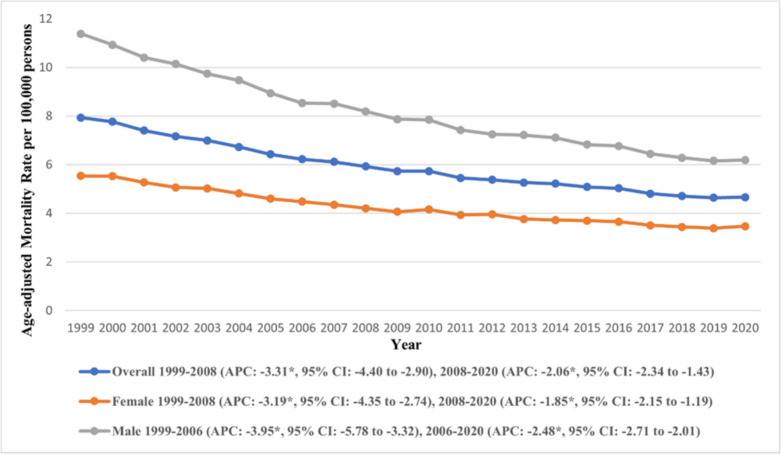
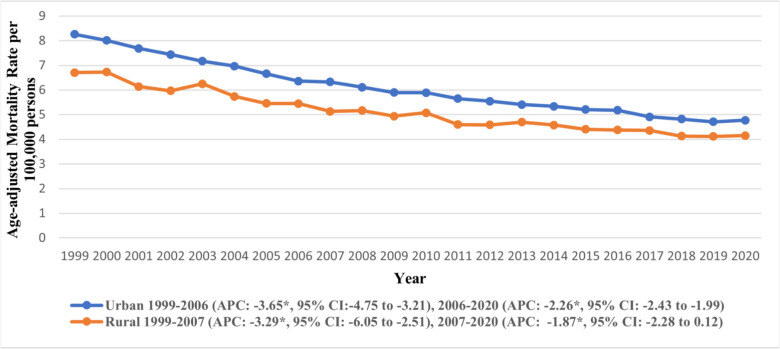
Results: Between 1999 and 2020, 276,023 deaths due to gastric malignancies were recorded, with 59.3% occurring among males. The AAMR declined from 7.94 in 1999 to 4.66 in 2020, with an overall AAMR of 5.82. The 65 + age group had the highest AAMR (20.83), while the 25-44 age group had the lowest (0.74). Males consistently reported higher AAMRs (7.60) than females (4.85). NH Black individuals had the highest overall AAMR (10.82), while NH White individuals had the lowest (4.62). Urban areas had higher AAMRs (5.95) than rural areas (5.07).
Conclusion: Mortality from gastric malignancies has declined in the U.S. from 1999 to 2020; however, higher mortality rates in NH Black individuals, males, and urban dwellers highlight the need for targeted interventions and equitable access to prevention and treatment resources. Future research should focus on identifying actionable solutions to mitigate these gaps.
Keywords: Cancer mortality; Gastric cancer; Gastric neoplasm; Malignancy.
© 2025. The Author(s).
Conflict of interest statement
Declarations. Competing interests: The authors declare no competing interests.
Figures



References
-
- Yang K, Lu L, Liu H, Wang X, Gao Y, Yang L, Li Y, Su M, Jin M, Khan S. A comprehensive update on early gastric cancer: defining terms, etiology, and alarming risk factors. Expert Rev Gastroenterol Hepatol. 2021;15(3):255–73. 10.1080/17474124.2021.1845140. - PubMed
MeSH terms
LinkOut - more resources
Full Text Sources
Medical