


Predictive role of the geriatric nutritional risk index in all-cause and cardiovascular mortality among elderly patients with osteoarthritis
- PMID: 40764522
- PMCID: PMC12326807
- DOI: 10.1186/s12877-025-06225-9
Predictive role of the geriatric nutritional risk index in all-cause and cardiovascular mortality among elderly patients with osteoarthritis
Erratum in
-
Correction: Predictive role of the geriatric nutritional risk index in all-cause and cardiovascular mortality among elderly patients with osteoarthritis.BMC Geriatr. 2025 Oct 24;25(1):810. doi: 10.1186/s12877-025-06461-z. BMC Geriatr. 2025. PMID: 41136922 Free PMC article. No abstract available.
Abstract
Objective: We intended to investigate the correlation of the geriatric nutritional risk index (GNRI) and the risks of all-cause and cardiovascular mortality in elderly patients with osteoarthritis (OA).
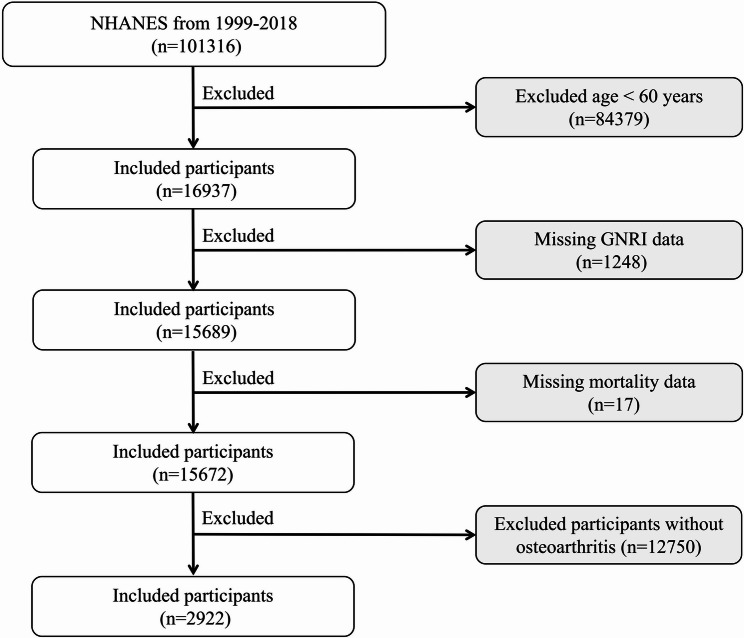
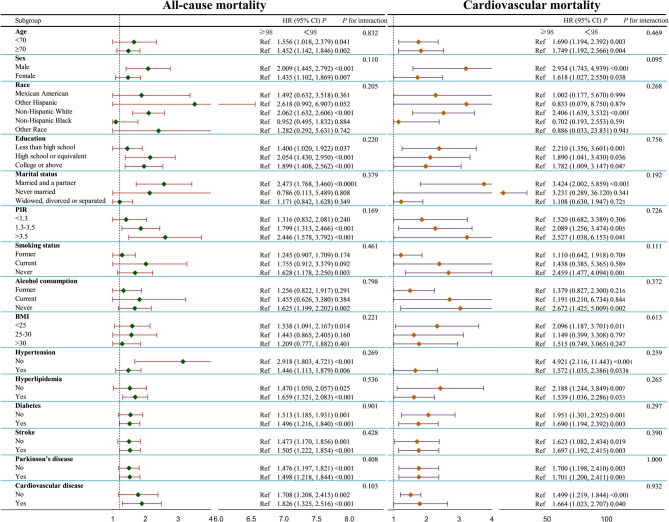
Methods: This study included 2,922 OA patients aged ≥ 60 years from National Health and Nutrition Examination Survey (NHANES) from 1999 to 2018. GNRI was obtained using serum albumin and body weight, with participants stratified into high (≥ 98) and low (< 98) GNRI groups. Cox regressions, survival analysis, and restricted cubic spline (RCS) regression have been utilized to assess mortality risks. Nonlinear threshold effects were evaluated using piecewise regression. Moreover, subgroup analyses have also been completed based on demographic, lifestyle, and clinical features.
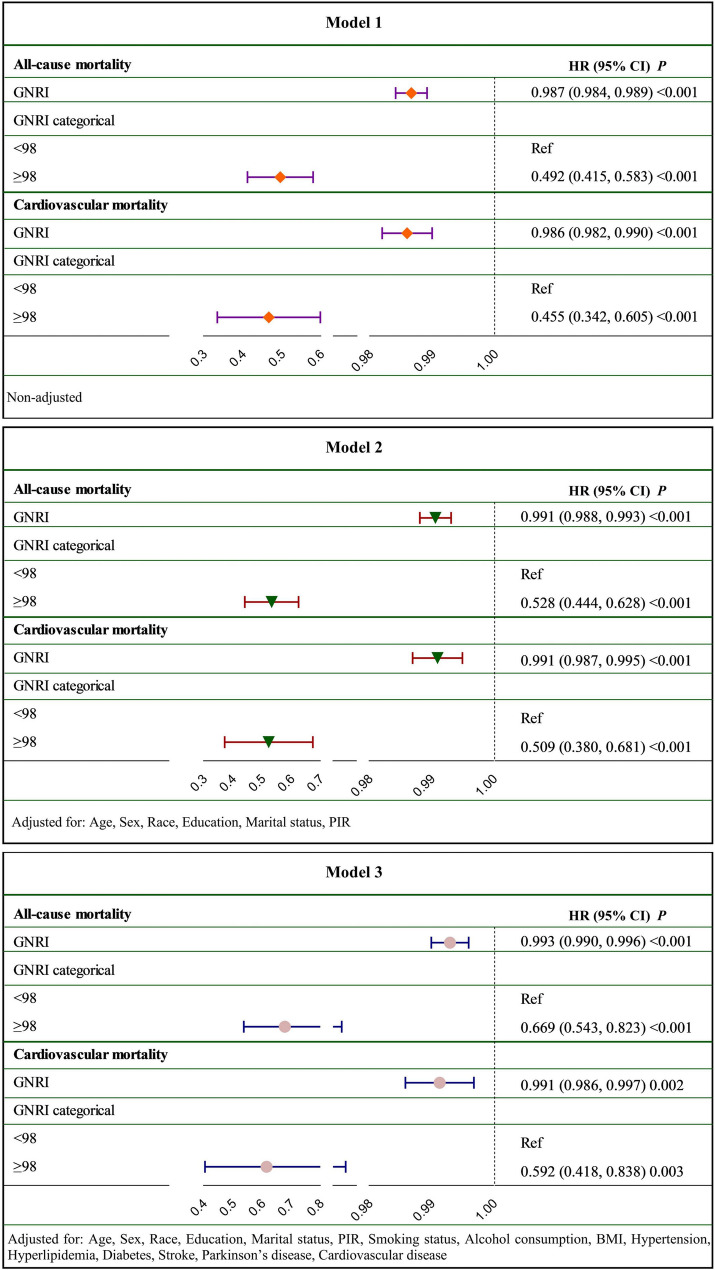
Results: Participants with low GNRI had significantly higher risks of all-cause mortality (adjusted HR = 1.494, 95% CI: 1.192-1.872, P < 0.001) and cardiovascular mortality (adjusted HR = 1.592, 95% CI: 1.142-2.219, P = 0.006). RCS analysis presented with a nonlinear J-shaped relationship, with optimal GNRI around 120. Subgroup analyses confirmed consistent associations across age, sex, race, and comorbidity strata.
Conclusion: Lower GNRI could independently lead to increased all-cause and cardiovascular mortality in OA patients, highlighting the importance of nutritional assessment in OA management. As a result, GNRI could serve as a valuable prognostic indicator for identifying high-risk individuals who could benefit from targeted nutritional interventions.
Keywords: All-cause and cardiovascular mortality; Geriatric nutritional risk index; Nutritional; Osteoarthritis; Risk.
© 2025. The Author(s).
Conflict of interest statement
Declarations. Ethics approval and consent to participate: Our research is based on reanalysis of public database, therefore this study is exempt from further ethical review and approval. Consent for publication: All authors approved the final manuscript and the submission to this joumal. Competing interests: The authors declare no competing interests.
Figures


References
MeSH terms
Grants and funding
LinkOut - more resources
Full Text Sources
Medical
Research Materials
