


The global burden of disease attributable to suboptimal fruit and vegetable intake, 1990-2021: a systematic analysis of the global burden of disease study
- PMID: 40764991
- PMCID: PMC12326680
- DOI: 10.1186/s12916-025-04275-9
The global burden of disease attributable to suboptimal fruit and vegetable intake, 1990-2021: a systematic analysis of the global burden of disease study
Abstract
Background: Suboptimal fruit and vegetable intake remains a significant global public health concern. This study aimed to estimate the global intake and the disease burden attributable to suboptimal fruit and vegetable intake.
Methods: In this Global Burden of Disease (GBD) Study 2021, we evaluated the number, age-standardized rates (ASRs), and estimated annual percentage changes (EAPCs) in deaths and disability-adjusted life years (DALYs) attributable to suboptimal fruit and vegetable intake among adults aged over 25 years, across 21 regions and 204 countries and territories, from 1990 to 2021.
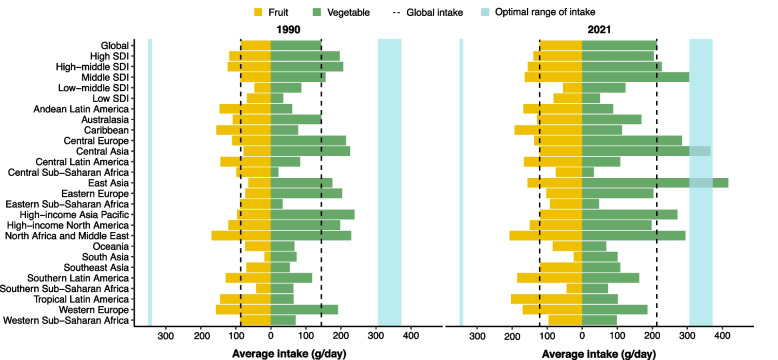
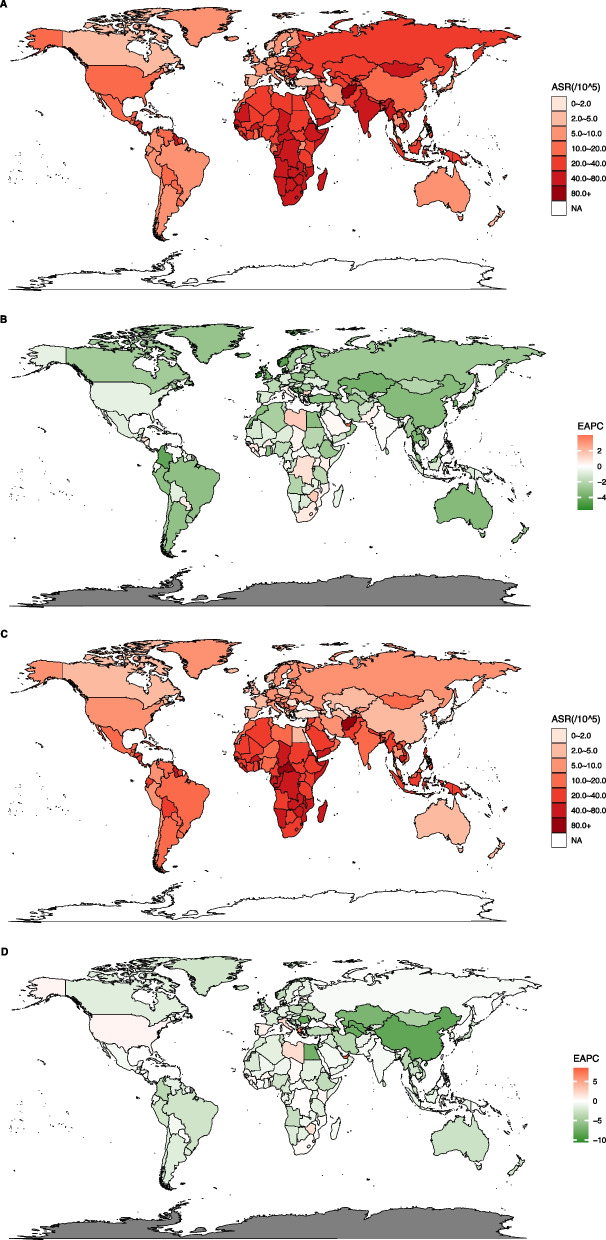
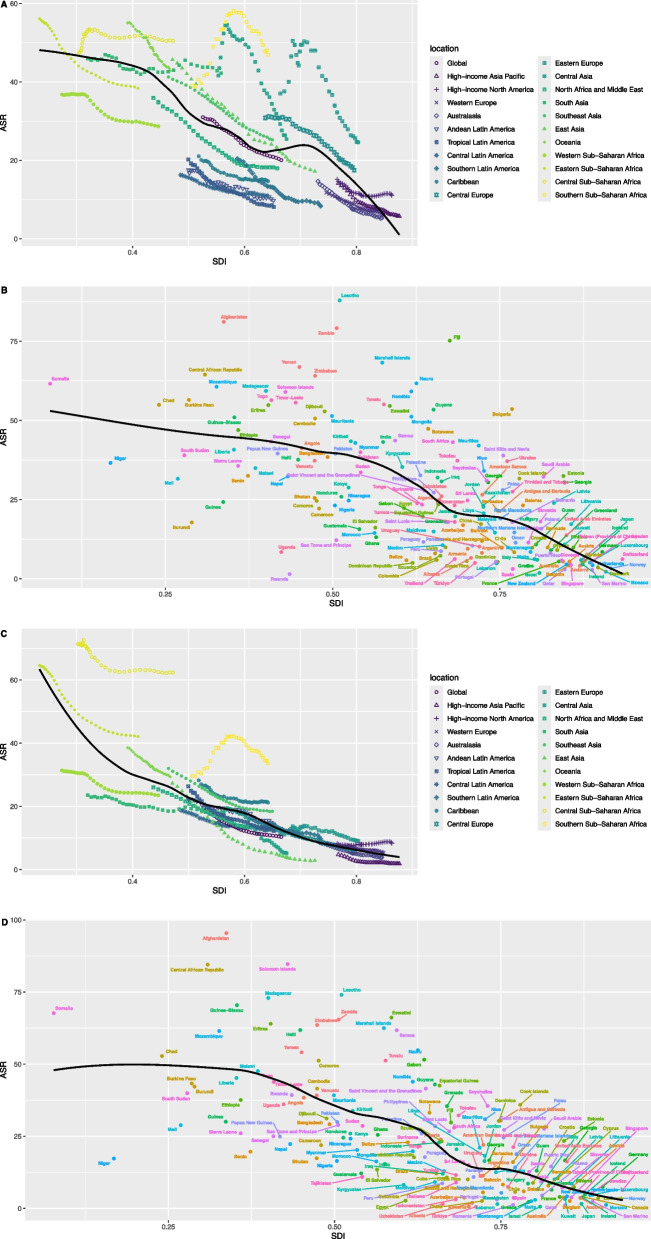
Results: In 2021, the global average intake of fruit and vegetable was 121.8 g/day and 212.6 g/day, respectively, far below the optimal intake range (fruit: 340-350 g/day, vegetable: 306-372 g/day). Suboptimal consumption contributed to 1.7 million (95% uncertainty interval [UI] 0.8 to 2.5, fruit) and 0.9 million (95% UI 0.5 to 1.2, vegetable) deaths globally, with cardiovascular diseases accounting for 83.7% (ASR 16.80/100,000) and 79.3% (ASR 8.22/100,000) of mortality attributable to suboptimal fruit and vegetable intake, respectively. Between 1990 and 2021, age-standardized mortality rates decreased by 35% (95%UI 28% to 40%) for fruit and 45% (95% UI 38% to 50%) for vegetables. The global disease burden attributable to suboptimal fruit and vegetable intake was inversely associated with sociodemographic index (SDI) and human development index (HDI). Over three decades, the difference in fruit (52.0 vs. 84.4 g/day) and vegetable (125.5 vs. 158.5 g/day) intake between higher (high, high-middle, middle) and lower (low-middle, low) SDI regions increased by 62.3% and 26.3%, respectively. Meanwhile, disparities in disease burden also increased, as higher SDI regions experienced greater reductions in age-standardized mortality due to suboptimal fruit (- 47.0% vs. - 17.7%) and vegetable (- 58.8% vs. - 26.8%) intake, highlighting widening health inequities linked to developmental disparities.
Conclusions: Suboptimal fruit and vegetable intake continues to contribute to a substantial and unequal global disease burden. Reducing this burden should be a global priority, particularly in regions with low SDI and HDI.
Keywords: Disease burden; Global burden of disease study 2021; Suboptimal fruit and vegetable intake.
© 2025. The Author(s).
Conflict of interest statement
Declarations. Ethics approval and consent to participate: The protocol for this study was exempted by the Ethics Committee of Peking Union Medical College Hospital (IRB number: I-25ZM0048) because it used only de-identified and publicly available data from the Global Burden of Disease Study 2021. Consent for publication: Not applicable. Competing interests: The authors declare no competing interests.
Figures

References
MeSH terms
Grants and funding
LinkOut - more resources
Full Text Sources
