


Meflin/Islr is a marker of fibroblasts that arise in fibrotic regions after spinal cord injury
- PMID: 40765807
- PMCID: PMC12320336
- DOI: 10.18999/nagjms.87.2.305
Meflin/Islr is a marker of fibroblasts that arise in fibrotic regions after spinal cord injury
Abstract
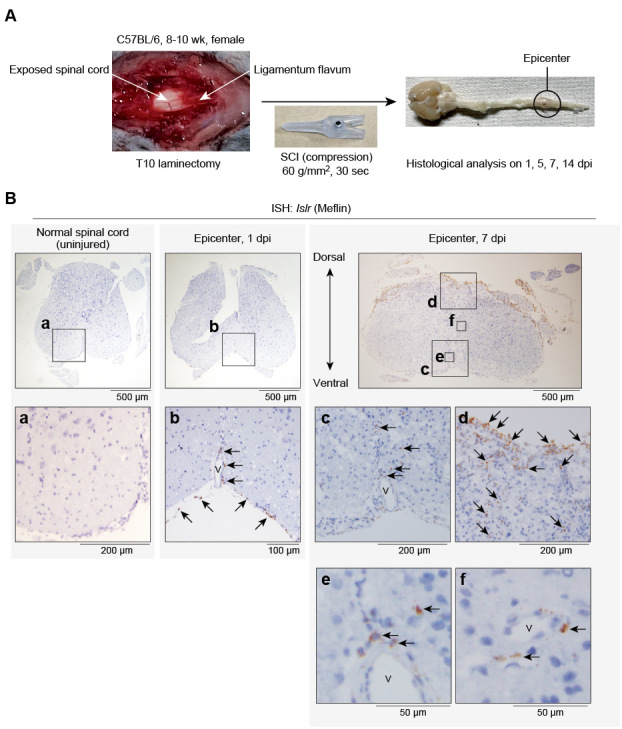
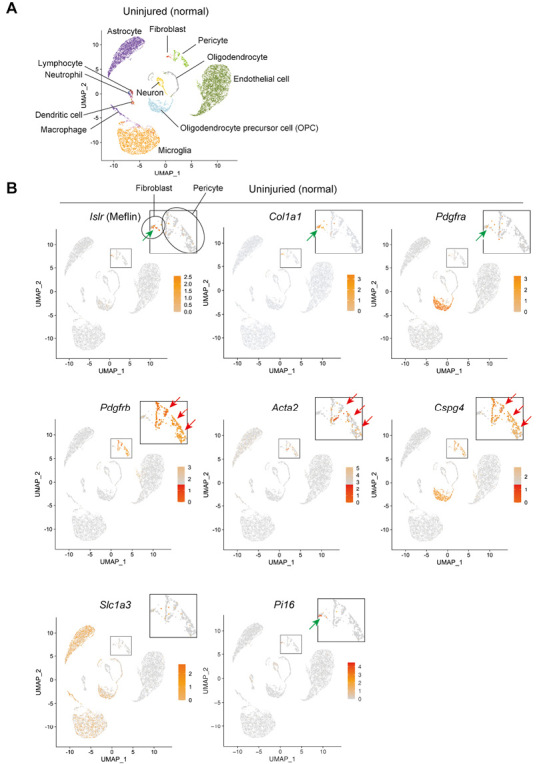
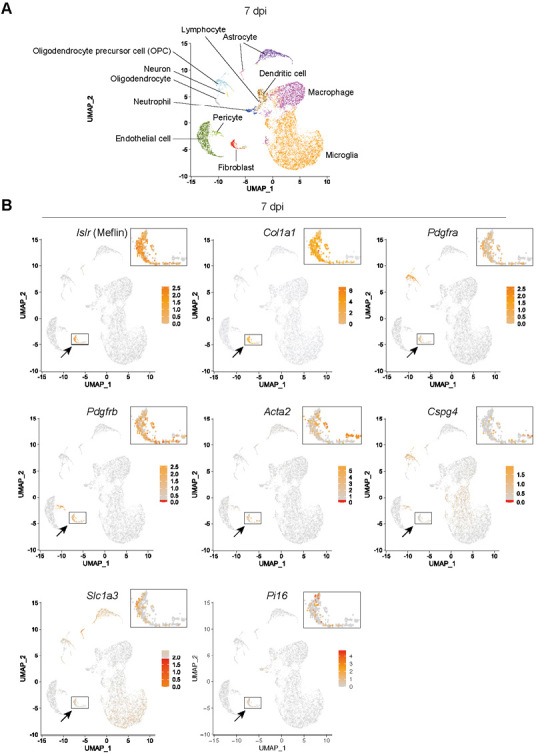
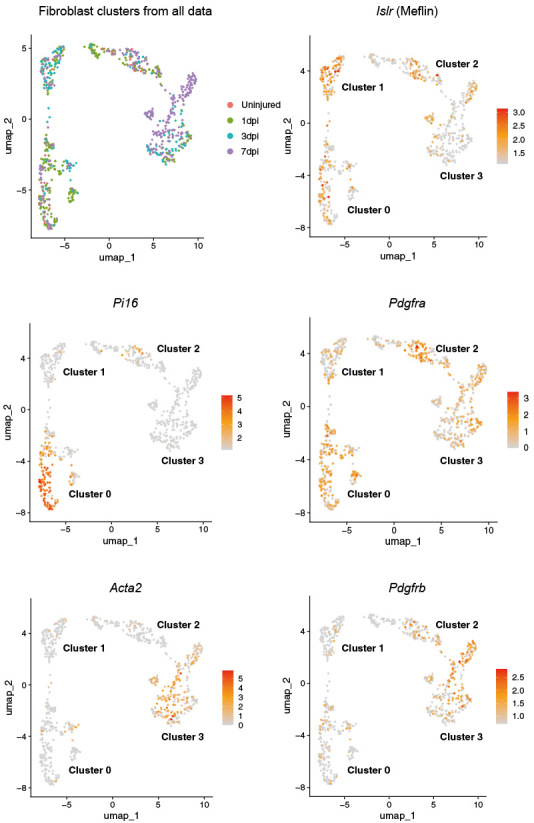
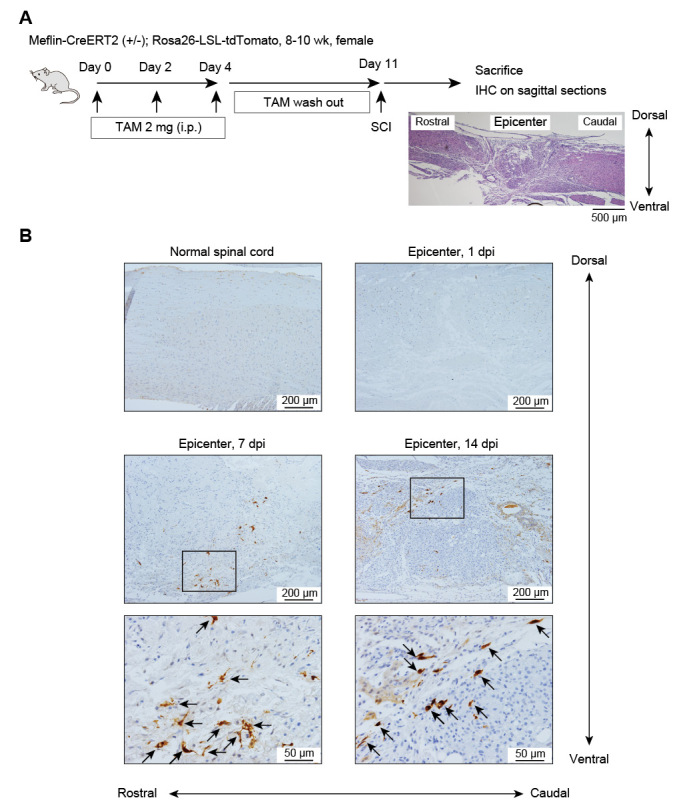
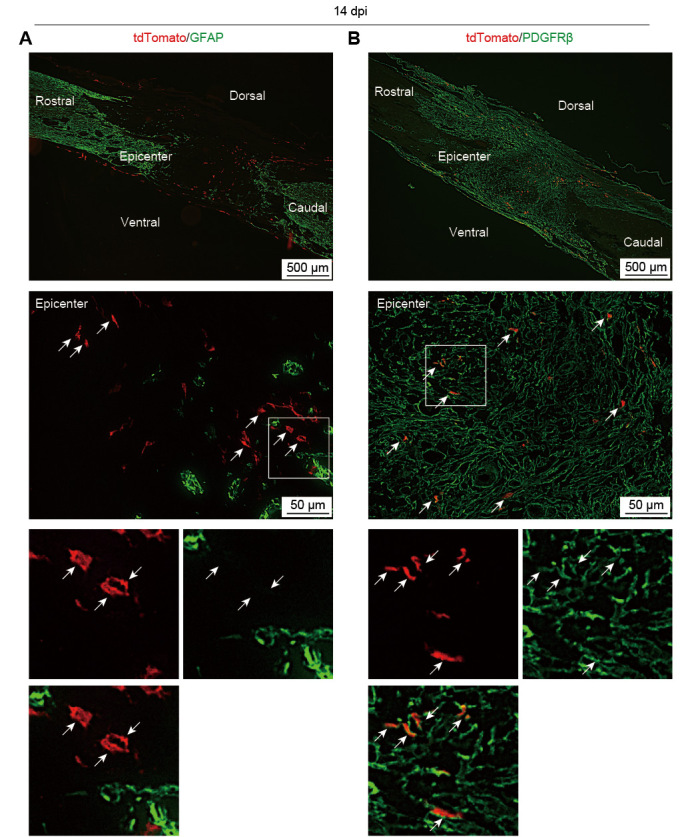
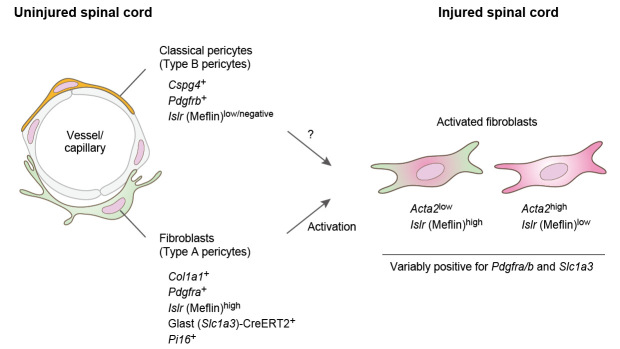
Scar formation after spinal cord injury (SCI) hampers axonal regeneration and functional recovery. Previous studies have shown that scar formation is attributable to both gliosis and fibrosis, the latter requiring fibroblast proliferation and extracellular matrix deposition. In this setting, there are essentially two cell types generating new fibroblasts: pericytes and tissue-resident fibroblasts. Here, we showed that Meflin, a glycosylphosphatidylinositol-anchored protein (a specific marker of fibroblasts across multiple organs) is expressed by fibroblasts in the normal mouse spinal cord. An in situ hybridization analysis showed that Meflin+ cells arose from the meninges and perivascular region of the spinal parenchyma after spinal cord compression injury. That finding was corroborated by single-cell transcriptomic data from normal and injured mouse spinal cords. Interestingly, Meflin+ cells are positive for the fibroblast markers collagen type I and platelet-derived growth factor receptor (PDGFR) α but not for pericyte markers such as PDGFRβ and chondroitin sulfate proteoglycan 4 in the normal spinal cord. Those findings are consistent with the recent view that tissue-resident fibroblasts play a central role in many other types of fibrotic disease. A lineage-tracing experiment using a knock-in mouse line that expressed inducible Cre recombinase under the control of the Meflin promoter showed that Meflin+ cells yield PDGFRβ+ myofibroblasts but not glial cells positive for glial fibrillary acidic protein. These findings suggest that the Meflin+ population contains the cells of origin of myofibroblasts that are involved in scar formation after SCI.
Keywords: Islr; Meflin; fibrosis; immunoglobulin superfamily containing leucine rich repeat; spinal cord injury.
Conflict of interest statement
The authors declare no conflicts of interest.
Figures
References
-
- Segi N, Nakashima H, Machino M, et al. Epidemiology of Cervical Fracture/Cervical Spinal Cord Injury and Changes in Surgical Treatment Modalities in Elderly Individuals During a 10-year Period: A Nationwide Multicenter Study in Japan. Global Spine J. 2024;14(5):1583–1594. doi: 10.1177/21925682231151643 - DOI - PMC - PubMed
MeSH terms
Substances
LinkOut - more resources
Full Text Sources
Medical
Miscellaneous