


The effects of sleep deprivation on cognitive flexibility: a scoping review of outcomes and biological mechanisms
- PMID: 40766906
- PMCID: PMC12321868
- DOI: 10.3389/fnins.2025.1626309
The effects of sleep deprivation on cognitive flexibility: a scoping review of outcomes and biological mechanisms
Abstract
Background: Sleep is vital for physical and mental health, yet sleep deprivation is a widespread issue that may impair cognitive flexibility, leading to rigid thinking and slower decision-making. This scoping review synthesizes evidence on the impact of sleep deprivation or sleep loss on cognitive flexibility.
Objective: To provide a comprehensive understanding of the complex and multifaceted effects of sleep deprivation on cognitive flexibility.
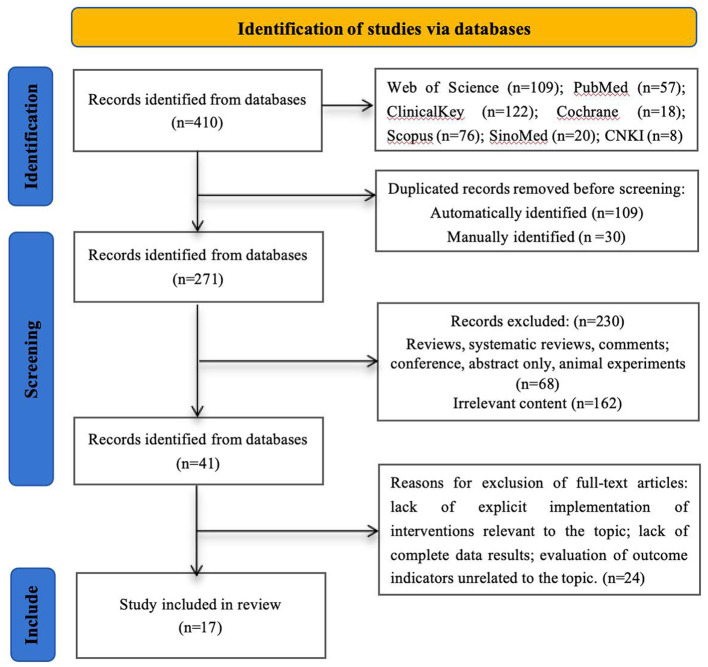
Methods: We searched PubMed, Web of Science, ClinicalKey, Cochrane, Scopus, SinoMed, and CNKI for studies evaluating the effects of sleep deprivation on cognitive flexibility. Two researchers independently screened and extracted data, assessing study quality using the Mixed Method Appraisal Tool (MMAT).
Results: Among the 410 retrieved articles, 6 randomized controlled trials and 11 non-randomized studies were included, focusing on the impact of sleep deprivation on cognitive flexibility across children, adolescents, college students, clinicians, athletes, and other adults. Eight studies found that sleep deprivation reduces cognitive flexibility, six reported no significant impact, and two noted temporary improvements due to physical stress. One study highlighted that being overweight exacerbates the negative effects of sleep deprivation on cognitive flexibility.
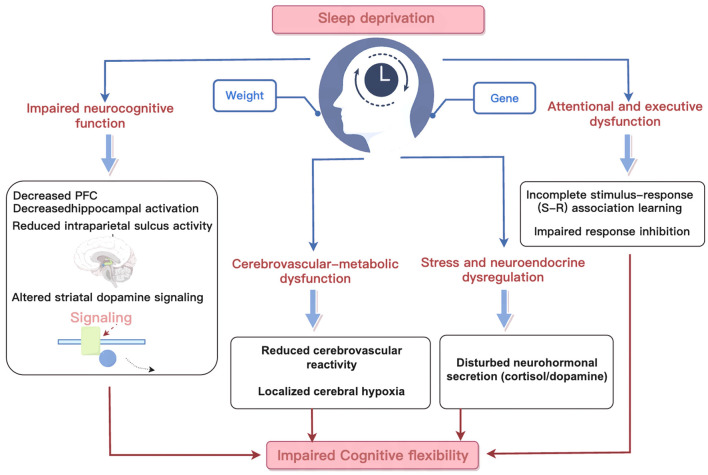
Conclusions: Sleep deprivation may predominantly impair accuracy rather than reaction time. Total sleep deprivation consistently reduces task-switching accuracy and cognitive flexibility, whereas partial sleep deprivation's effects remain unclear. The primary biological mechanisms involve decreased cerebral oxygen supply, impaired cerebrovascular reactivity, and alterations in gene expression and hormone levels. Rigorous randomized trials with objective measures are needed to assess long-term impacts across populations and age groups.
Keywords: biological mechanisms; cognitive flexibility; cognitive performance; executive function; sleep deprivation.
Copyright © 2025 Sun, Qu, Zhang, Zhang, Zhang, Zhao and Zhang.
Conflict of interest statement
The authors declare that the research was conducted in the absence of any commercial or financial relationships that could be construed as a potential conflict of interest.
Figures
References
-
- Abdelhamid B. M., Omar H., Hassan M. M., Embaby S. A., Rady A., Mohamed Aly H. (2020). Effects of partial sleep deprivation following night shift on cognitive functions of Egyptian anesthesiologists: prospective observational study. Egypt. J. Anaesth. 36, 61–68. 10.1080/11101849.2020.1768630 - DOI
Publication types
LinkOut - more resources
Full Text Sources
