


Effects of Obstructive Sleep Apnea on Cognition: An Analysis of Electroencephalography Microstates and Alpha Peak Frequency
- PMID: 40767426
- PMCID: PMC12326427
- DOI: 10.1111/cns.70553
Effects of Obstructive Sleep Apnea on Cognition: An Analysis of Electroencephalography Microstates and Alpha Peak Frequency
Abstract
Background: Respiration-related sleep disorders such as obstructive sleep apnea (OSA) are risk factors for mild cognitive impairment and age-related neurocognitive deficits. Nearly 60% of patients with OSA suffer from a variety of impaired cognitive functions, including attention, working memory, and episodic memory, and are susceptible to mood disorders such as depression and anxiety. However, it remains largely unexplored regarding the features of the electroencephalography (EEG) microstates of these patients and the potential association between the EEG microstates and the cognitive impairments.
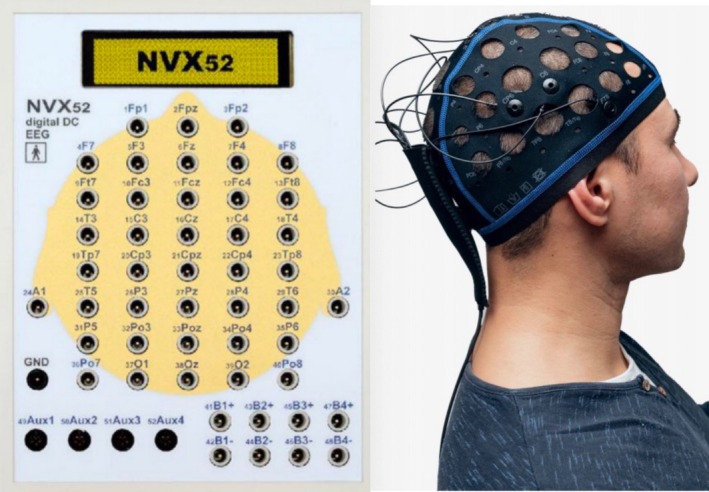
Method: In this study, we performed polysomnography (PSG) on 70 patients who were recruited from the Department of Neurology and subsequently categorized into the OSA group (44 patients) and the non-OSA group (26 patients). We collected and analyzed their demographic information, blood and body fluid specimens, EEG alpha peak frequency, and EEG microstates.
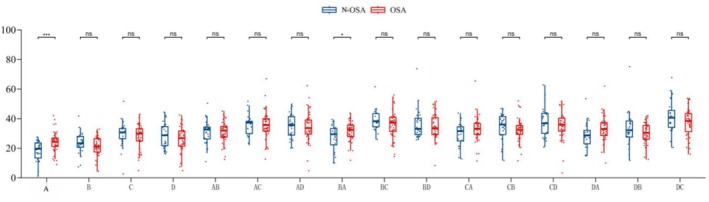
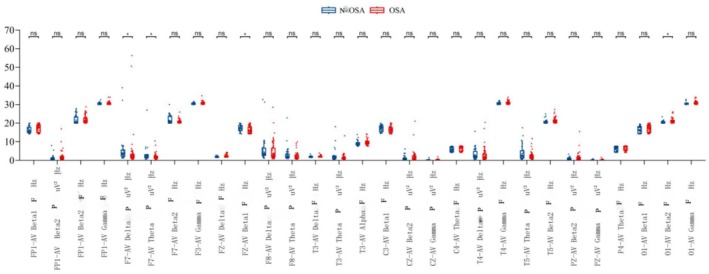
Result: Compared with the non-OSA group, the OSA group reported more cases of comorbid anxiety symptoms (58.5% vs. 29%), and scored significantly lower in the word classification test. Of note, compared with the non-OSA counterparts, the OSA patients displayed markedly more microstate A, a significantly higher rate of B to A microstate conversion, and drastically lower Delta and Theta power at the F7-AV position.
Conclusion: These findings confirm that OSA may affect sleep quality and cognitive function by influencing EEG activity and microstates, which highlights a potential EEG network mechanism for OSA-induced cognitive impairment.
Keywords: EEG microstates; biomarkers; cognitive impairment; obstructive sleep apnea syndrome (OSA).
© 2025 The Author(s). CNS Neuroscience & Therapeutics published by John Wiley & Sons Ltd.
Conflict of interest statement
The authors declare no conflicts of interest.
Figures

References
MeSH terms
Grants and funding
LinkOut - more resources
Full Text Sources
Miscellaneous
