


Occurrence, concentration, and risk assessment of selected pharmaceuticals in representative cropland soils and their underlying groundwater in Gauteng province, South Africa
- PMID: 40770519
- PMCID: PMC12328511
- DOI: 10.1007/s10661-025-14436-1
Occurrence, concentration, and risk assessment of selected pharmaceuticals in representative cropland soils and their underlying groundwater in Gauteng province, South Africa
Abstract
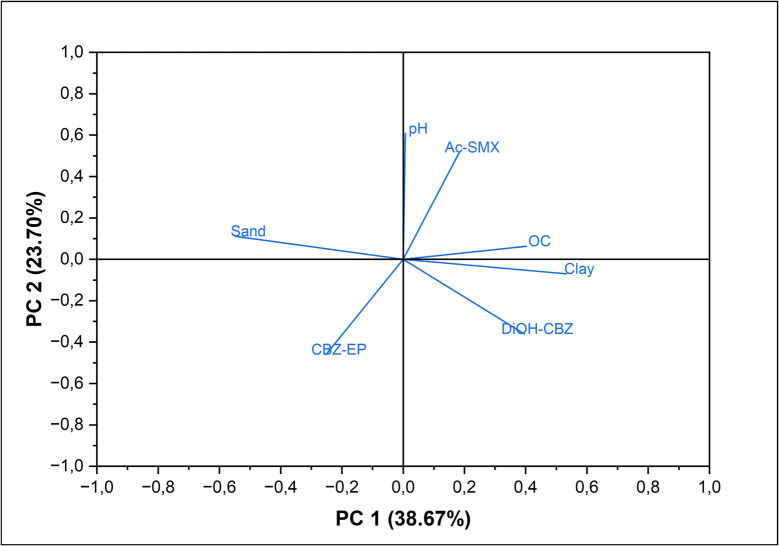
Traceable levels of pharmaceuticals are frequently detected in various environmental matrices. However, studies investigating the occurrence of pharmaceuticals in cropland soils and underlying groundwaters are relatively limited, hindering risk assessments. This study aims the following: (1) determine the occurrence of selected pharmaceuticals in cropland soils and underlying groundwater, (2) investigate the correlations between pharmaceutical's occurrence in cropland soils and underlying groundwater, (3) evaluate the correlations between soil and water parameters and pharmaceutical's concentration, and (4) estimate human health risk from pharmaceuticals present in groundwater. A single soil and groundwater sampling campaign was conducted across eighteen farmers' fields, characterized by varying farm management practices. Caffeine, carbamazepine-10,11-epoxide, carbamazepine diol, and N4-acetylsulfamethoxazole were detected in groundwater, with concentrations reaching 67.1, 106.7, 506.7, and 113.8 ng L-1, respectively. Three of these compounds, carbamazepine-10,11-epoxide, carbamazepine diol, and N4-acetylsulfamethoxazole, were also present in soils with concentrations reaching 10.0, 353.5, and 59.1 ng g-1 dry weight, respectively, indicating potential soil-to-groundwater transfer. Principal component analysis revealed a strong correlation between the application of commercial inorganic fertilizers and carbamazepine-10,11-epoxide levels and the irrigation practices and the levels of caffeine, carbamazepine diol, and N4-acetylsulfamethoxazole in the soil and groundwater. Risk quotients showed that caffeine poses negligible risk to human health through drinking water exposure. Overall, the findings suggest that pharmaceuticals are present in South African croplands and underlying groundwater, though current levels do not pose a significant risk to human health. However, future studies should focus on other metabolites of pharmaceuticals due to their higher concentrations in the soil and groundwater.
Keywords: Cropland; Groundwater; Occurrence; Pharmaceuticals; Risk.
© 2025. The Author(s).
Conflict of interest statement
Declarations. Ethics approval: All authors have read, understood, and have complied as applicable with the statement on “Ethical responsibilities of Authors” as found in the Instructions for Authors. Consent for publication: The results provided in this manuscript have not published elsewhere, nor are they under consideration by another publisher. Consent to participate: All authors have given consent to their contribution. Competing interests: The authors declare no competing interests.
Figures




References
-
- Agricultural Research Council–Institute for Soil, Climate and Water (ARC-ISCW) (2006). Land types and soil inventory databases of South Africa. Pretoria: ARC-ISCW.
-
- Arun, S., Xin, L., Gaonkar, O., Neppolian, B., Zhang, G., & Chakraborty, P. (2022). Antibiotics in sewage treatment plants, receiving water bodies and groundwater of Chennai city and the suburb, South India: Occurrence, removal efficiencies, and risk assessment. Science of the Total Environment,851, Article 158195. 10.1016/j.scitotenv.2022.158195 - DOI - PubMed
-
- Bastos, M. C., Soubrand, M., Le Guet, T., Le Floch, É., Joussein, E., Baudu, M., & Casellas, M. (2020). Occurrence, fate and environmental risk assessment of pharmaceutical compounds in soils amended with organic wastes. Geoderma,375, Article 114498. 10.1016/j.geoderma.2020.114498 - DOI
-
- Bolujoko, N. B., Olorunnisola, D., Poudel, S., Omorogie, M. O., Ogunlaja, O. O., Olorunnisola, C. G., & Unuabonah, E. I. (2024). Occurrence profiling, risk assessment, and correlations of antimicrobials in surface water and groundwater systems in Southwest Nigeria. Environmental Science: Processes & Impacts,26(3), 595–610. 10.1039/D3EM00516J - DOI - PubMed
MeSH terms
Substances
LinkOut - more resources
Full Text Sources
