


Exosome-Loaded Bioscaffolds for Spinal Cord Injuries: A Review
- PMID: 40771301
- PMCID: PMC12328054
- DOI: 10.1155/sci/8841129
Exosome-Loaded Bioscaffolds for Spinal Cord Injuries: A Review
Abstract
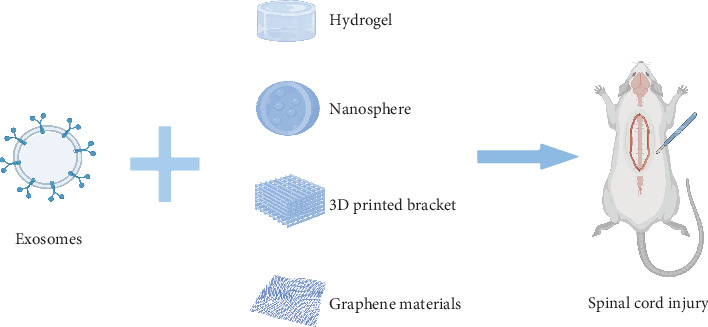
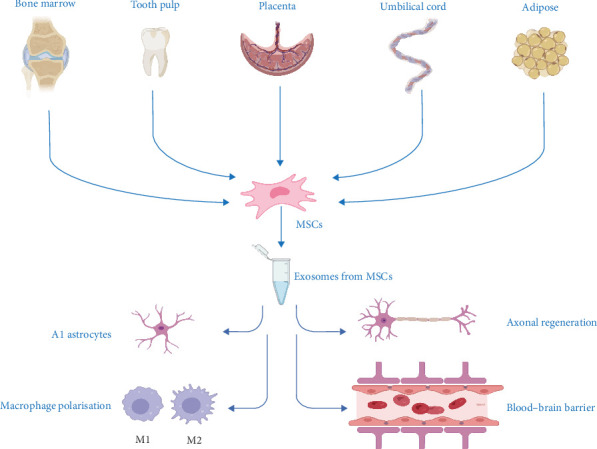
Exosomes are naturally occurring cellular products released by various cell types in the body. Their composition is similar to that of human tissues, which reduces the risk of immune rejection. As critical mediators of intercellular communication, exosomes transmit signals and information that regulate the physiological states of surrounding tissues. Depending on their cellular origin and molecular content, exosomes can either promote nerve regeneration and functional recovery at the site of spinal cord injury (SCI) or exacerbate the local injury microenvironment. However, as a cellular product, the composition and function of exosomes are affected by the type and state of the cells from which they originate, and thus, there may be specificity problems in treatment, such as the possible instability of the therapeutic effect, et cetera. Moreover, exosomes need to be further optimized in terms of their delivery and release strategies in order to improve the duration and stability of the therapeutic effect. Thus, a single therapy approach is often insufficient to effectively support nerve repair following SCI. Numerous studies have demonstrated that encapsulating exosomes within biomaterial scaffolds enhances their delivery and retention at the injury site, thereby improving their viability. This paper reviews the latest research on stem cell-derived exosomes and biomaterials in the context of SCI. It further explores the combined application of exosomes and biomaterial scaffolds in SCI treatment, while also addressing the associated challenges and future prospects.
Keywords: biological material; exosomes; inflammatory reaction; neural repair; spinal cord injury; stem cells.
Copyright © 2025 Ruilin Chen et al. Stem Cells International published by John Wiley & Sons Ltd.
Conflict of interest statement
The authors declare no conflicts of interest.
Figures
References
-
- Samantaray S., Smith J. A., Das A., et al. Low Dose Estrogen Prevents Neuronal Degeneration and Microglial Reactivity in an Acute Model of Spinal Cord Injury: Effect of Dosing, Route of Administration, and Therapy Delay. Neurochemical Research . 2011;36(10):1809–1816. doi: 10.1007/s11064-011-0498-y. - DOI - PMC - PubMed
Publication types
LinkOut - more resources
Full Text Sources
Research Materials
