


Global trends in the application of nanopore sequencing technology in the detection of infectious disease pathogens: a bibliometric analysis from 2014 to 2024
- PMID: 40771470
- PMCID: PMC12325371
- DOI: 10.3389/fmed.2025.1610063
Global trends in the application of nanopore sequencing technology in the detection of infectious disease pathogens: a bibliometric analysis from 2014 to 2024
Erratum in
-
Correction: Global trends in the application of nanopore sequencing technology in the detection of infectious disease pathogens: a bibliometric analysis from 2014 to 2024.Front Med (Lausanne). 2025 Sep 5;12:1678005. doi: 10.3389/fmed.2025.1678005. eCollection 2025. Front Med (Lausanne). 2025. PMID: 40978752 Free PMC article.
Abstract
Purpose: This study aimed to comprehensively analyze the global landscape, trends, and research focus of nanopore sequencing technology in the field of pathogenic microorganism diagnosis using bibliometric analysis.
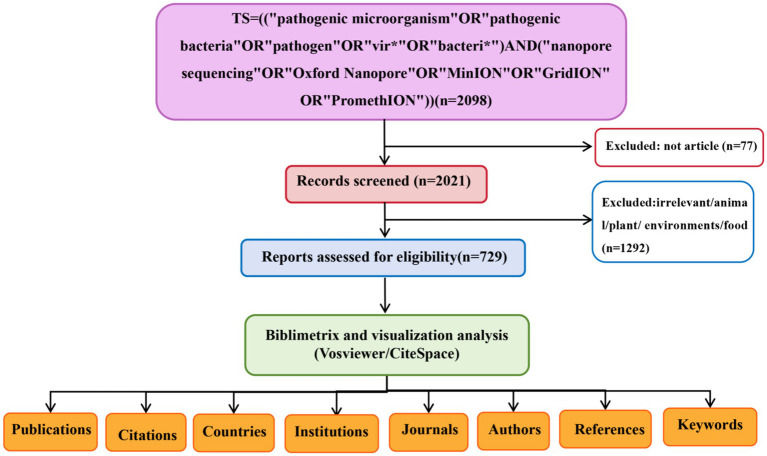
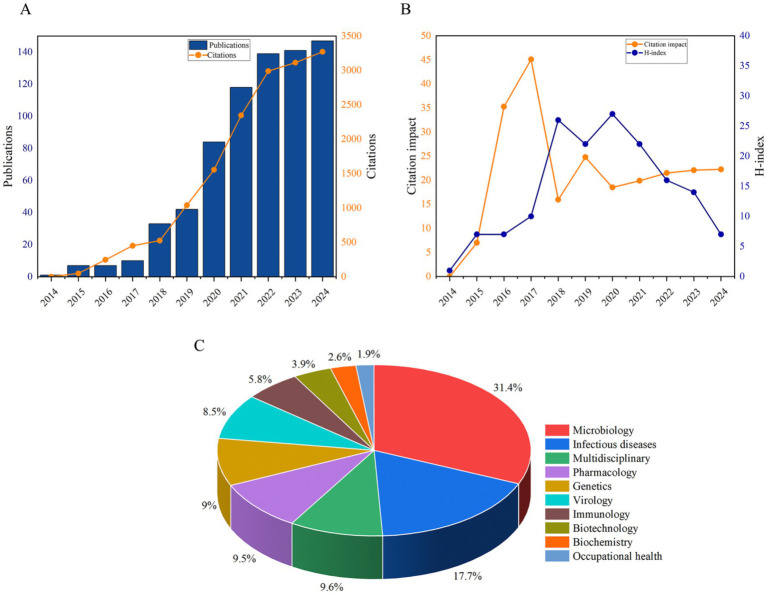
Methods: Literature published between January 2014, and December 2024, was retrieved from the Web of Science Core Collection. A cross-sectional bibliometric analysis was conducted using VOSviewer, CiteSpace, Origin 2024, and R software to extract and evaluate metrics. Publications were categorized by country, institution, author, journal, highly cited papers, and keywords. Variables were compared based on publication output and academic impact, which included citation counts, citation impact, H-index, journal impact factor, total link strength, major pathogens, and research directions.
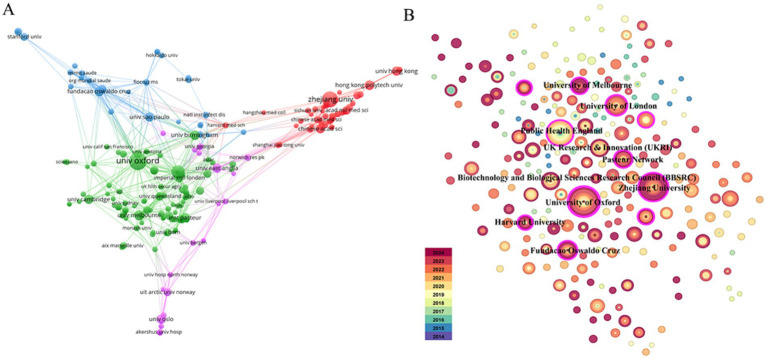
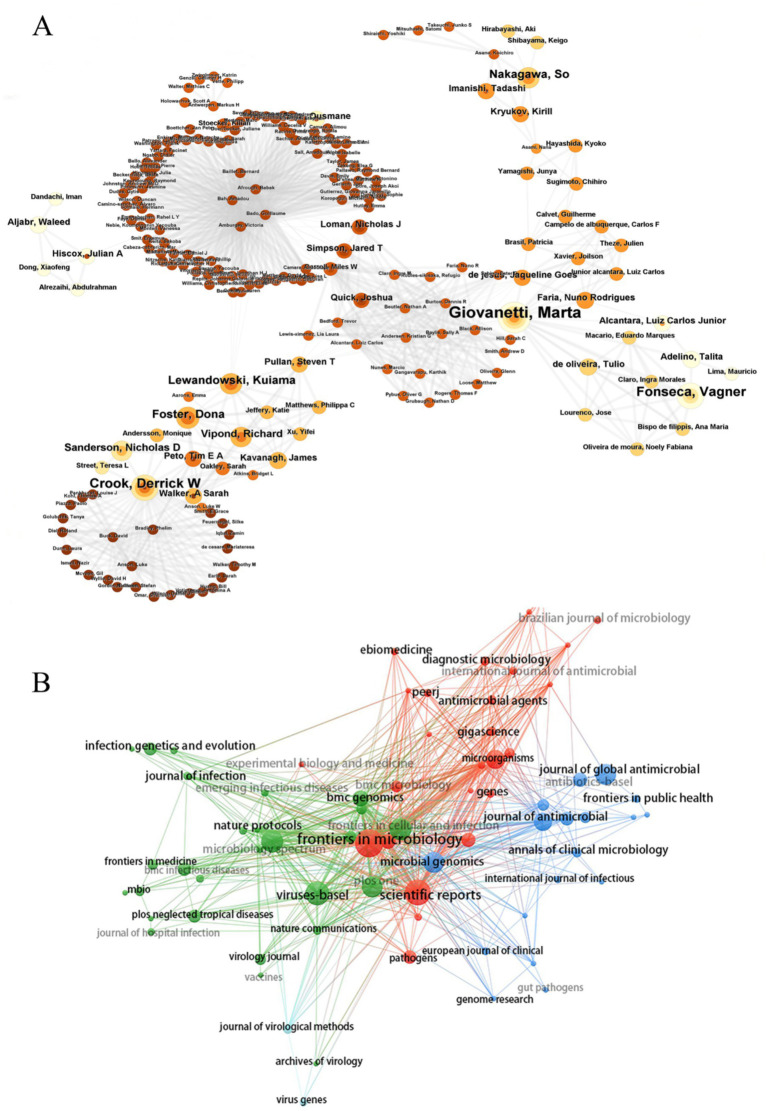
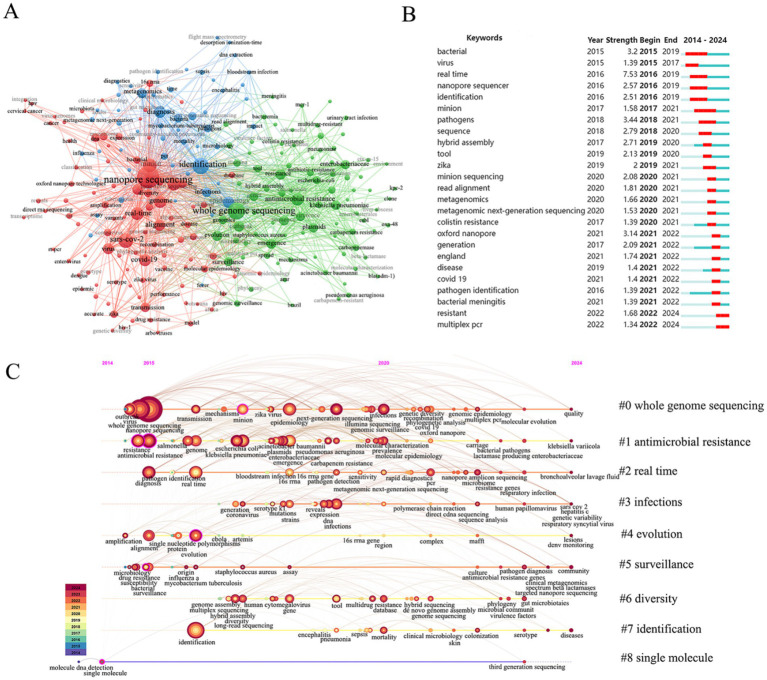
Results: Initial searches identified 2,098 articles related to nanopore sequencing and pathogenic microorganisms, of which 729 were ultimately included in the analysis. Among the 104 participating countries, the United Kingdom, the United States, and China have led in publication output, citations, and academic influence. The most versatile institution was the University of Oxford, followed by Zhejiang University. The most productive scholars and journals were Crook, Derrick W., and Frontiers in Microbiology, respectively. Keyword analysis revealed that the primary advantages of nanopore sequencing include portability, long-read capabilities, and real-time analysis. Current research hotspots focus on real-time pathogen identification, viral genomic surveillance, and antimicrobial resistance profiling.
Conclusion: Presently, nanopore sequencing is rapidly transitioning from laboratory research to on-site sequencing and public health emergency scenarios. To our knowledge, this study is the first bibliometric analysis to comprehensively delineate the latest developments in nanopore sequencing in pathogenic microorganism diagnosis. It provides researchers with an understanding of the current situation, identifies knowledge gaps, and points out future research directions.
Keywords: antimicrobial resistance; bibliometric analysis; genomic surveillance; nanopore sequencing; pathogenic microorganisms; real-time.
Copyright © 2025 Long, Zeng, Li, Zhang and Deng.
Conflict of interest statement
The authors declare that the research was conducted in the absence of any commercial or financial relationships that could be construed as a potential conflict of interest.
Figures

References
LinkOut - more resources
Full Text Sources
