


Exploring the fate of Listeria monocytogenes in an in vitro digestion and fecal fermentation model: insights into survival during digestion and interaction with gut microbiota
- PMID: 40771694
- PMCID: PMC12325261
- DOI: 10.3389/fmicb.2025.1616720
Exploring the fate of Listeria monocytogenes in an in vitro digestion and fecal fermentation model: insights into survival during digestion and interaction with gut microbiota
Abstract
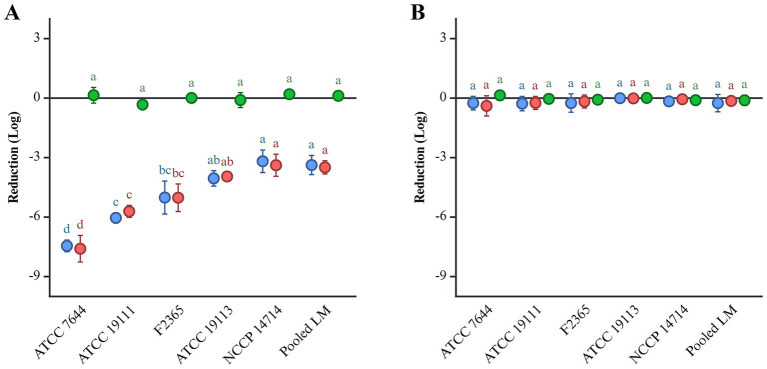
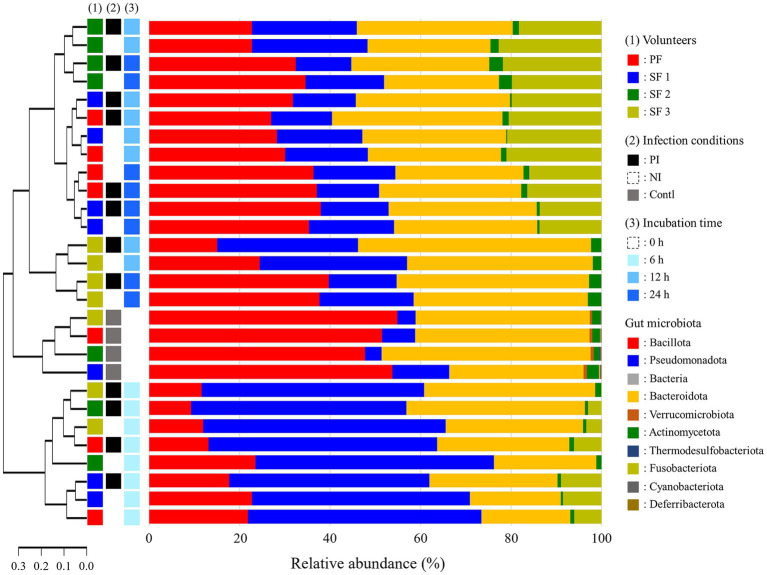
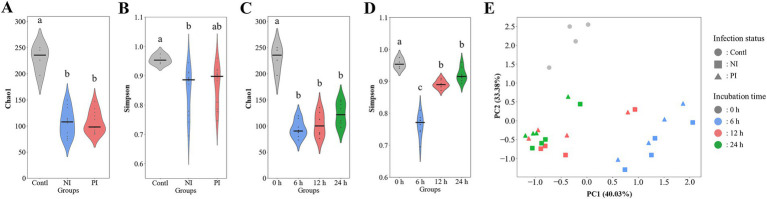
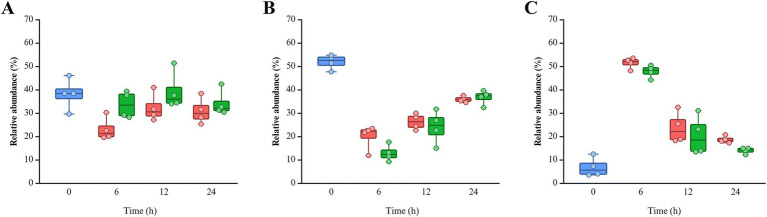
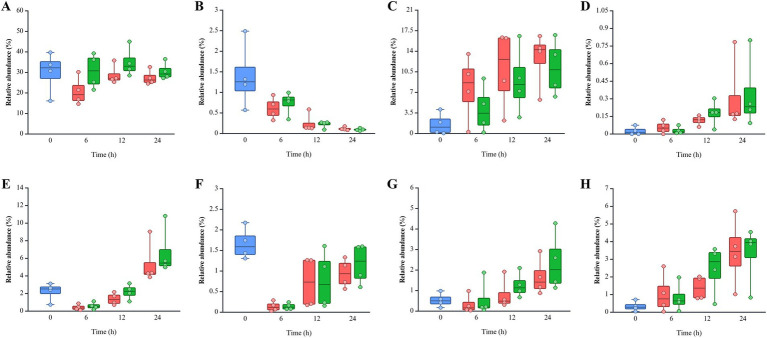
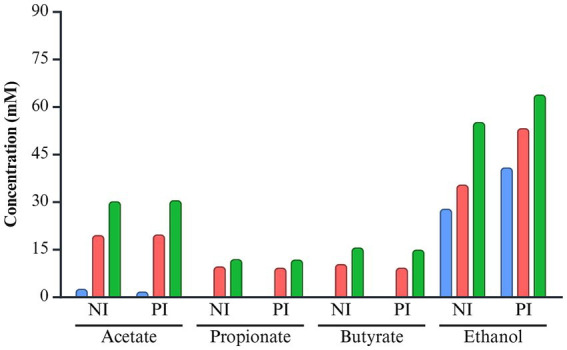
Listeria monocytogenes is a foodborne pathogen that causes listeriosis, a disease with a mortality rate of 20 ~ 30%. This bacterium enters the human body through contaminated food or ingredients and encounters primary innate defense systems, including gastric acid, bile salts, and gut microbiota. These systems play a critical role in preventing pathogen colonization and infection. However, interactions with pathogens can also alter the gut microbiota profile. This study aimed to investigate the host's defense mechanisms against L. monocytogenes and the changes in the gut microbiota profile following infection. L. monocytogenes ATCC 7644 showed the greatest reduction (7.6 log CFU), followed by ATCC 19111 (5.71 log), F2365 (5.02 log), ATCC 19113 (3.96 log), and NCCP 14714 (3.38 log), while the pooled cocktail exhibited a 3.49 log CFU reduction. Notably, the clinical isolates NCCP 14714 and F2365 exhibited greater resistance to the simulated digestive process compared to the food isolate ATCC 7644. L. monocytogenes infection induced notable shifts in specific bacterial groups, including Bacteroides, Bifidobacterium, and the Mediterraneibacter gnavus group, as well as an increase in ethanol levels. These alterations may contribute to gut barrier disruption and the upregulation of immune responses, ultimately promoting the pathogenesis of L. monocytogenes infection. The findings from this study provide valuable insights into the interaction between L. monocytogenes and the human gut microbiota, offering a comparative reference for the interpretation of future research.
Keywords: Listeria monocytogenes; fecal fermentation; gut microbiota; in vitro digestion; microbial interactions.
Copyright © 2025 Kim, Singh, Kim, An, Je, Lee, Yun and Koo.
Conflict of interest statement
The authors declare that the research was conducted in the absence of any commercial or financial relationships that could be construed as a potential conflict of interest.
Figures
References
-
- Alva-Murillo N., Ochoa-Zarzosa A., López-Meza J. E. (2012). Short chain fatty acids (propionic and hexanoic) decrease Staphylococcus aureus internalization into bovine mammary epithelial cells and modulate antimicrobial peptide expression. Vet. Microbiol. 155, 324–331. doi: 10.1016/j.vetmic.2011.08.025, PMID: - DOI - PubMed
LinkOut - more resources
Full Text Sources
