


Gestational stress influences cognition and behavior
- PMID: 40772234
- PMCID: PMC12327493
- DOI: 10.2217/fnl.10.35
Gestational stress influences cognition and behavior
Abstract
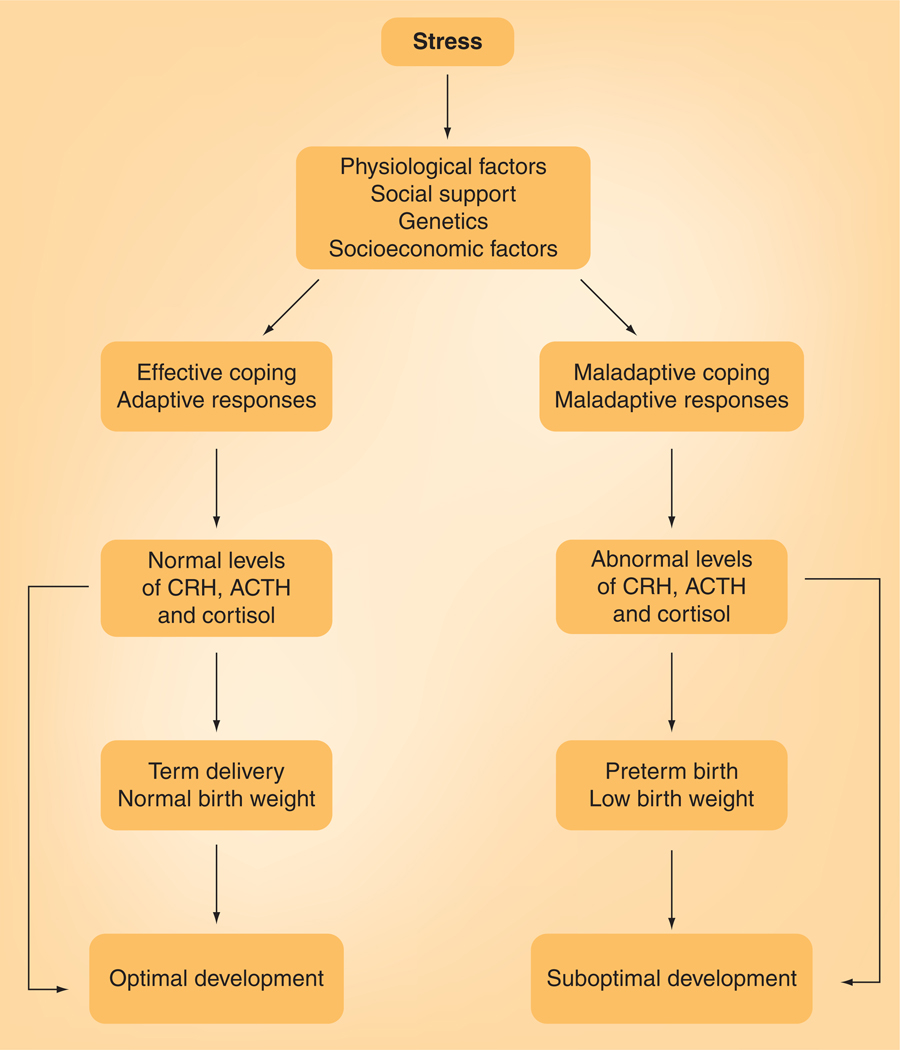
The developmental origins of disease or fetal programming model predicts that early exposures to threat or adverse conditions have lifelong consequences that result in harmful outcomes for health. The vast majority of the studies in support of the programming model in human beings are retrospective and most relied on surrogate measures of early experience such as birth weight or preterm birth. Recently, a small number of prospective studies have been reported that have documented the developmental consequences of exposures to stressful intrauterine conditions. These studies of gestational stress have clearly shown that fetal exposures to psychosocial and/or biological markers of adversity have significant and largely negative consequences for fetal, infant and child neurological development. Fetal exposure to stress, especially early in gestation, results in delayed fetal maturation and impaired cognitive performance during infancy and results in decreased brain volume in areas associated with learning and memory in children. The accumulating evidence supports the conclusion that fetal exposure to stress profoundly influences the nervous system, with consequences that persist into childhood and perhaps beyond.
Keywords: anxiety; corticotrophic-releasing hormone; cortisol; developmental origins of disease; fetal development; fetal programming; infant development; pregnancy; prenatal stress; sex difference; stress.
Conflict of interest statement
Curt A Sandman is supported by the NIH grants NS-41298, HD-51852 and HD-28413 and Elysia P Davis is supported by the NIH grant HD-50662. The authors have no other relevant affiliations or financial involvement with any organization or entity with a financial interest in or financial conflict with the subject matter or materials discussed in the manuscript apart from those disclosed.
Figures


References
-
- Kuzawa CW: Fetal origins of developmental plasticity: are fetal cues reliable predictors of future nutritional environments? Am. J. Hum. Biol. 17(1), 5–21 (2005). - PubMed
-
-
Denver RJ: Environmental stress as a developmental cue: corticotropin-releasing hormone is a proximate mediator of adaptive phenotypic plasticity in amphibian metamorphosis. Horm. Behav. 31, 169–179 (1997).
■■ First paper to describe the role of corticotrophic-releasing hormone (CRH) in the developmental trajectory of the tadpole, with strong implications for human development.
-
-
- Pike I: Maternal stress and fetal responses: evolutionary perspectives on preterm delivery. Am. J. Hum. Biol. 17, 55–65 (2005). - PubMed
-
- Smith DC: Adult recruitment in chorus frogs: effects of size and date at metamorphosis. Ecology 68, 344–350 (1987).
-
- John-Adler HB, Morin PJ: Effects of larval density on jumping ability and stamina in newly metamorphosed Bufo-woodhousifowleri. Copeia 856–860 (1990).
Grants and funding
LinkOut - more resources
Full Text Sources