


Atypical Influenza A(H3N2) Activity Patterns in Germany, 2021-2023, and Characterization of Newly Emerged Virus Clades
- PMID: 40772603
- PMCID: PMC12330201
- DOI: 10.1002/jmv.70530
Atypical Influenza A(H3N2) Activity Patterns in Germany, 2021-2023, and Characterization of Newly Emerged Virus Clades
Abstract
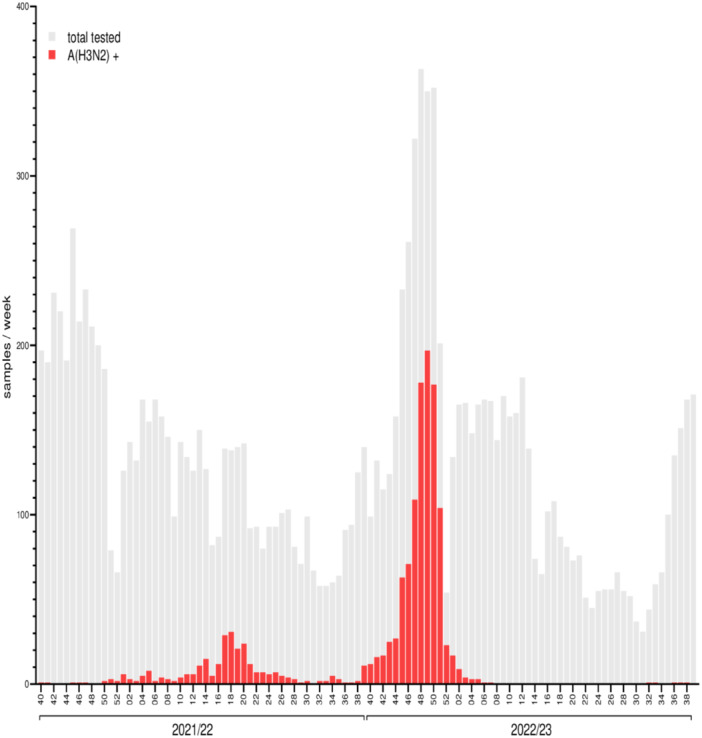
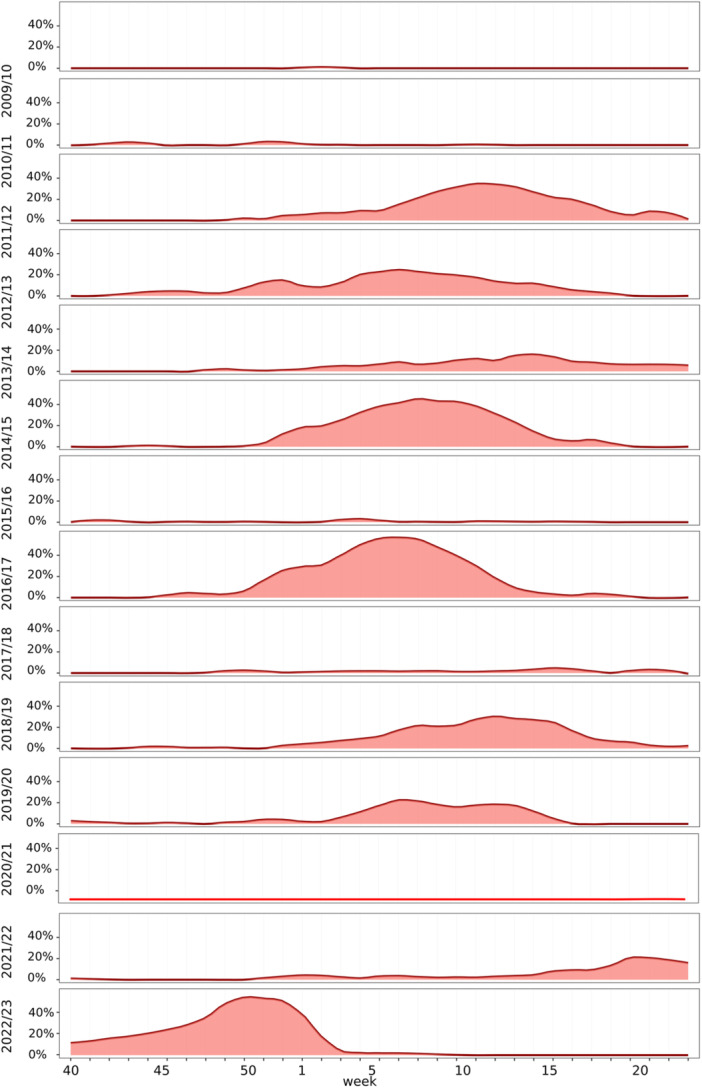
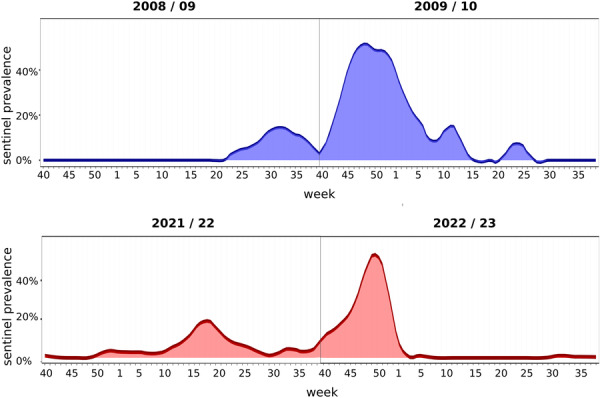
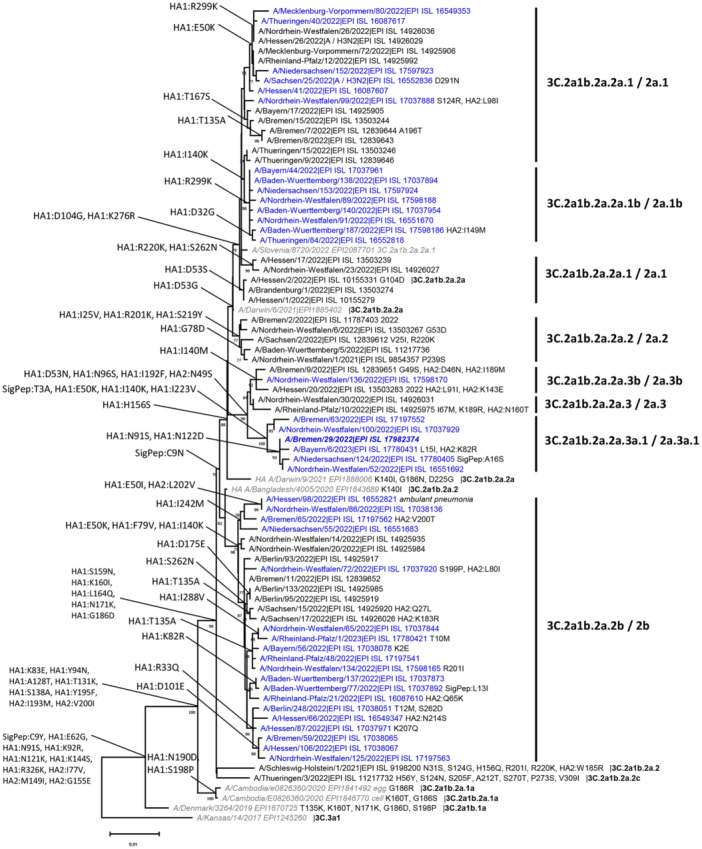
The first waves of the COVID-19 pandemic were accompanied by an unprecedented decrease of influenza activity which persisted throughout the 2020/21 and 2021/22 winter seasons. Here, we report on the unusual influenza circulation patterns that followed in the year 2022, which was dominated throughout by A(H3N2) influenza viruses. After a delayed spring wave in 2022, A(H3N2) influenza viruses circulated at low levels throughout the summer and rose to a prominent, prematurely-timed fall/winter wave peaking in December, with highest positivity rates observed in 10-12-years old children. This winter wave ended abruptly with the national school holidays, when positivity rates decreased sharply not only in children but also in other age groups. Genetic analysis of influenza virus hemagglutinin (HA) showed cocirculation of 10 A(H3N2) clades, of which three (2a.1b, 2a.3a.1, and 2b) became dominant in late 2022. All A(H3N2) viruses, including those assigned to the new clades, displayed high titers in HA inhibition tests with postinfection ferret antiserum raised against the A(H3N2) vaccine strains A/Cambodia/e0826360/2020 and A/Darwin/9/2021. All viruses were susceptible to neuraminidase inhibitors and the polymerase inhibitor baloxavir marboxil, but carried the M2-S31N substitution conferring adamantane resistance. Our findings shed light on disturbed seasonality of A(H3N2) circulation in the post-COVID-19 era.
Keywords: antigenic analysis; influenza, surveillance; inhibition test; phylogenetic analysis; resistance; respiratory infection; vaccine; virological analysis.
© 2025 The Author(s). Journal of Medical Virology published by Wiley Periodicals LLC.
Conflict of interest statement
The authors declare no conflicts of interest.
Figures




References
-
- WHO . Influenza (Seasonal) Fact sheet 03. October 2023. Fact sheet 2023; https://www.who.int/en/news-room/fact-sheets/detail/influenza-(seasonal), accessed January 15, 2025.
-
- Javanian M., Barary M., Ghebrehewet S., Koppolu V., Vasigala V., and Ebrahimpour S., “A Brief Review of Influenza Virus Infection,” Journal of Medical Virology 93, no. 8 (2021): 4638–4646. - PubMed
-
- Moriyama M., Hugentobler W. J., and Iwasaki A., “Seasonality of Respiratory Viral Infections,” Annual Review of Virology 7, no. 1 (2020): 83–101. - PubMed
MeSH terms
Substances
LinkOut - more resources
Full Text Sources
Medical
