


Geometric principles of wobble board design for balance training and rehabilitation
- PMID: 40774976
- PMCID: PMC12331965
- DOI: 10.1038/s41598-025-07290-1
Geometric principles of wobble board design for balance training and rehabilitation
Abstract
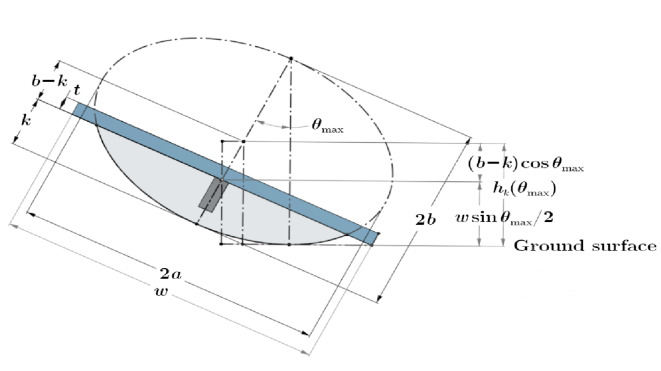
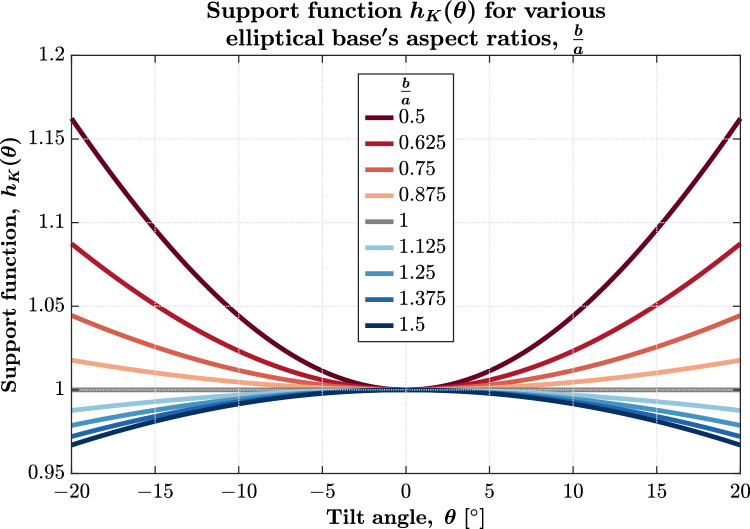
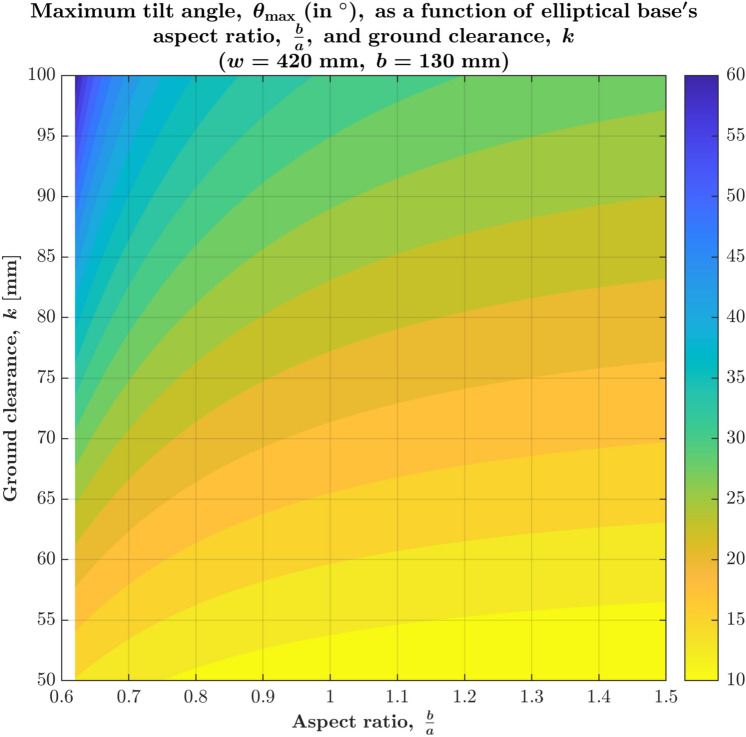
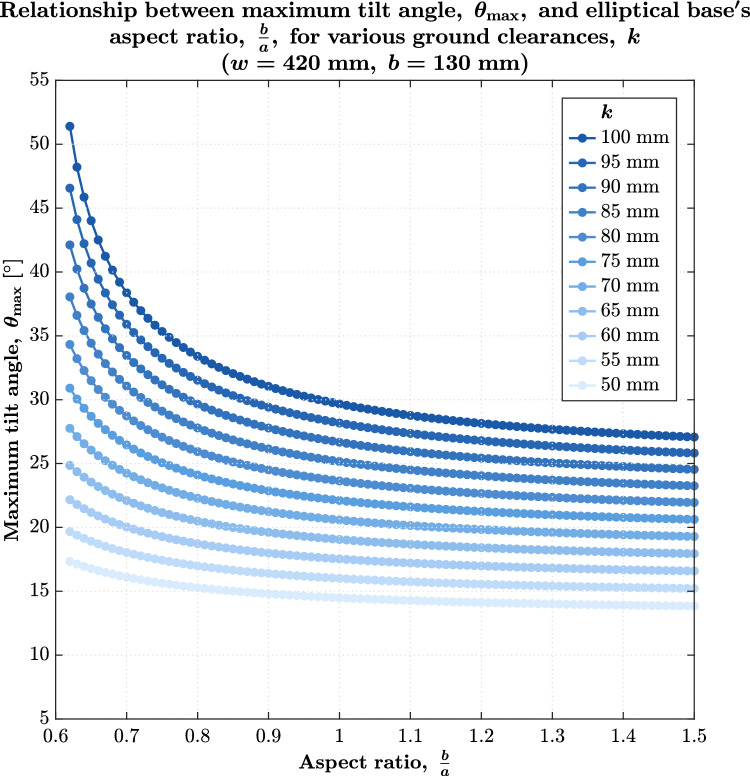
Wobble boards-unstable platforms mounted on curved bases-are widely used for balance training and rehabilitation. However, their design lacks a systematic theoretical foundation, making it difficult to precisely tailor instability characteristics to specific neuromuscular demands. This study introduces a geometric framework for optimizing wobble board instability through controlled manipulation of base geometry. We derived exact relationships between the elliptical base's geometric parameters and the board's instability characteristics for the general case of a truncated elliptical base geometry. Our analysis reveals that the ratio between the vertical and horizontal semi-axes of the elliptical base plays a critical role in shaping stability properties. If this ratio exceeds a certain critical value-which can be precisely determined from the geometry-the board transitions into an unstable regime requiring rapid, reflexive postural responses. Conversely, ratios below this critical value enable more stable configurations that support larger, compensatory movements involving gross motor coordination. The absolute size of the elliptical base further modulates these effects by scaling the overall postural demand. Furthermore, we demonstrate that ground clearance (i.e., the vertical distance between the base's truncation and the ground) governs safety trade-offs by limiting the maximum tilt angle achievable before loss of stability. These results constitute theoretical predictions derived from geometric modeling that offer a structured basis for customizing instability in training or rehabilitation contexts, though their clinical relevance remains to be established through future empirical validation. By linking these parameters to postural demands, this framework provides clinicians and trainers with a structured, evidence-based method for designing, prescribing, and progressively adapting wobble boards to match individual skill levels and neuromuscular requirements.
Keywords: Balance board; Balance control; Neuromechanics; Postural stability; Postural training; Rehabilitation engineering.
© 2025. The Author(s).
Conflict of interest statement
Declarations. Competing interests: The authors declare no competing interests.
Figures
References
-
- Nashner, L. M. & McCollum, G. The organization of human postural movements: A formal basis and experimental synthesis. Behav. Brain Sci.8(1), 135–150. 10.1017/S0140525X00020008 (1985). - DOI
-
- Shumway-Cook, A. Motor Control: Translating Research into Clinical Practice (Lippincoot Williams & Wilkins, Philadelphia, PA, 2007).
-
- Winter, D. A. Human balance and posture control during standing and walking. Gait Posture3(4), 193–214. 10.1016/0966-6362(96)82849-9 (1995). - DOI
MeSH terms
Grants and funding
LinkOut - more resources
Full Text Sources
