


A single-blind active-control randomized controlled trial of group-based social competence intervention
- PMID: 40774996
- PMCID: PMC12331927
- DOI: 10.1038/s41598-025-12876-w
A single-blind active-control randomized controlled trial of group-based social competence intervention
Abstract
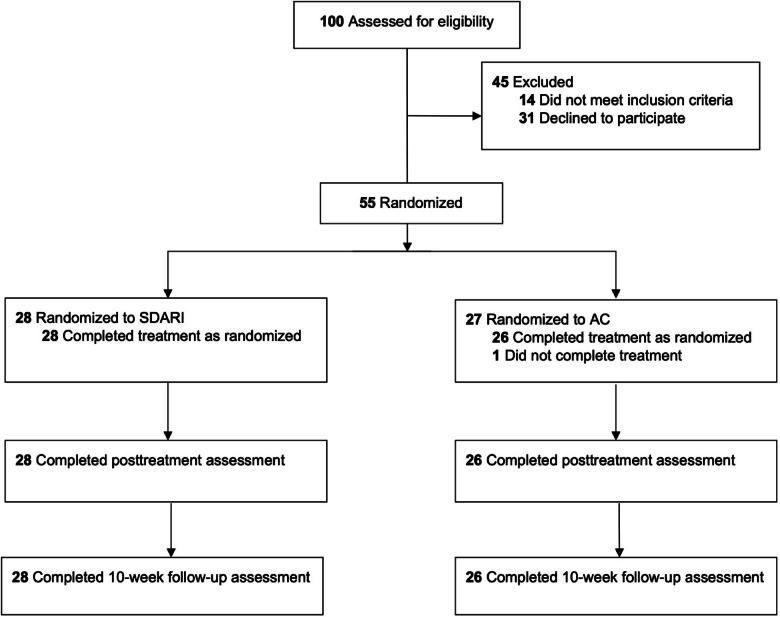
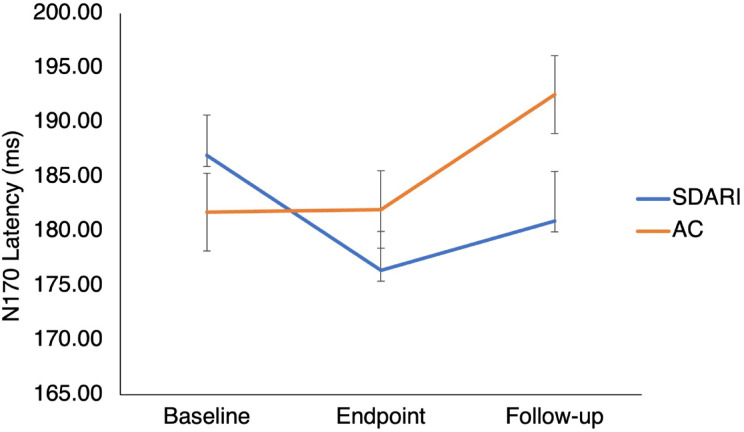
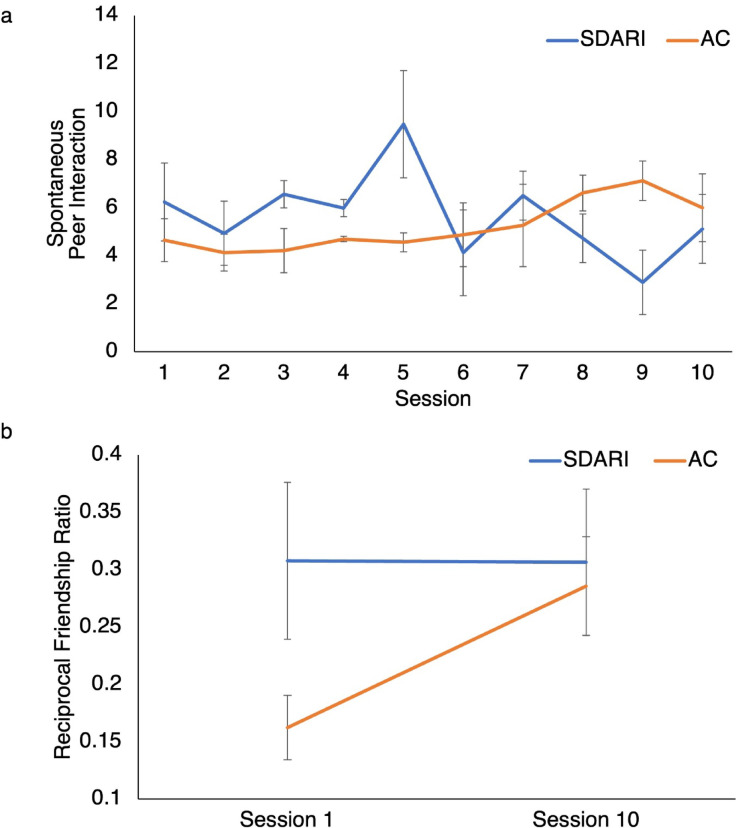
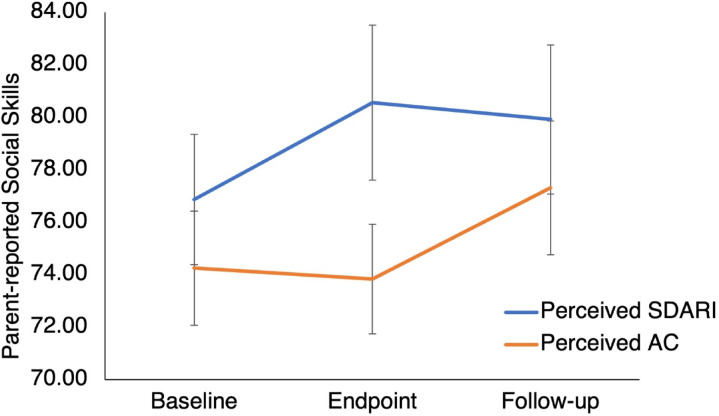
This study evaluated specific effects of a blinded randomized controlled trial of a group-based social skills intervention, Socio-Dramatic Affective-Relational Intervention (SDARI), against an active attention control (AC) intervention. Fifty-five autistic youth (Mage=12.40; SDage=2.92; 73% boys) were randomly allocated to either the SDARI or the AC condition. Both interventions comprised 10 weekly sessions and were tightly matched for structure, participant age, IQ, and gender, such that the specific activities of SDARI were directly examined. Multimethod assessments at pre-, post-treatment, and 10-week follow-up included informant-reported social skills and autism-related behaviors, observer-rated spontaneous peer interaction, peer-rated friendships, and a metric of social information processing (the N170 event-related potential). Parent expectancy effect was also explored by examining perceived conditions by parents/caregivers, who were blinded to the condition assignment. Compared to the AC condition, the SDARI group evinced improvements in the N170 latency, rapid peer-liking, and reciprocal friendships at endpoint and follow-up. While the conditions did not differ on parent-reported social skills or autism-related behaviors, a parental expectancy effect was found where parent-rated social skills improvements were related to parents' perceived conditions. These results provide support for the efficacy of the specific SDARI activities on several objective, reliable outcomes of social functioning in autistic youth.
Keywords: Autism spectrum disorder; Group-based social skills intervention; Randomized controlled trial; Social skills intervention.
© 2025. The Author(s).
Conflict of interest statement
Declarations. Competing interests: The authors declare no competing interests.
Figures
References
-
- White, S., Keonig, K. & Scahill, L. Social skills development in children with autism spectrum disorders: A review of the intervention research. J. Autism Dev. Disord. 37, 1858–1868 (2007). - PubMed
-
- Jones, R. M., Carberry, C., Hamo, A. & Lord, C. Placebo-like response in absence of treatment in children with autism. Autism Res.10, 1567–1572 (2017). - PubMed
Publication types
MeSH terms
LinkOut - more resources
Full Text Sources
