Long-term trends in obesity and overweight in women in Ghana from 2003-2023
- PMID: 40775445
- PMCID: PMC12332120
- DOI: 10.1038/s43856-025-01082-4
Long-term trends in obesity and overweight in women in Ghana from 2003-2023
Abstract
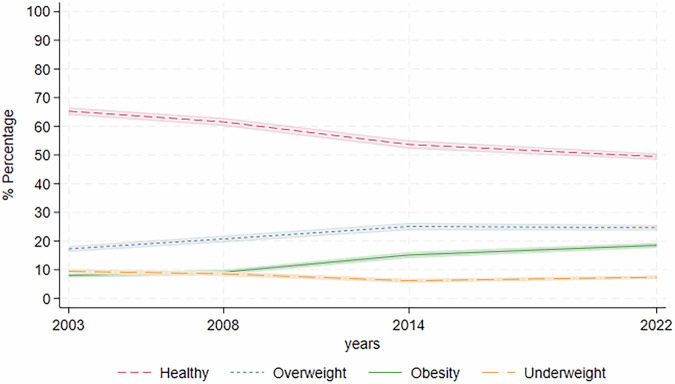
Background: In Ghana, overweight and obesity prevalence among women (20-49 years) reached 50% in 2022, increasing from 40% in 2014. This study aims to understand what has driven previous trends in overweight and obesity among women of reproductive age in Ghana and to predict future trends that can help inform policy making and public health surveillance.
Methods: We used data from the Ghana Demographic and Health Survey (DHS) containing information on women of reproductive age (aged 15 to 49 years). Data collected between 2003 and 2022 provided cohorts born between 1953 and 2007. Age-period-cohort (APC) analysis was used to disentangle the effects of age, time, and generation on trends in the odds of obesity and overweight.
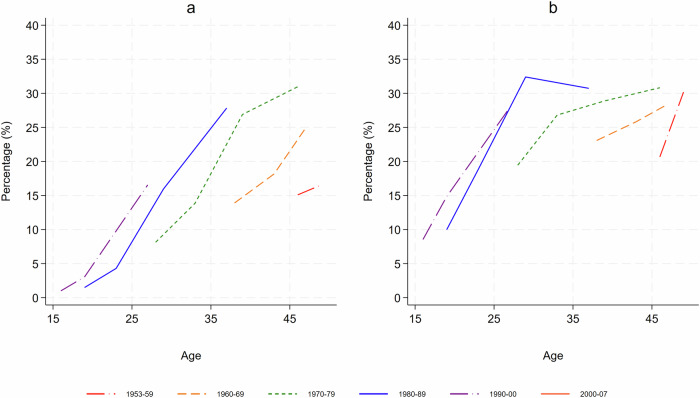
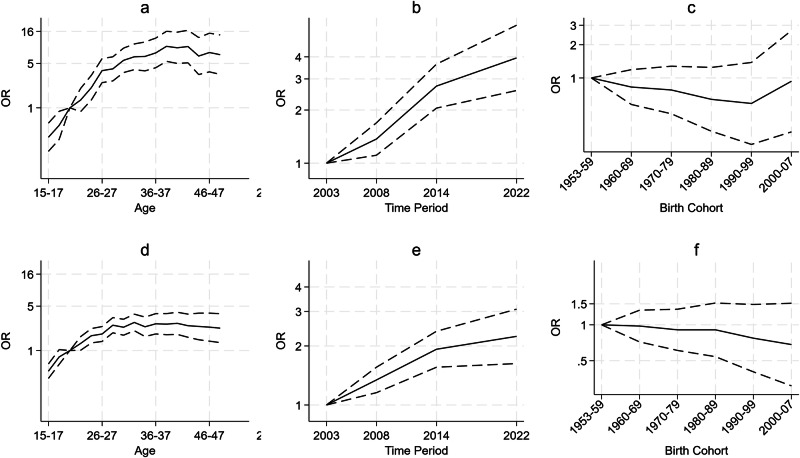
Results: The prevalence of overweight and obesity increases during the study period, especially with age, in all cohorts. In the APC analysis, the odds of obesity increase with age until age 42-43 years (odds ratio (OR): 9.37; 95% confidence interval (CI): 5.63-15.59, compared to 20-21 year olds) before levelling out. Accounting for age and birth cohort, the odds of overweight and obesity increase significantly over time between 2003 and 2015 (overweight OR: 1.76; 95% CI: 1.47-2.11, obesity OR: 2.27; 95% CI: 1.77-2.91), after which the effect levels out and appears to stabilise. There is no effect of birth cohort on the odds of overweight or obesity.
Conclusions: Although high, the increasing odds of obesity and overweight in Ghana appears to be stabilising. However, the increasing odds of obesity with age, suggest that an ageing population could mean that the prevalence will increase into the future.
Plain language summary
Overweight and obesity are increasing rapidly in Ghana, especially among women, leading to serious health problems. We wanted to understand why these rates are rising and predict future trends to help create effective health programs.We looked at health survey data from Ghanaian women aged 15–49 collected over two decades (2003-2022). We used a specialist method to see how age, time, and the generation a woman was born into influenced her weight status.We found an increase in overweight and obesity among Ghanaian women over time, particularly between 2003 and 2014. Women tend to gain weight as they age, but we found that changes over time were more important than generational differences.Early interventions could be crucial to promote healthier weight and prevent long-term health issues for women.
© 2025. The Author(s).
Conflict of interest statement
Competing interests: The authors declare no competing interests.
Figures
References
-
- Akparibo, R. et al. Prevalence and Risk factors for overweight and obesity among African men and women: A systematic Review and Meta-analysis. In: African Nutrition Society Conference, October. (2024).
-
- Ghana Statistical Service (GSS) & ICF International. Ghana Demographic and Health Survey 2022: Key Indicators Report. Accra, Ghana & Rockville, Maryland, USA; https://www.dhsprogram.com/pubs/pdf/PR149/PR149.pdf (2024).
-
- Ghana Statistical Service (GSS) Ghana Health Service (GHS) and ICF International. Ghana Demographic and Health Survey 2014. (2015).
Grants and funding
LinkOut - more resources
Full Text Sources