Insights into the expansion of Oropouche virus in Brazil: epidemiological and environmental aspects
- PMID: 40776978
- PMCID: PMC12328251
- DOI: 10.3389/ebm.2025.10647
Insights into the expansion of Oropouche virus in Brazil: epidemiological and environmental aspects
Abstract
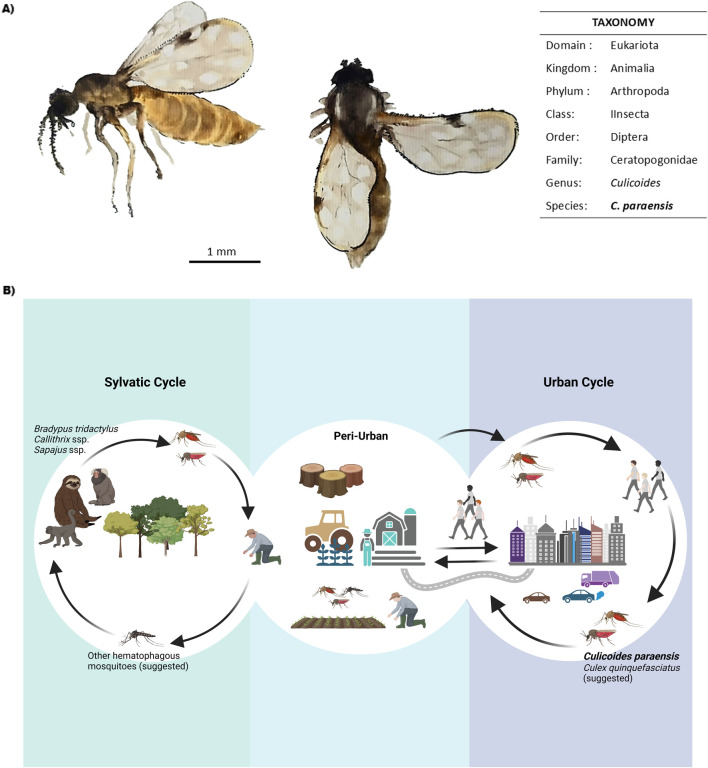
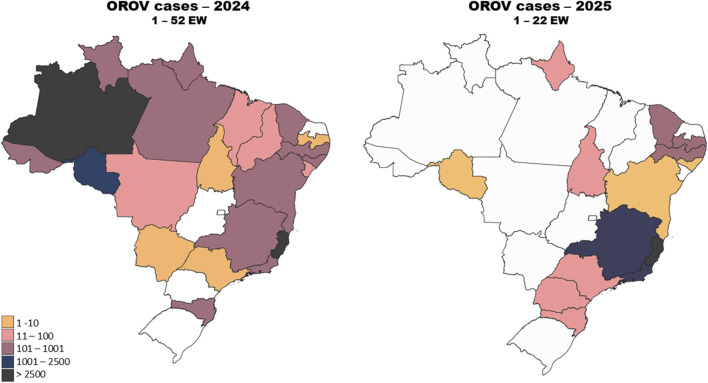
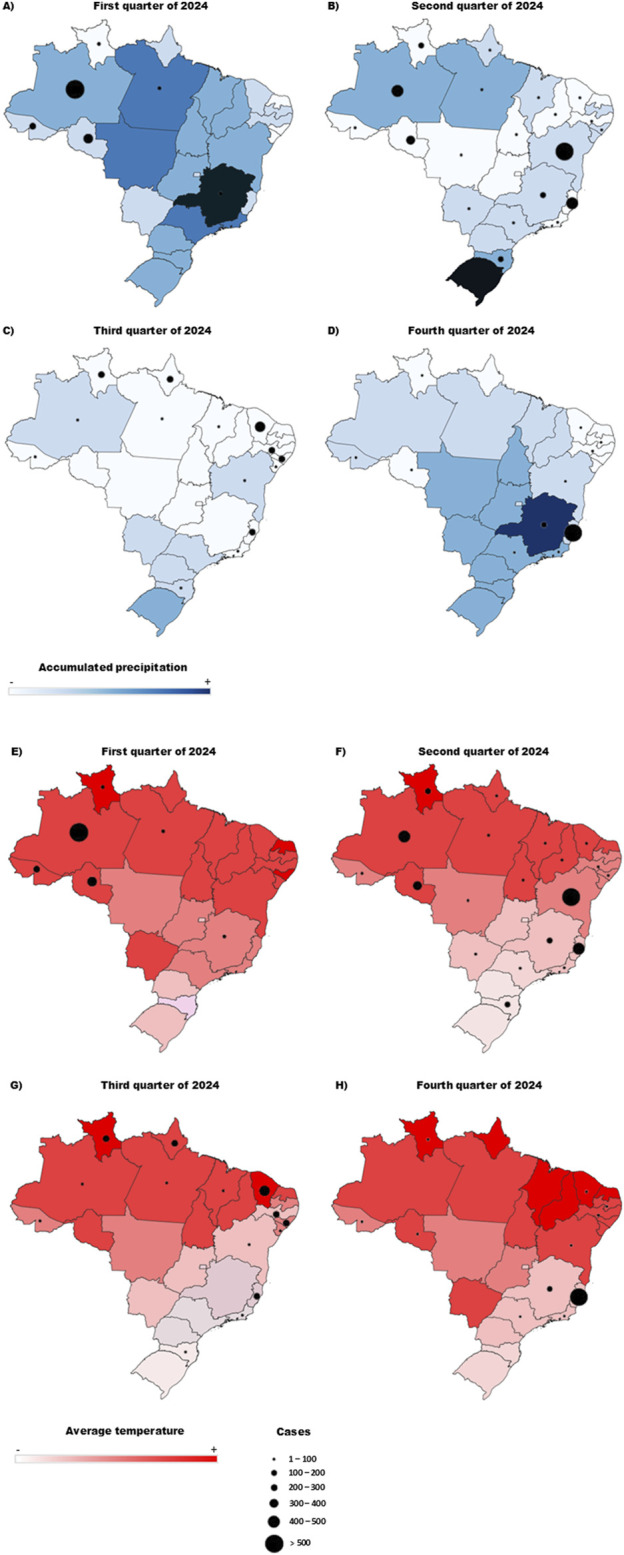
The Oropouche virus (OROV), an arbovirus transmitted primarily by the Culicoides paraensis midge, has caused significant outbreaks in the Americas, especially in the Amazon region. The virus's spread is closely linked to a combination of environmental, climatic, and ecological factors. These include deforestation, urbanization, and changes in rainfall patterns, which influence the proliferation of vectors, and, consequently, increase the chances of mutations and reassortment events to occur. In 2024 and 2025, the number of OROV cases increased significantly, with outbreaks extending beyond the traditionally endemic Amazon region, highlighting the growing geographic expansion of the disease throughout Brazil. Despite its growing dispersion, diagnostic and therapeutic tools for OROV remain limited. Current diagnostic strategies rely almost exclusively on molecular detection methods, and there are no vaccines for effective prevention. Additionally, immunological responses to OROV infection are not fully understood, and further studies are needed. The ecological dynamics influencing OROV transmission, particularly the role of environmental changes in shaping vector populations, highlight the need for more integrated surveillance and control strategies. The ongoing expansion of OROV outside its traditional hotspots may be indicative of broader environmental shifts that facilitate viral spread. Therefore, continuous monitoring of both environmental and epidemiological data is crucial to understanding and mitigating the impact of OROV in the future. Collaborative efforts among researchers, policymakers, and local communities will be essential to prevent further outbreaks and minimize the health burden caused by OROV. This review summarizes important and up-to-date data information to the ongoing epidemic of Oropouche fever, focusing on topics that are particularly important to Public Health.
Keywords: Culicoides paraensis; Oropouche fever; Orthobunyavirus oropoucheense; climate change; environmental impacts; epidemiology.
Copyright © 2025 Godinho, Dória, Rocha, Miranda, Salomão, Stancioli, Paim, Coelho dos Reis, Pereira and da Fonseca.
Conflict of interest statement
The author(s) declared no potential conflicts of interest with respect to the research, authorship, and/or publication of this article.
Figures
References
-
- Pinheiro F, Pinheiro M, Bensabath G, Causey O, Shope R. Oropouche virus epidemic in Belém. Revista de Serviço Especial de Saúde Publica (1962) 12:15–23. Available online at: https://patuaback.iec.gov.br/server/api/core/bitstreams/04423538-c0d5-47....
-
- Mourão MPG, Bastos Md S, Figueiredo RMPd, Gimaque JBd L, Alves Vd CR, Saraiva Md GG, et al. Arboviral diseases in the western brazilian amazon: a perspective and analysis from a tertiary health and research center in manaus, state of Amazonas. Rev Soc Bras Med Trop (2015) 48:20–6. 10.1590/0037-8682-0133-2013 - DOI - PubMed
Publication types
MeSH terms
Supplementary concepts
LinkOut - more resources
Full Text Sources