


A systematic review and meta-analysis on the prevalence of extended-spectrum beta-Lactamase-Producing Klebsiella Pneumonia in Nigeria
- PMID: 40777963
- PMCID: PMC12327123
- DOI: 10.4314/ahs.v24i3.5
A systematic review and meta-analysis on the prevalence of extended-spectrum beta-Lactamase-Producing Klebsiella Pneumonia in Nigeria
Abstract
Background: Rapid emergence and proliferation of extended spectrum beta-lactamase producing Klebsiella pneumoniae (ESBL-KP) constitute a serious health problem globally.
Objectives: The aim of this study was to evaluate the pooled prevalence of ESBL-KP and ESBL genes in Nigeria.
Methods: A quantitative method (Meta-analysis) design was used to summarize pooled results of primary studies. Different databases [Google Scholar, PubMed, and African Journal Online (AJOL)] were searched for relevant studies. Meta-analysis was done using random-effects model. I2 and Egger test was used to ascertain heterogeneity and publication bias evaluation.
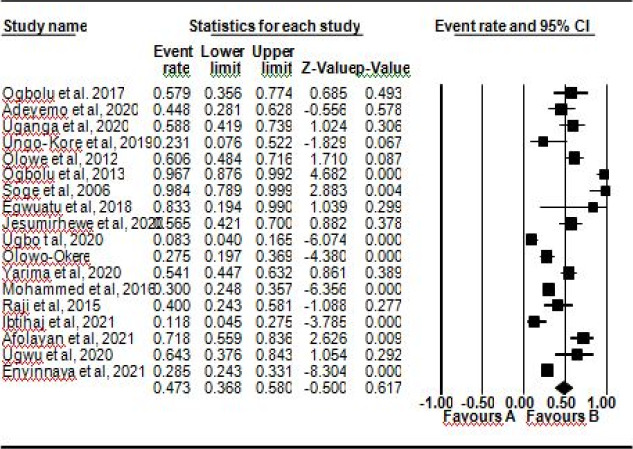
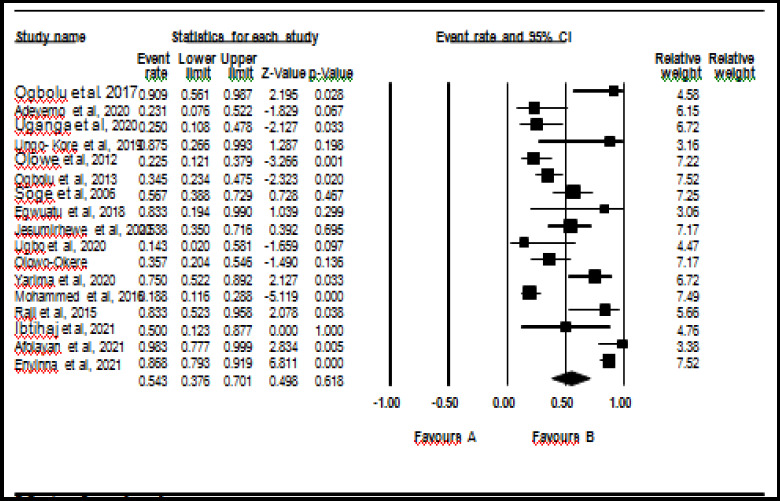
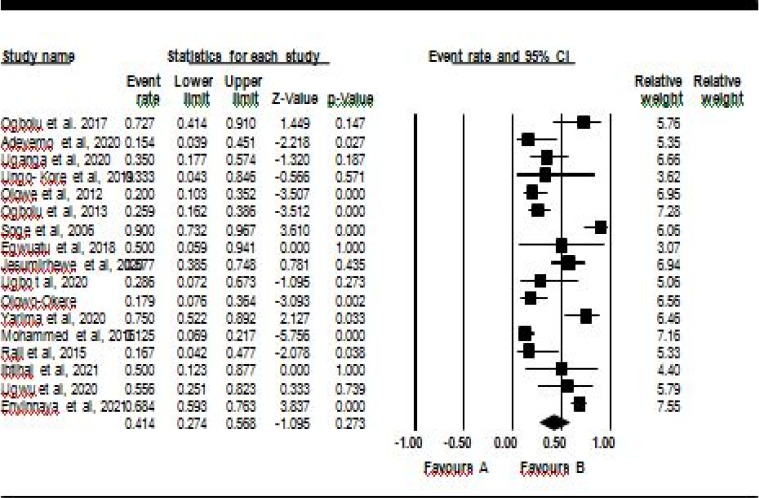
Results: Eighteen observational studies were selected and the pooled prevalence of ESBL-KP in Nigeria was 47.3% [95% confidence interval (CI) 37 - 58%]. Among the genes encoding ESBL, OXA had the highest pooled prevalence in the selected studies [57% (95% CI 32, 76)], followed by TEM [55% (95% CI 36, 70)], CTX-M [54% (95% CI 38, 70)], and 41% (95% CI 27, 57). Heterogeneity tests (I2) was observed to be between 69.22 and 95.63 % for ESBL-KP and ESBL genes in the studies. Egger tests showed no publication bias (0.09 - 0.99).
Conclusions: This meta-analysis demonstrated that the prevalence of ESBL-KP is increasing in Nigeria. Hence, antimicrobial stewardship and infection control measures for the prevention and spread of these strains be implemented.
Keywords: Extended spectrum beta-latamase; Klebsiella Pneumonia; Nigeria; meta-analysis.
© 2024 Ezeh CK et al.
Conflict of interest statement
No conflict of interest to declare.
Figures
References
-
- Azuma T, Hayashi T. Effects of natural sunlight on antimicrobial-resistant bacteria (AMRB) and antimicrobial-susceptible bacteria (AMSB) in wastewater and river water. Science of Total Environment. 2020;766:142568. - PubMed
Publication types
MeSH terms
Substances
LinkOut - more resources
Full Text Sources