


Potential effect of non-nitrogen fixing cyanobacteria Spirulina platensis on growth promotion of wheat (Triticum aestivum L.) under salt stress
- PMID: 40781471
- PMCID: PMC12334567
- DOI: 10.1038/s41598-025-14567-y
Potential effect of non-nitrogen fixing cyanobacteria Spirulina platensis on growth promotion of wheat (Triticum aestivum L.) under salt stress
Abstract
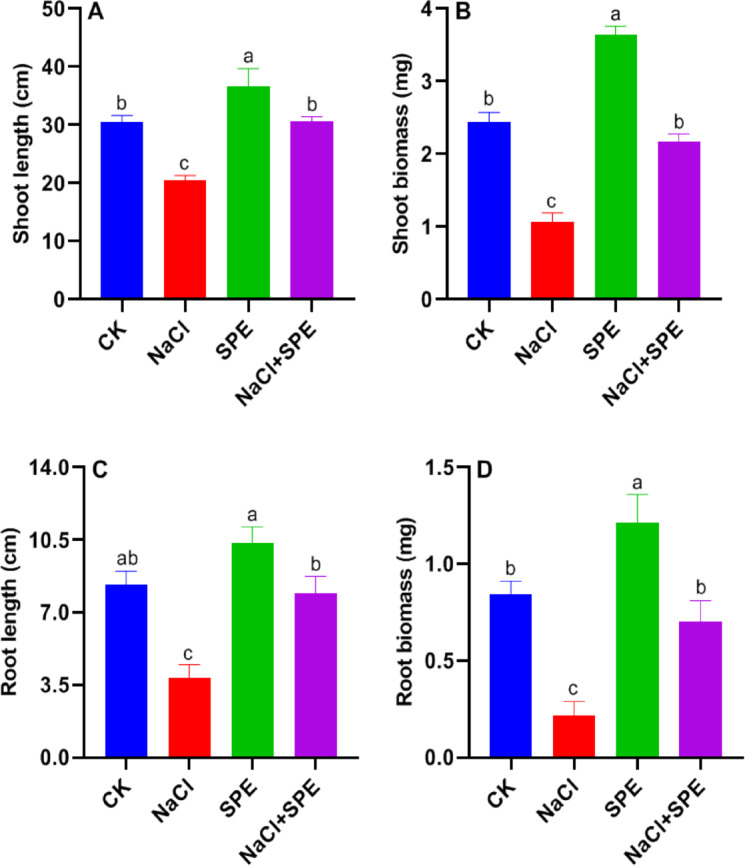
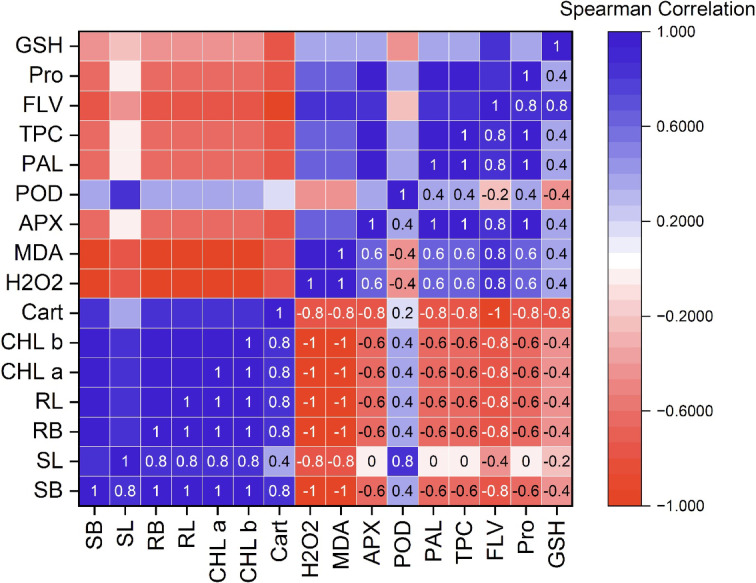
Numerous microalgae have been used as modern eco-friendly biostimulants under abiotic stress conditions; however, the application of non-nitrogen fixing cyanobacteria, such as Spirulina (Arthrospira platensis) has not been extensively investigated. In this study, the effects of A. platensis (60 mg/L) applied twice as a foliar application on the growth, photosynthetic pigments, and oxidative metabolism of Triticum aestivum seedlings grown under salt stress (150 mM) were evaluated. Under salt stress conditions, growth attributes such as shoot and roots fresh weights, lengths, and photosynthetic pigments were significantly inhibited compared to the control group. Treatment with A. platensis effectively improved all growth parameters. Under salt stress conditions, shoot fresh weight and length increased by 49% and 44%, respectively, while root fresh weight and length were enhanced by 105% and 223%. The contents of chlorophyll a, b, and carotenoids in wheat were significantly reduced by 57%, 35%, and 43%, respectively. Additionally, seedlings exposed to salinity showed improved accumulation of hydrogen peroxide (H2O2) and malondialdehyde (MDA), along with decreased peroxidase (POD) enzyme activity. Spirulina extract (SPE) mitigated salt and induced oxidative stress by enhancing the activities of antioxidant enzymes. Furthermore, SPE protected wheat seedlings from the detrimental effects of H2O2 by promoting secondary metabolite biosynthesis. Additionally, SPE increased the proline content by 25%, aiding in the regulation of osmotic stress. Taken together, the results of this study support the application of A. platensis as an effective biostimulant for improving wheat growth and food security by reducing the harmful impacts of salt stress in semi-arid regions.
Keywords: Biostimulation; Crops tolerance; Cyanobacteria; Oxidative stress; Soil salinization.
© 2025. The Author(s).
Conflict of interest statement
Declarations. Conflict of interest: The authors declare no conflict of interest. Ethics approval and consent to participate: Not applicable. Consent for publication: Not applicable.
Figures


References
-
- Sahab, S. et al. Potential risk assessment of soil salinity to agroecosystem sustainability: current status and management strategies. Sci. Total Environ.764, 144164 (2021). - PubMed
-
- Munns, R. & Tester, M. Mechanisms of salinity tolerance. Annu. Rev. Plant. Biol.59, 651–681 (2008). - PubMed
-
- Gonzales Cruz, C., Centeno da Rosa, A. P., Strentzle, B. R. & Vieira Costa, J. A. Microalgae-based dairy effluent treatment coupled with the production of agricultural biostimulant. J. Appl. Phycol.35, 2881–2890 (2023).
MeSH terms
Substances
Supplementary concepts
LinkOut - more resources
Full Text Sources
