


Real world effectiveness of chemotherapy plus bevacizumab with immunotherapy in colorectal cancer
- PMID: 40783607
- PMCID: PMC12335471
- DOI: 10.1038/s41598-025-13701-0
Real world effectiveness of chemotherapy plus bevacizumab with immunotherapy in colorectal cancer
Abstract
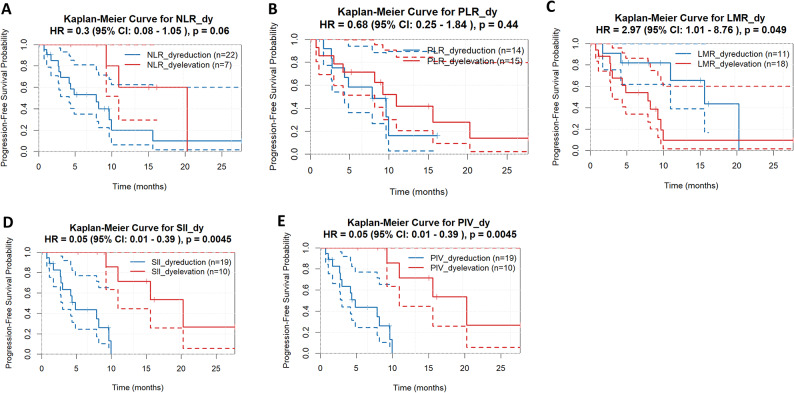
Patients diagnosed with microsatellite stable (MSS) metastatic colorectal cancer (mCRC) typically have an immunosuppressive tumor microenvironment, which leads to a low response rate when treated with immunotherapy. Some studies indicate that chemotherapy and anti-angiogenic therapy could potentially improve the responsiveness of these patients to immunotherapy. Therefore, this study is designed to assess the effectiveness and safety of combining chemotherapy with bevacizumab and anti-PD-1 immunotherapy as a second-line treatment option for MSS mCRC. A retrospective analysis was conducted on patients diagnosed with MSS mCRC at Peking University First Hospital and Jilin Cancer Hospital from January 2020 to December 2024. Patients received second-line chemotherapy in combination with bevacizumab and anti-PD-1 immunotherapy. Progression-free survival (PFS), overall survival (OS), disease control rate (DCR), objective response rate (ORR), and treatment-related adverse reactions were collected. Biomarker analysis was performed to identify potential predictors of a favorable treatment response. Between January 2021 and December 2024, 29 patients were enrolled. Five patients (17.2%) achieved a partial response (PR), and 18 patients (62.1%) had stable disease. The median follow-up period was 13.3 months. The ORR was 17.2%, and the DCR was 79.3%. The median PFS was 7.8 months, and the median OS was 28.8 months. The most common treatment-related adverse events (TRAEs) of all grades were anemia (18/29, 62.1%), leukopenia (12/29, 41.4%), and hand-foot syndrome (10/29, 34.5%). The most frequent grade 3 or 4 TRAEs were anemia (2/29, 6.9%) and elevated triglycerides (1/29, 3.4%). No grade 5 adverse events occurred. Dynamic changes in the Lymphocyte-to-Monocyte Ratio (LMR), Systemic Immune-Inflammation Index (SII), and Platelet-to-Inflammatory Index (PIV) before and after treatment could predict the efficacy of immune combination therapy. In the biomarker exploration, multiple immunohistochemical analyses indicated better tumor immune microenvironment cell infiltration in the PFS-long (≥ 16 weeks) group compared to the PFS-short group. Chemotherapy combined with bevacizumab and anti-PD-1 immunotherapy has demonstrated promising efficacy in the treatment of MSS mCRC, with manageable adverse reactions. Exploratory biomarker assessment analysis showed that hematological dynamic changes and tumor immune microenvironment cell infiltration may predict the efficacy of immune combination therapy.
Keywords: Immune checkpoint inhibitors; Metastatic colorectal cancer; Microsatellite stable; PD-1; RAS mutation.
© 2025. The Author(s).
Conflict of interest statement
Declarations. Competing interests: The authors declare no competing interests. Ethics approval: This study has been approved by the Ethics Committee of the Peking University First Hospital and Jilin Cancer Hospital.
Figures




References
-
- Bray, F. et al. Global cancer statistics 2022: GLOBOCAN estimates of incidence and mortality worldwide for 36 cancers in 185 countries. CA Cancer J. Clin.74(3), 229–263 (2024). - PubMed
-
- Dekker, E. et al. Colorectal cancer. Lancet394(10207), 1467–1480 (2019). - PubMed
-
- Biller, L. H. & Schrag, D. Diagnosis and treatment of metastatic colorectal cancer: A review. JAMA325(7), 669–685 (2021). - PubMed
-
- Carbone, F. R. & Mackay, L. K. Functional T cell tolerance by peripheral tissue-based checkpoint control. Nat. Immunol.24(8), 1224–1225 (2023). - PubMed
-
- Wei, S. C., Duffy, C. R. & Allison, J. P. Fundamental mechanisms of immune checkpoint blockade therapy. Cancer Discov.8(9), 1069–1086 (2018). - PubMed
MeSH terms
Substances
Grants and funding
LinkOut - more resources
Full Text Sources
Medical
Research Materials
