


Resilience changes and occupational resilience factors among healthcare workers during and after the COVID-19 pandemic: A 2-year prospective cohort study
- PMID: 40784955
- PMCID: PMC12336339
- DOI: 10.1038/s41598-025-09829-8
Resilience changes and occupational resilience factors among healthcare workers during and after the COVID-19 pandemic: A 2-year prospective cohort study
Abstract
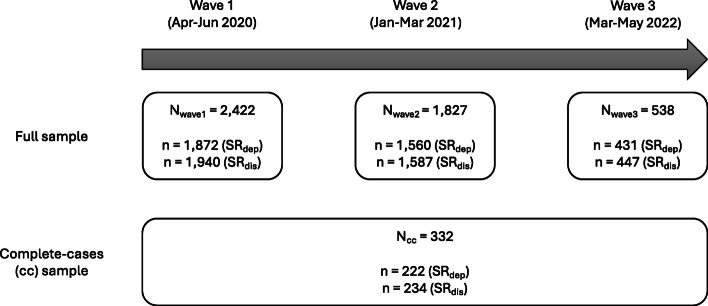
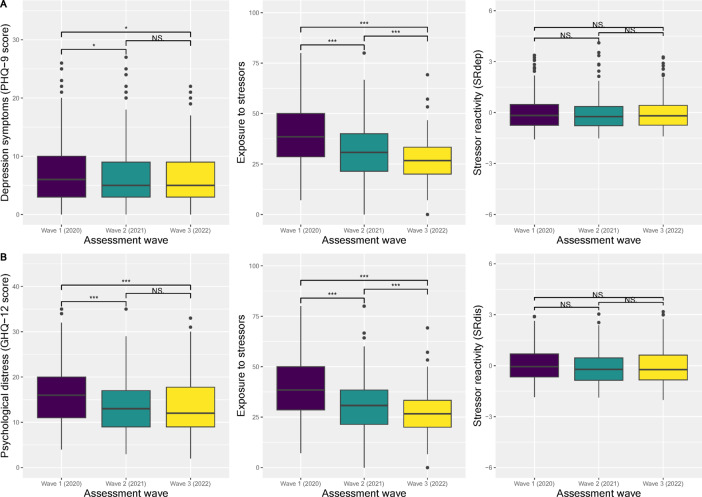
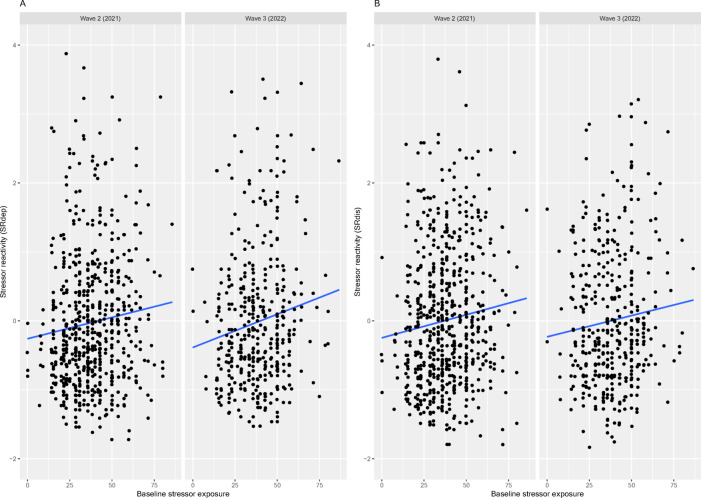
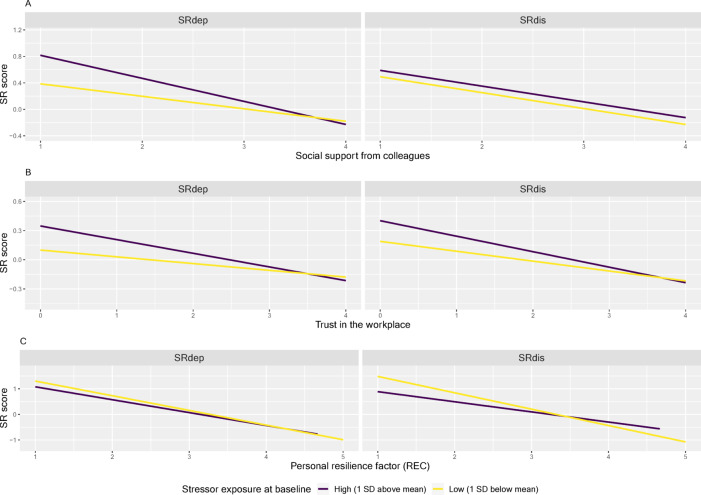
Healthcare workers (HCWs) in COVID-19 pandemic hotspots were exposed to heightened workplace stressor load. Structural occupational resilience factors could prevent work-related stressor exposure from translating into mental health problems but remain poorly understood. This study identifies resilience factors actionable at the workplace and examines the impact of prior stressor exposure early in the pandemic on the later development of depressive and general distress symptoms. We prospectively followed a convenience sample of HCWs working in Spain during the pandemic using a 3-wave online survey conducted in 2020 (wave 1, n = 2,422), 2021 (wave 2, n = 1,827), and 2022 (wave 3, n = 538). We operationalised resilience as low stressor reactivity (SR), quantified as individual deviations from the normative relation between stressors exposure and either depressive or distress symptoms. Mental health problems and stressor exposure both decreased over time, whereas stressor reactivity remained stable. Stressor exposure at baseline was inversely associated with resilience at follow-up. The structural occupational factors support from colleagues, trust in the workplace, and perceived ability to recover from stress were prospectively associated with resilience and thus identified as resilience factors. These results show that resilient responses of HCWs in times of crisis could be supported by promoting structural occupational resilience factors and mitigating cumulative stressor exposure. Future research should test this association in studies that allow causal inferences.
Keywords: Depression; Mental health; Occupational health; Social support; Stress; Trust.
© 2025. The Author(s).
Conflict of interest statement
Declarations. Competing interests: The authors declare no competing interests. Ethical standards: The authors assert that all procedures contributing to this work comply with the ethical standards of the relevant national and institutional committees on human experimentation and with the Helsinki Declaration of 1975, as revised in 2008. All participants signed informed consent forms.
Figures
References
-
- Mathieu, E. et al. Coronavirus Pandemic (COVID-19). Our World in Data OurWorldInData.org (2023).
MeSH terms
LinkOut - more resources
Full Text Sources
Medical
Research Materials
