


Metabolic Syndrome and Associated Risk Factors in Norwegian Trauma-Exposed Inpatients: A Cross-Sectional Comparison with Blood Donors
- PMID: 40785753
- PMCID: PMC12333625
- DOI: 10.2147/DMSO.S536015
Metabolic Syndrome and Associated Risk Factors in Norwegian Trauma-Exposed Inpatients: A Cross-Sectional Comparison with Blood Donors
Abstract
Purpose: The incidence of metabolic syndrome (MetS) is increasing, and research indicates a further increased risk of MetS in trauma-exposed individuals, which is yet to be fully understood. Therefore, this study aimed to investigate the risk of MetS in trauma-exposed inpatients compared to blood donors and the influence of putative associated psychological, biological, and behavioral risk factors for MetS.
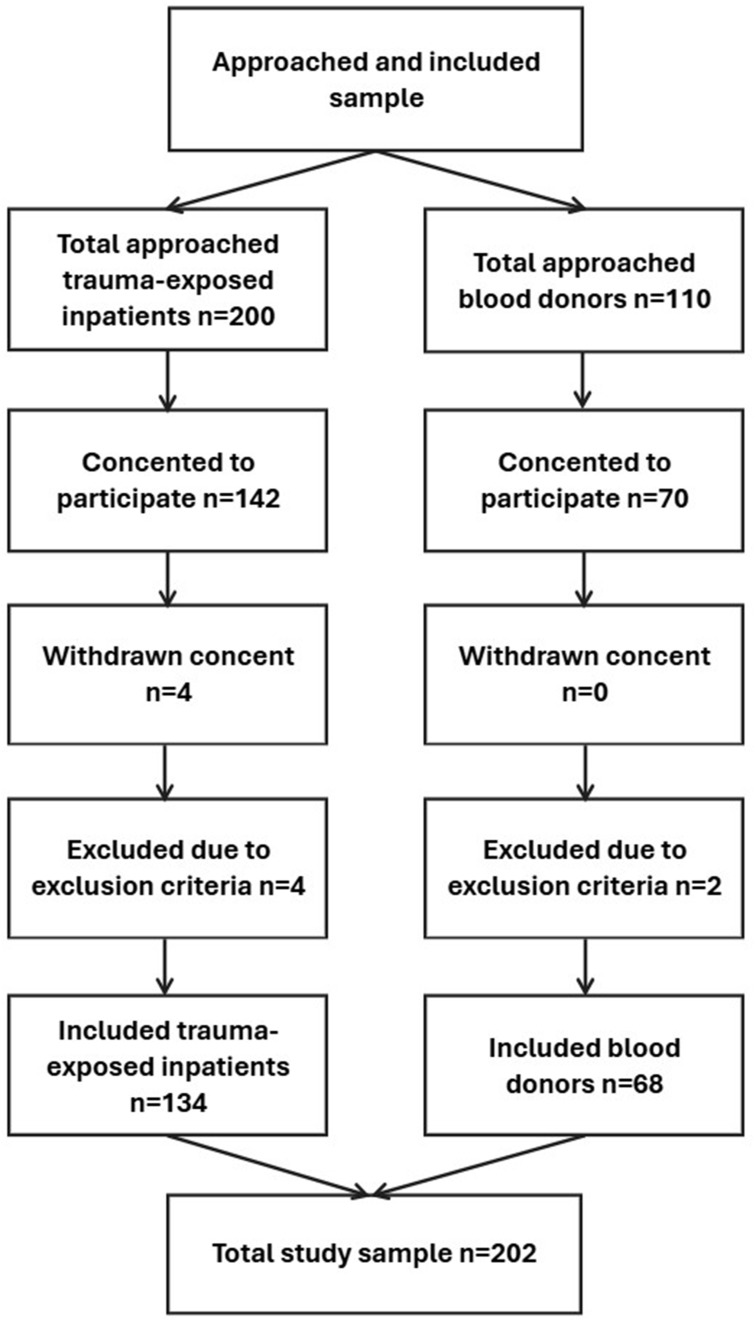
Patients and methods: A cross-sectional study of trauma-exposed inpatients (n = 134) compared to blood donors (n = 68) was conducted. Clinical data, blood biomarkers, and self-administered questionnaires were collected. Descriptive statistics and multivariable logistic regression, including interaction analyses, were performed to explore the odds ratio (OR) of MetS among trauma-exposed inpatients compared to blood donors as well as the interaction effects of putative risk factors.
Results: A significantly higher age- and gender adjusted OR (OR = 2.51, 95% CI 1.18-5.34) of MetS was found among trauma-exposed inpatients compared to the blood donors. Adjusted for education, cigarette smoking, symptoms of disordered eating and consumption of selected nutrients, the higher OR of MetS remained significant in the inpatients compared to the blood donors, ranging from OR = 2.27 95% CI 1.00-5.14 for symptoms of "dieting" to OR = 3.06 95% CI 1.16-8.10 for adult trauma. A significant interaction effect was documented only between group and age (OR = 1.07, 95% CI 1.01-1.13).
Conclusion: The trauma-exposed inpatients in this study had significantly higher age- and gender adjusted risk of MetS compared to the blood donors, and psychological and behavioral lifestyle factors appeared to increase the risk of MetS.
Keywords: disordered eating; insulin resistance; mental disorders; metabolism; posttraumatic stress; type 2 diabetes mellitus.
© 2025 Roer et al.
Conflict of interest statement
The authors report no conflicts of interest in this work.
References
LinkOut - more resources
Full Text Sources
