Inflammatory reaction in the acute phase of Kawasaki disease may better predict chronic cardiac dysfunction than coronary artery lesions
- PMID: 40785941
- PMCID: PMC12332656
- DOI: 10.21037/qims-24-2352
Inflammatory reaction in the acute phase of Kawasaki disease may better predict chronic cardiac dysfunction than coronary artery lesions
Abstract
Background: Kawasaki disease (KD) is a pediatric acute vasculitis affecting the coronary arteries and cardiac tissues. Research has been conducted on the assessment of acute cardiac function in KD; however, chronic cardiac dysfunction remains understudied, particularly in terms of coronary artery lesion (CAL) grading and acute-phase inflammatory markers. This study aimed to assess the effect of CAL grading on chronic cardiac function in KD patients, and explore the association between CAL grading and acute-phase inflammatory markers.
Methods: A prospective study was conducted on 25 children with giant coronary aneurysms (GCAs) and gender-, height-, and weight-matched subgroups. Chronic cardiac function and inflammatory markers were assessed using echocardiography and laboratory tests.
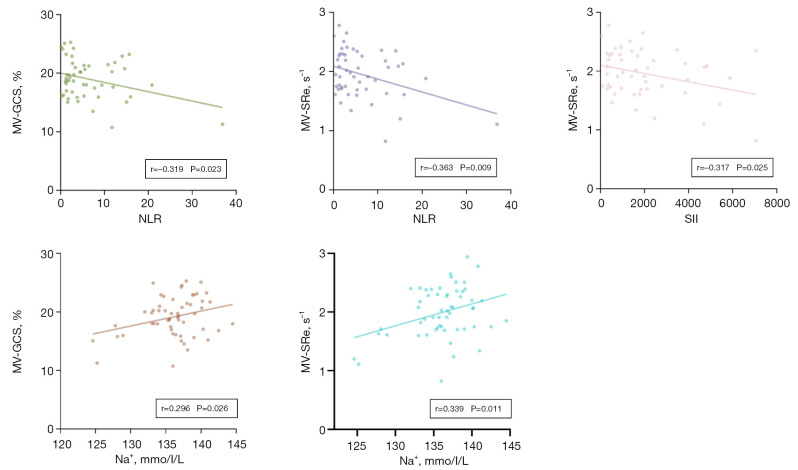
Results: The KD group showed significantly impaired left ventricular function compared to the healthy control group, including reduced global longitudinal strain (19.94%±3.42% vs. 21.27%±1.69%, P=0.001) and circumferential strain (20.85%±4.01% vs. 23.14%±5.37%, P=0.002). Most systolic/diastolic parameters demonstrated similar statistical significance (KD vs. healthy control group, all P<0.05). Notably, no association was found between CAL severity gradation and cardiac dysfunction (P>0.05 across CAL subgroups). Surprisingly, a considerable proportion of patients with GCAs (61.11%) and medium-sized coronary artery aneurysms (69.57%) had normalized cardiac function. Acute-phase C-reactive protein levels emerged as a predictor for chronic cardiac dysfunction (cut-off value: 127.79 mg/L).
Conclusions: Chronic cardiac dysfunction in KD patients is affected by CAL grading and acute-phase inflammatory markers. Integrating inflammatory indicators into CAL risk stratification could enhance clinical management strategies. Further research with larger cohorts needs to be conducted to validate these findings and establish longitudinal monitoring protocols.
Keywords: Kawasaki disease (KD); chronic follow-up; global longitudinal strain (GLS); left heart function in sequelae stage.
Copyright © 2025 AME Publishing Company. All rights reserved.
Conflict of interest statement
Conflicts of Interest: All authors have completed the ICMJE uniform disclosure form (available at https://qims.amegroups.com/article/view/10.21037/qims-24-2352/coif). The authors have no conflicts of interest to declare.
Figures


References
-
- McCrindle BW, Rowley AH, Newburger JW, Burns JC, Bolger AF, Gewitz M, Baker AL, Jackson MA, Takahashi M, Shah PB, Kobayashi T, Wu MH, Saji TT, Pahl E, American Heart Association Rheumatic Fever, Endocarditis, and Kawasaki Disease Committee of the Council on Cardiovascular Disease in the Young ; Council on Cardiovascular and Stroke Nursing; Council on Cardiovascular Surgery and Anesthesia; and Council on Epidemiology and Prevention. Diagnosis, Treatment, and Long-Term Management of Kawasaki Disease: A Scientific Statement for Health Professionals From the American Heart Association. Circulation 2017;135:e927-99. 10.1161/CIR.0000000000000484 - DOI - PubMed
LinkOut - more resources
Full Text Sources
Research Materials
Miscellaneous