


Non-Native Woody Plant Species Show Different Leaf Functional Traits and Herbivory Levels From Native Ones in the Urban Areas of Beijing, China
- PMID: 40785986
- PMCID: PMC12334854
- DOI: 10.1002/ece3.71947
Non-Native Woody Plant Species Show Different Leaf Functional Traits and Herbivory Levels From Native Ones in the Urban Areas of Beijing, China
Erratum in
-
Correction to "Non-Native Woody Plant Species Show Different Leaf Functional Traits and Herbivory Levels From Native Ones in the Urban Areas of Beijing, China".Ecol Evol. 2025 Sep 23;15(9):e72130. doi: 10.1002/ece3.72130. eCollection 2025 Sep. Ecol Evol. 2025. PMID: 41001275 Free PMC article.
Abstract
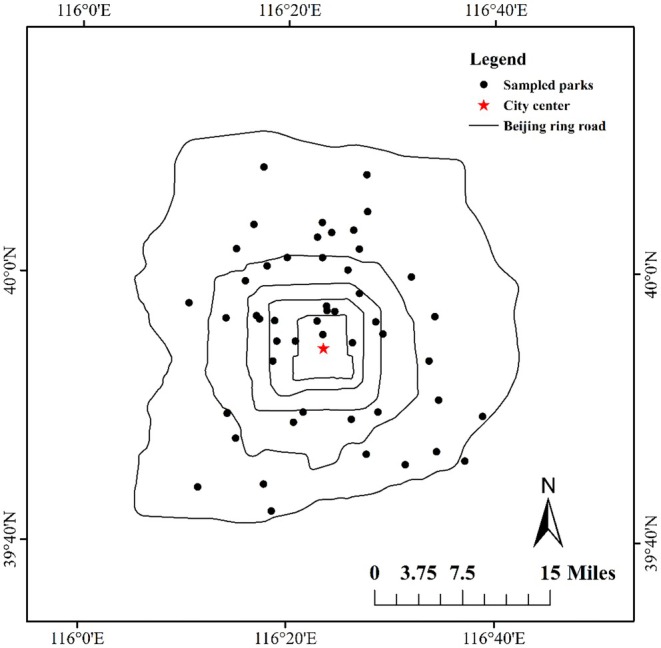
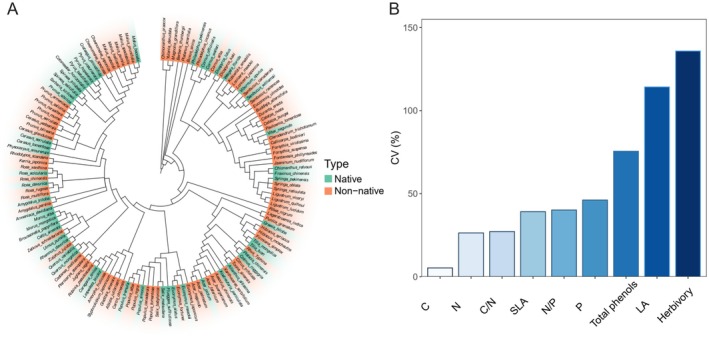
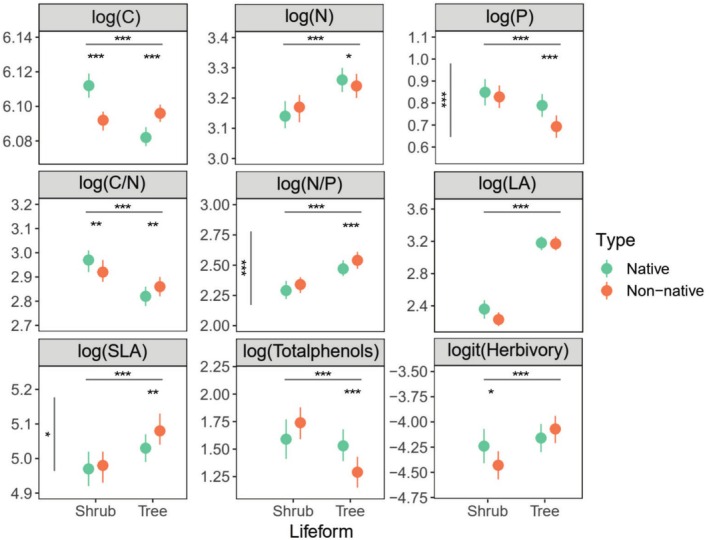
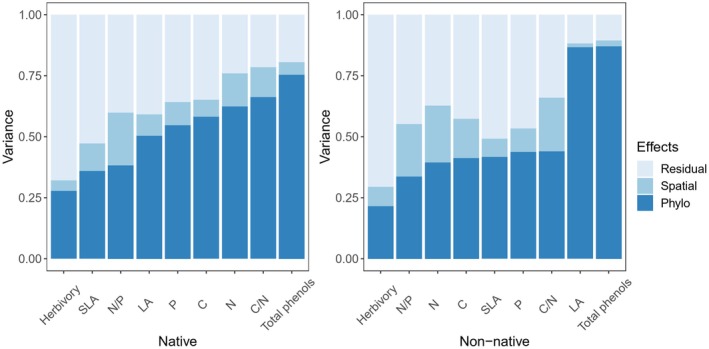
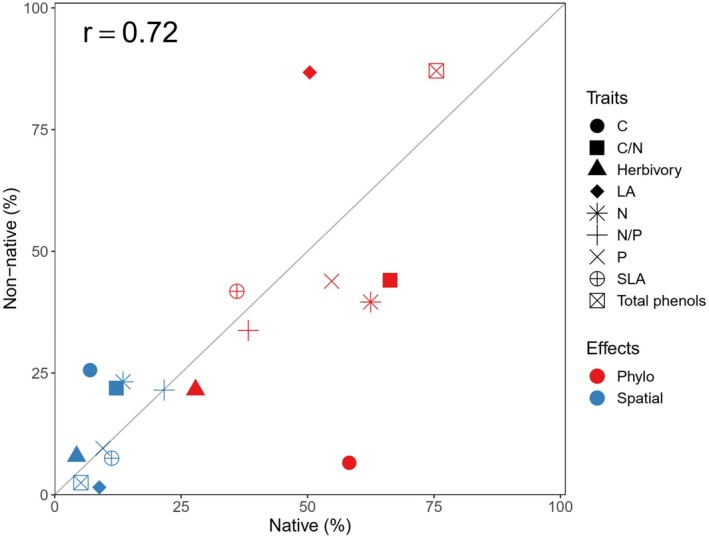
A large number of non-native species have been introduced to urban ecosystems, and it is a distinctive feature of the urbanization process. However, it is unclear whether these non-native species have similar functional traits to native ones and are similarly integrated into the local food web. We evaluated the differences in leaf functional traits and herbivory between native and non-native species of common woody plants in 50 parks in Beijing, China. The nutrient contents, defensive traits, and levels of herbivory were measured in 2681 leaves across 138 (52 native and 86 non-native species) woody plant species. Results show that compared to native species, non-native trees showed greater potential for short-term carbon sequestration, lower nutrient contents, and chemical defense but similar levels of herbivory. Non-native shrubs had lower carbon contents and herbivory levels than native shrubs. Phylogenetic history explained much more of the variance in plant traits and herbivory than spatial variation, suggesting the high homogeneity of environments among different urban parks. Furthermore, the variation in leaf traits and herbivory of non-native species had higher uncertainty than that of native species. Our research findings indicate that compared to native species in urban ecosystems, non-native species have reduced plant-herbivore energy flow to primary consumers, which may hinder biodiversity at higher nutrient levels. In the future, urban parks should incorporate more native plant species and enhance environmental heterogeneity.
Keywords: herbivory; leaf functional traits; non‐native plants; phylogenetic history; urban ecology; urbanization.
© 2025 The Author(s). Ecology and Evolution published by British Ecological Society and John Wiley & Sons Ltd.
Conflict of interest statement
The authors declare no conflicts of interest.
Figures
References
-
- Alberti, M. , Palkovacs E. P., Roches S. D., et al. 2020. “The Complexity of Urban Eco‐Evolutionary Dynamics.” Bioscience 70: 772–793.
-
- Amoatey, P. , and Sulaiman H.. 2020. “Quantifying Carbon Storage Potential of Urban Plantations and Landscapes in Muscat, Oman.” Environment, Development and Sustainability 22: 7969–7984.
-
- Bardgett, R. D. 2017. “Plant Trait‐Based Approaches for Interrogating Belowground Function.” Biology and Environment: Proceedings of the Royal Irish Academy 117B: 1–13.
LinkOut - more resources
Full Text Sources
