


Eosinophils in Rheumatoid Arthritis: A Multifaceted Role in the Pathogenesis of the Disease
- PMID: 40786589
- PMCID: PMC12333626
- DOI: 10.32604/biocell.2025.062821
Eosinophils in Rheumatoid Arthritis: A Multifaceted Role in the Pathogenesis of the Disease
Abstract
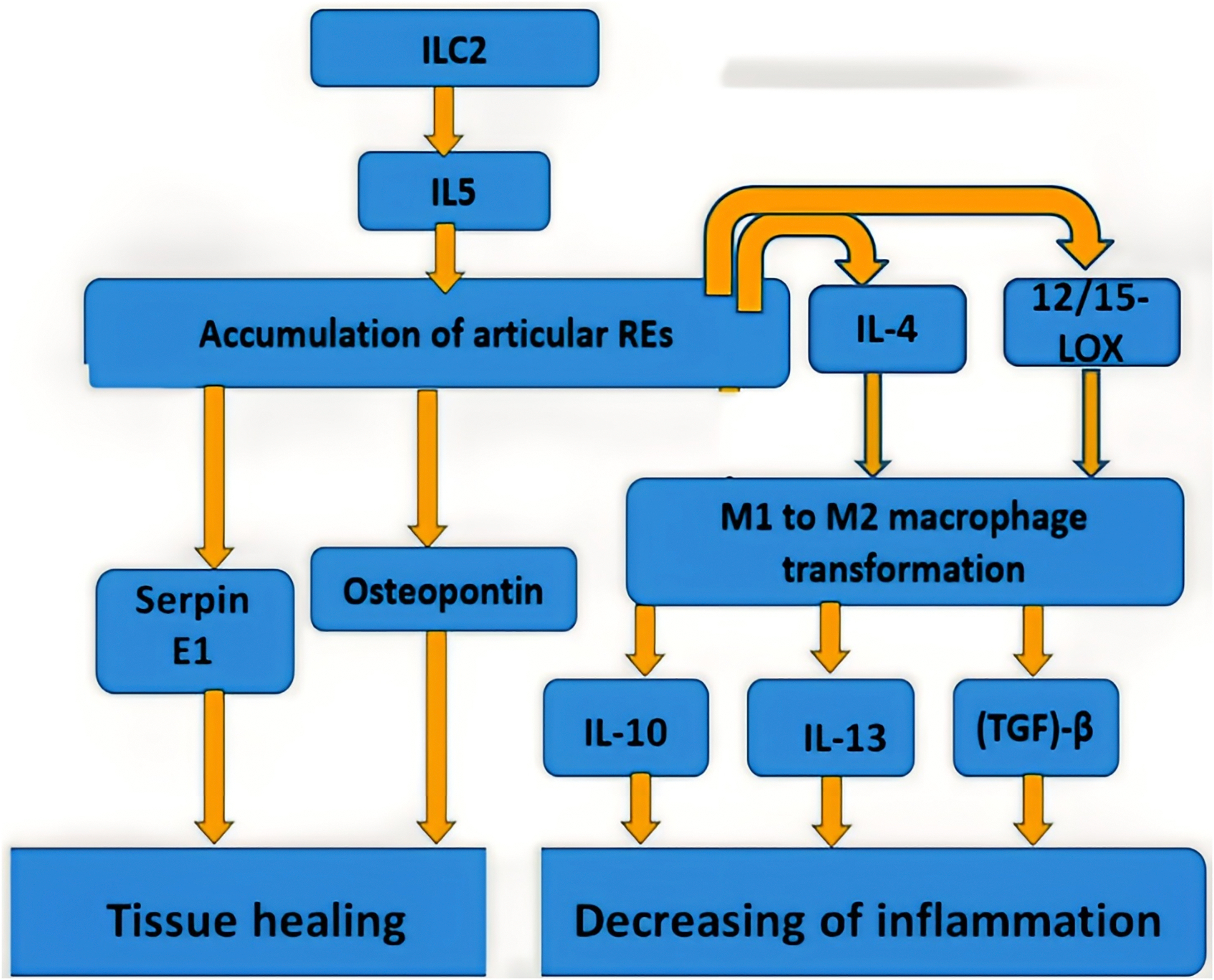
Eosinophils are multifunctional granulocytes that contribute to the initiation and modulation of inflammation. Accumulating evidence suggests that eosinophils are adaptable leukocytes that orchestrate the resolution of inflammatory responses. The most prevalent chronic inflammatory illness, rheumatoid arthritis (RA), is typified by persistent synovitis that makes it hard for the disease to go away on its own. Interestingly, a unique subset of eosinophils known as regulatory eosinophils has been found in RA patients' synovium, especially while the disease is in remission. Pro-resolving signatures of regulatory eosinophils in the synovium are distinct from those of their lung counterparts. The most recent research on eosinophils and their function in this disease pathogenesis is compiled in this review. Based on the role of regulatory eosinophils, a new pathological model of inflammation resolution in RA is proposed, and potential therapeutic strategies aimed at enhancing the action of regulatory eosinophils in RA are proposed.
Keywords: Rheumatoid arthritis; cytokines; eosinophils; inflammation; lymphocytes; synovium.
Conflict of interest statement
Conflicts of Interest: The authors declare no conflicts of interest to report regarding the present study.
Figures
References
-
- Li Y, Liu J, Hu Y, Cong C, Chen Y, Zhou Q. Crossroads: pathogenic role and therapeutic targets of neutrophil extracellular traps in rheumatoid arthritis. BIOCELL. 2024;48(1):9–19. doi: 10.32604/biocell.2023.045862. - DOI
Grants and funding
LinkOut - more resources
Full Text Sources