


Global, regional, and national burden of sudden infant death syndrome and the impact of COVID-19: a trend and health inequality analysis based on the global burden of disease study 2021
- PMID: 40787009
- PMCID: PMC12331577
- DOI: 10.3389/fped.2025.1623238
Global, regional, and national burden of sudden infant death syndrome and the impact of COVID-19: a trend and health inequality analysis based on the global burden of disease study 2021
Abstract
Background: Current sudden infant death syndrome (SIDS) epidemiological patterns and COVID-19 impacts remain uncertain. We therefore conducted this global, regional, and national epidemiological study using data from the Global Burden of Disease Study (GBD) 2021.
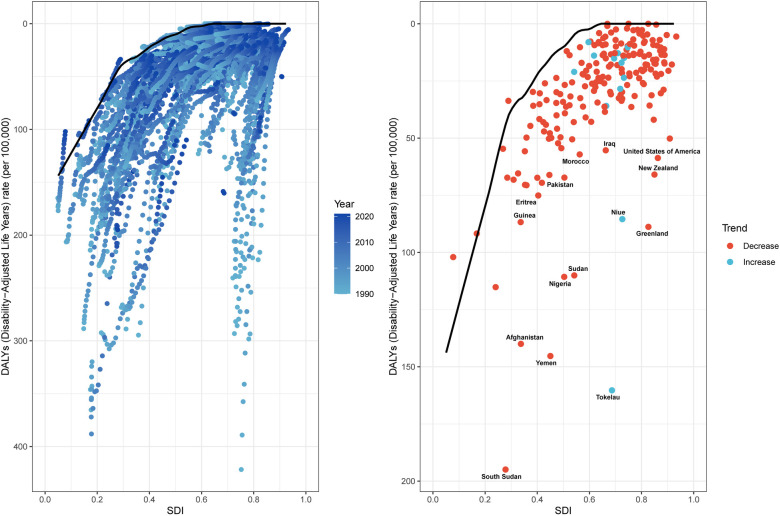
Methods: This study analyzed GBD-based population data on SIDS disability-adjusted life years (DALYs). Age-standardized DALY rates (ASDR; per 100,000 population) with 95% uncertainty intervals (UIs) were calculated for 204 countries and territories, stratified by age, location, and socio-demographic index (SDI).
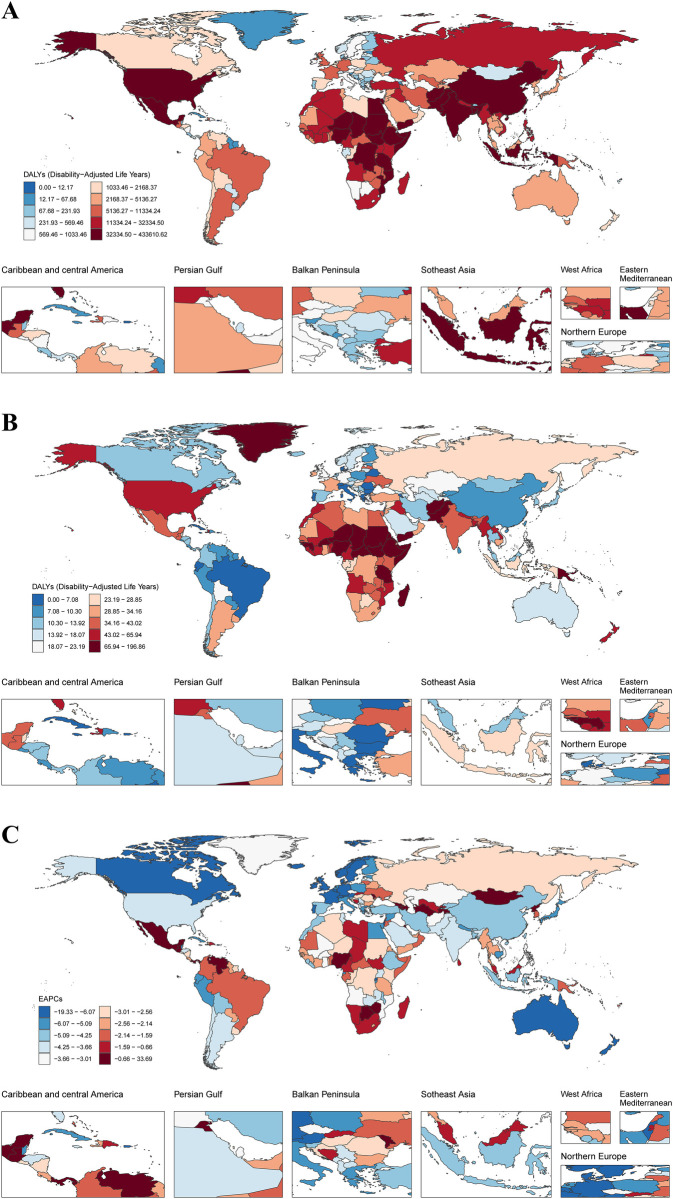
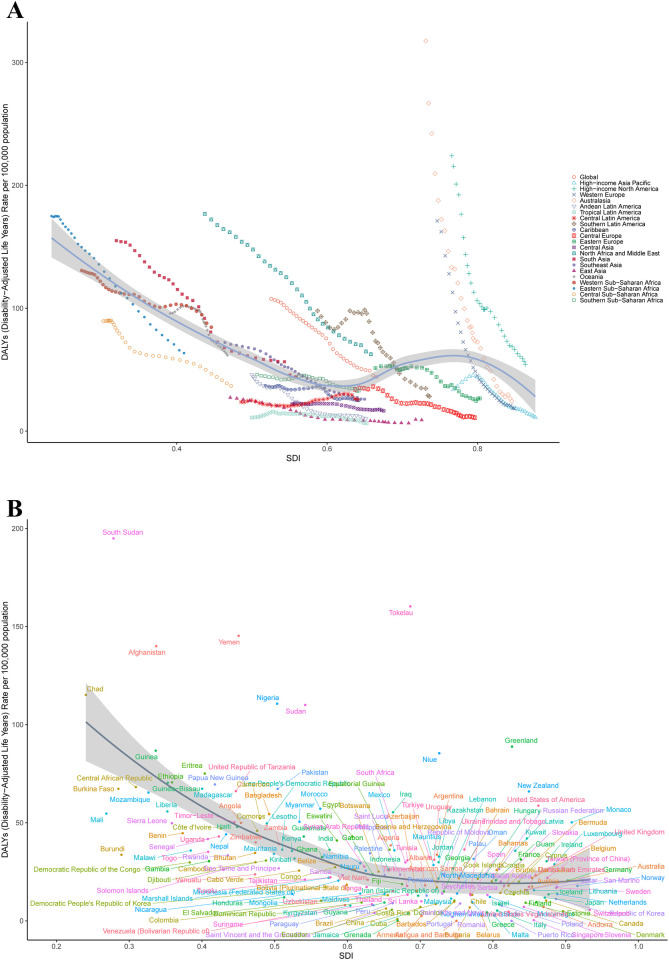
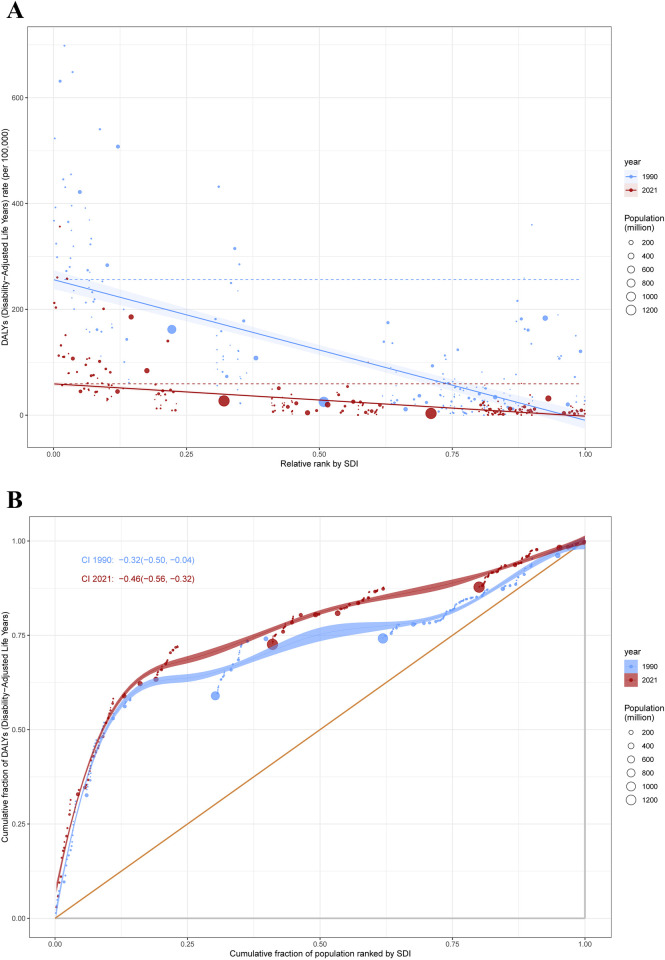
Results: In 2021, the ASDR of SIDS accounted for 44.16 (95% UI: 25.70-59.26) per 100,000 population globally, which was a 58.97% decrease from 1990. The low and low-middle SDI quintiles exhibited a disproportionately higher disease burden of SIDS among the five SDI quintiles in 2021. Higher sociodemographic status showed an inverse association with SIDS burden, with high-SDI countries demonstrating a greater reduction compared to low-SDI counterparts from 1990 to 2021 based on age-period-cohort analysis. Although the global burden of SIDS had maintained a sustained downward trend prior to the pandemic, COVID-19 disruptions may have attenuated mitigation progress, with trend analysis suggesting a possible plateau in SIDS burden during this period rather than continued decline. Study findings indicate that although the global incidence of SIDS has shown a steady decline, persistent regional disparities underscore long-standing public health challenges.
Conclusion: The burden of SIDS-related DALYs remains substantial, and its post-pandemic evolution trends necessitate dynamic tracking through robust epidemiological surveillance systems.
Keywords: epidemiology; global burden of disease study; health inequality analysis; risk factors; sudden infant death syndrome.
© 2025 Zheng, Liu, Zhao, Xu, Tao, Wu, Sun, Dong and Xi.
Conflict of interest statement
The authors declare that the research was conducted in the absence of any commercial or financial relationships that could be construed as a potential conflict of interest.
Figures
References
-
- GBD 2021 Causes of Death Collaborators. Global burden of 288 causes of death and life expectancy decomposition in 204 countries and territories and 811 subnational locations, 1990–2021: a systematic analysis for the global burden of disease study 2021. Lancet. (2024) 403(10440):2100–32. 10.1016/S0140-6736(24)00367-2 - DOI - PMC - PubMed
LinkOut - more resources
Full Text Sources
