


Tumor-infiltrating lymphocytes in NSCLC: from immune surveillance to immunotherapy
- PMID: 40787464
- PMCID: PMC12331737
- DOI: 10.3389/fimmu.2025.1610998
Tumor-infiltrating lymphocytes in NSCLC: from immune surveillance to immunotherapy
Abstract
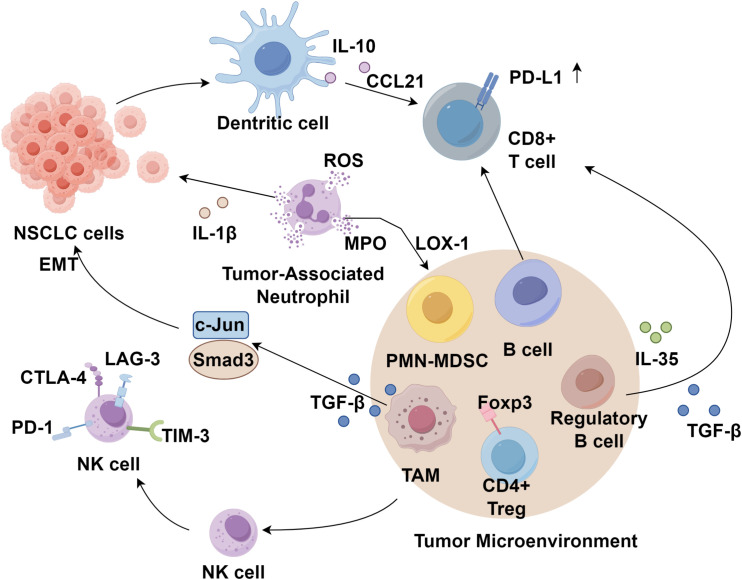
Lung cancer, predominantly non-small cell lung cancer (NSCLC), remains a principal driver of cancer-related morbidity and mortality worldwide. Despite advancements in surgery, radiotherapy, chemotherapy, and targeted treatments, outcomes remain poor in advanced NSCLC. The tumor microenvironment (TME) exerts a critical influence on therapy responses. Within the TME, immune cells such as T and B lymphocytes, dendritic cells, myeloid-derived suppressor cells, tumor-associated macrophages, neutrophils, and natural killer cells can drive both pro- and anti-tumor processes. This review integrates their classification, phenotypic plasticity, and roles in NSCLC, highlighting key preclinical and clinical evidence while discussing pathogenesis, prognostic significance, and therapeutic potential. We also summarize the current immunotherapeutic strategies for advanced NSCLC, including first- or second-line regimens with immune checkpoint inhibitors alone or combined with chemotherapy, anti-angiogenic agents, or additional checkpoint inhibitors, and future directions. By elucidating the interplay between the NSCLC immune microenvironment and emerging immunotherapies, this review emphasizes the need for novel combination regimens and robust predictive biomarkers to improve clinical outcomes and extend survival in advanced NSCLC.
Keywords: B cell; CD8 + T cell; immune cells; immunotherapy; lung cancer; tumor microenvironment.
Copyright © 2025 Xue, Fan, Li, Zhao, Zhang, Zhao and Liu.
Conflict of interest statement
The authors declare that the research was conducted in the absence of any commercial or financial relationships that could be construed as a potential conflict of interest.
Figures
References
Publication types
MeSH terms
Substances
LinkOut - more resources
Full Text Sources
Medical
Research Materials
