


An RNA modification prevents extended codon-anticodon interactions from facilitating +1 frameshifting
- PMID: 40789848
- PMCID: PMC12340085
- DOI: 10.1038/s41467-025-62342-4
An RNA modification prevents extended codon-anticodon interactions from facilitating +1 frameshifting
Abstract
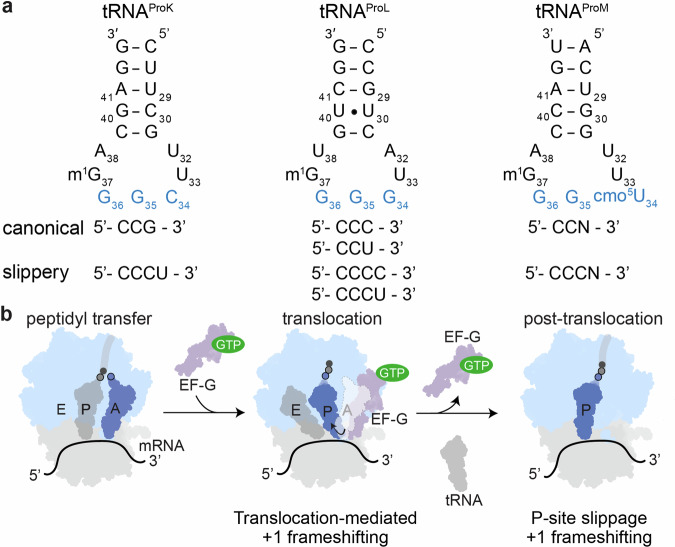
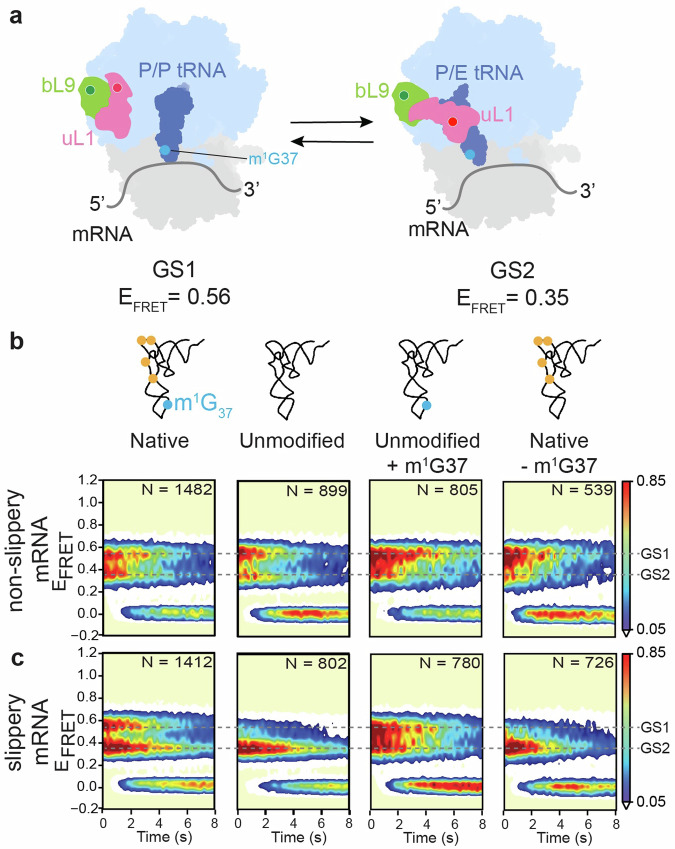
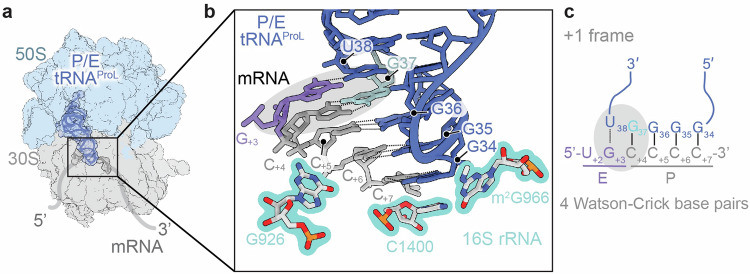
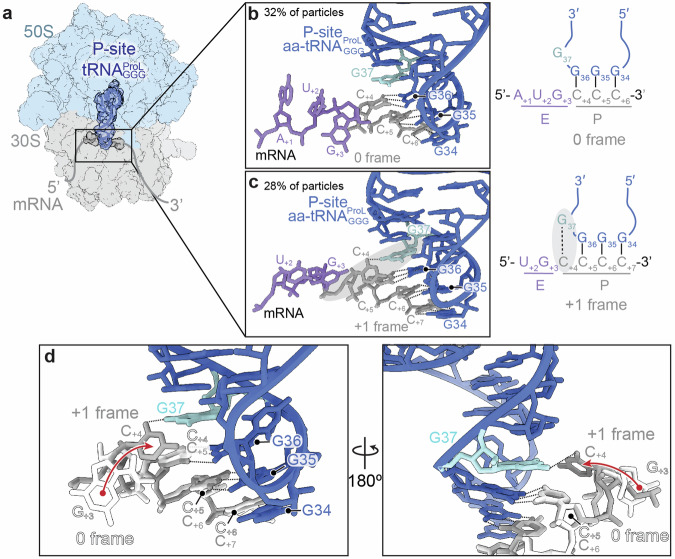
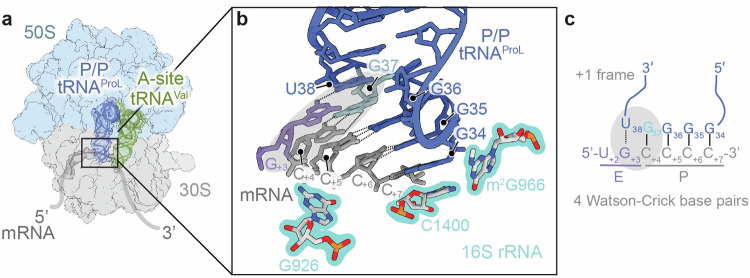
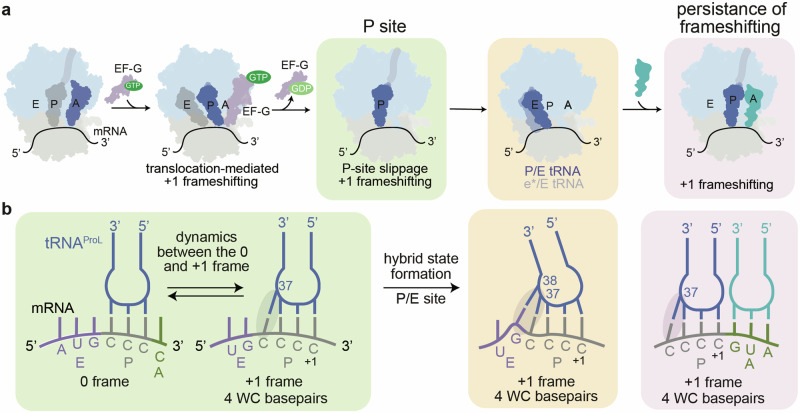
RNA post-transcriptional modifications act by stabilizing the functional conformations of RNA. While their role in messenger RNA (mRNA) decoding is well established, it is less clear how transfer RNA (tRNA) modifications outside the anticodon contribute to tRNA stability and accurate protein synthesis. Absence of such modifications causes translation errors, including mRNA frameshifting. By integrating single-molecule fluorescence resonance energy transfer and cryogenic electron microscopy, we demonstrate that the N1-methylguanosine (m1G) modification at position 37 of Escherichia coli tRNAProL is necessary and sufficient for modulating the conformational energy of this tRNA on the ribosome so as to suppress +1 frameshifting otherwise induced by this tRNA. Six structures of E. coli ribosomal complexes carrying tRNAProL lacking m1G37 show this tRNA forms four and even five codon-anticodon base pairs as it moves into the +1 frame, allowing direct visualization of the long-standing hypothesis that a four base pair codon-anticodon can form during +1 frameshifting.
© 2025. The Author(s).
Conflict of interest statement
Competing interests: The authors declare no competing interests.
Figures
References
-
- Bjork, G. R., Wikstrom, P. M. & Bystrom, A. S. Prevention of translational frameshifting by the modified nucleoside 1-methylguanosine. Science244, 986–989 (1989). - PubMed
-
- Atkins, J. F., Gesteland, R. F., Reid, B. R. & Anderson, C. W. Normal tRNAs promote ribosomal frameshifting. Cell18, 1119–1131 (1979). - PubMed
MeSH terms
Substances
Grants and funding
LinkOut - more resources
Full Text Sources
